01Physics
From a lecture diagram to a visual explanation.
[Practical skills]: CPR for adults, children, and babies (including pocket mask use and the “chain of survival”)
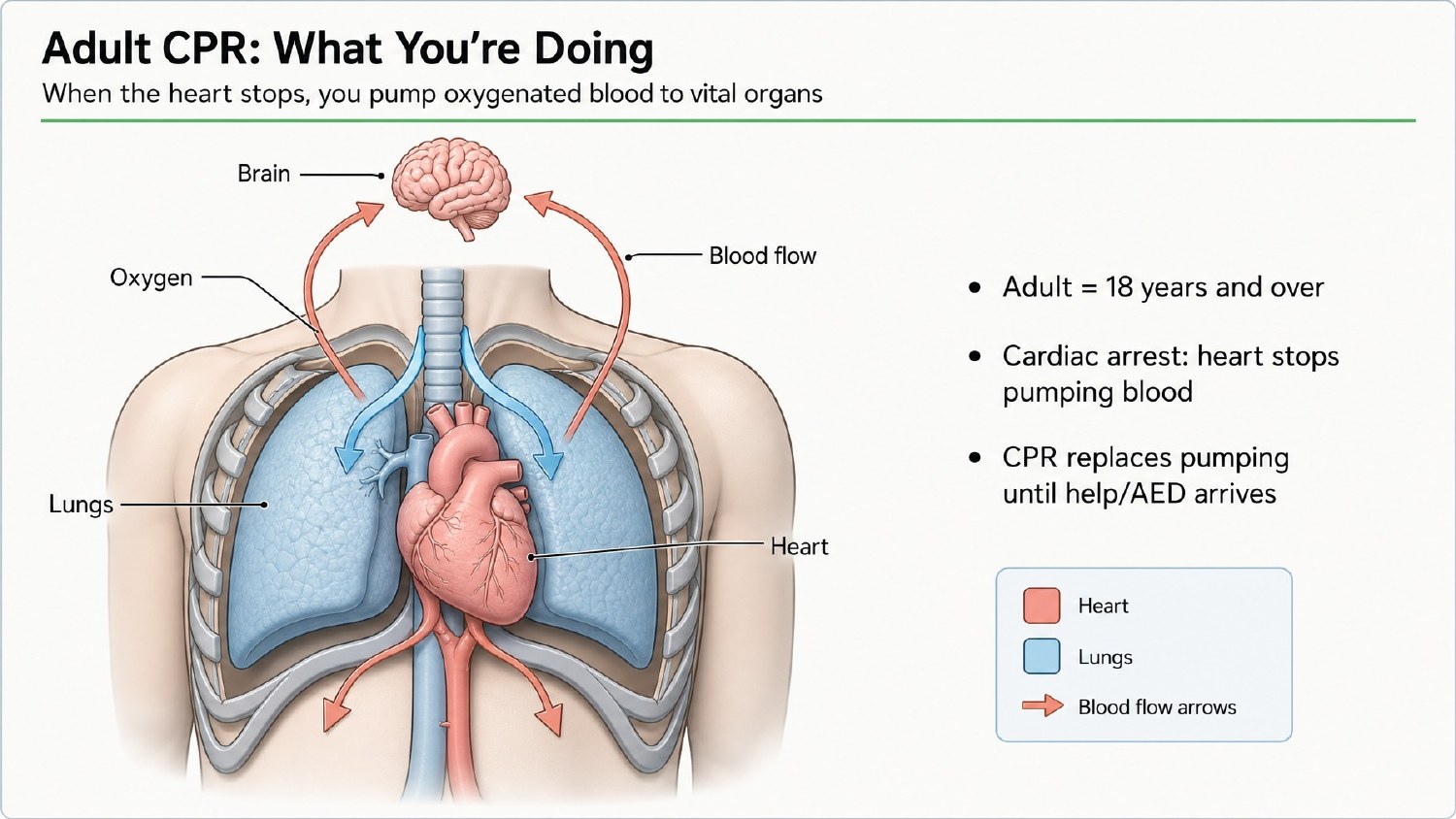
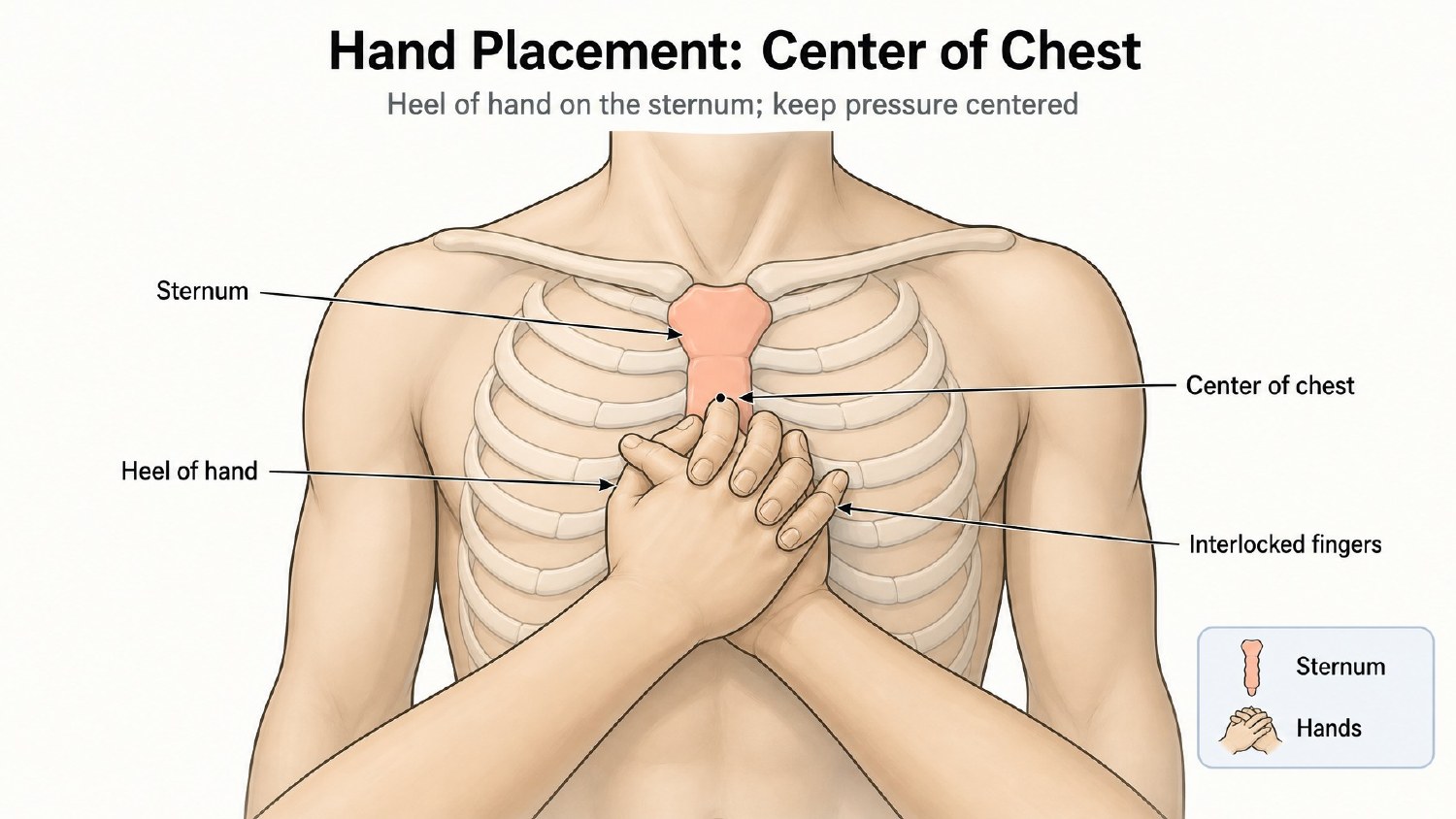
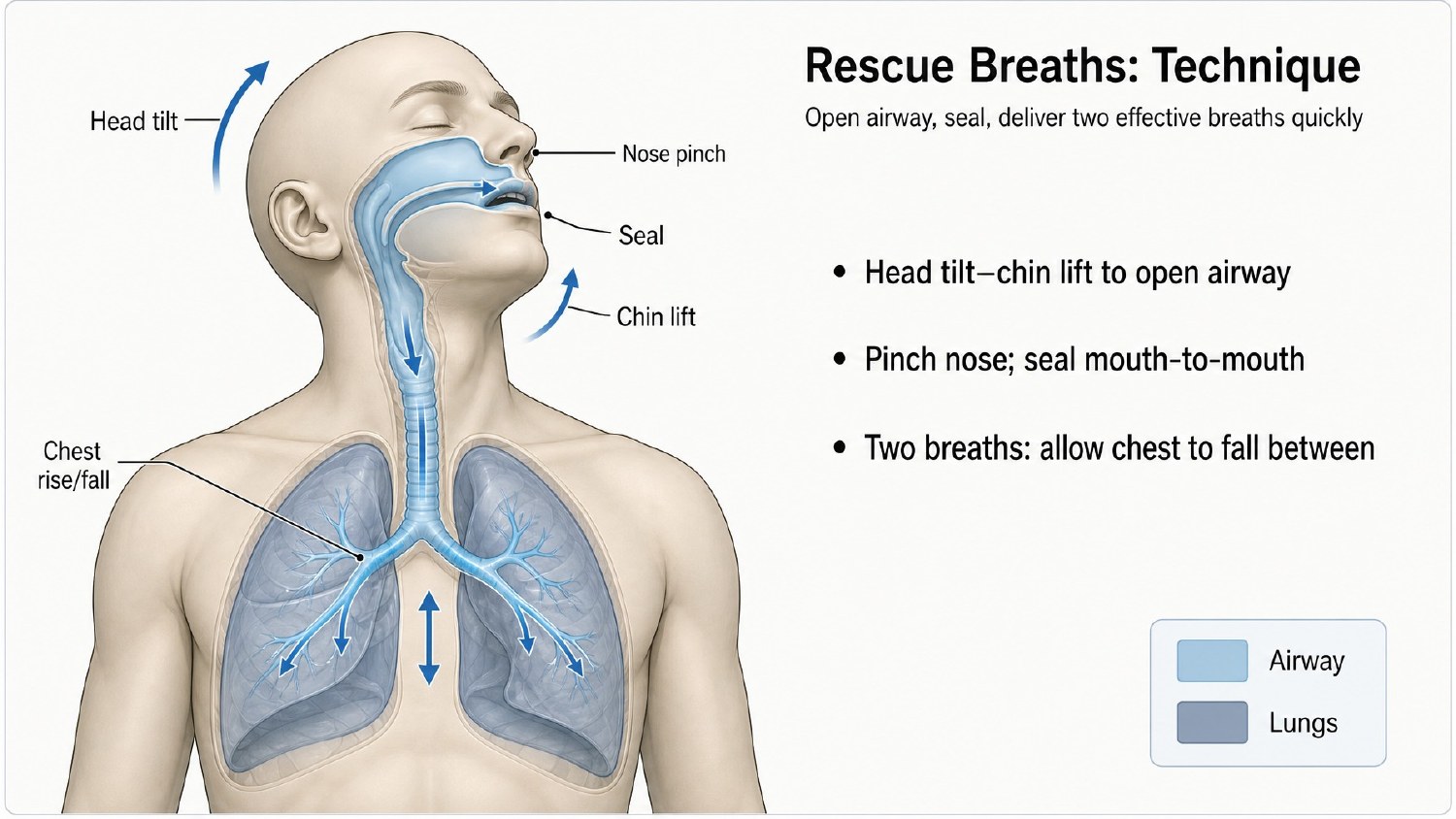
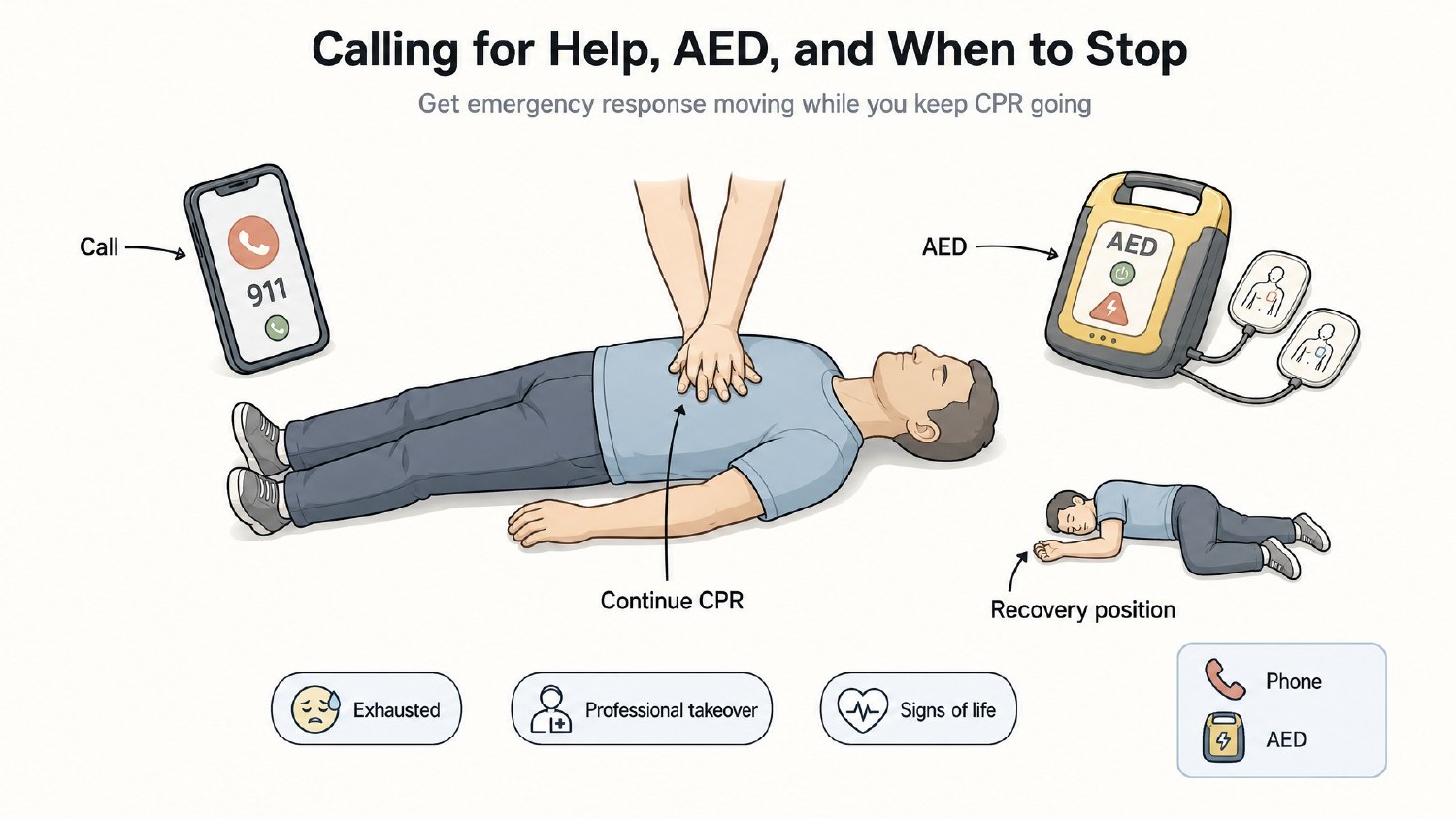
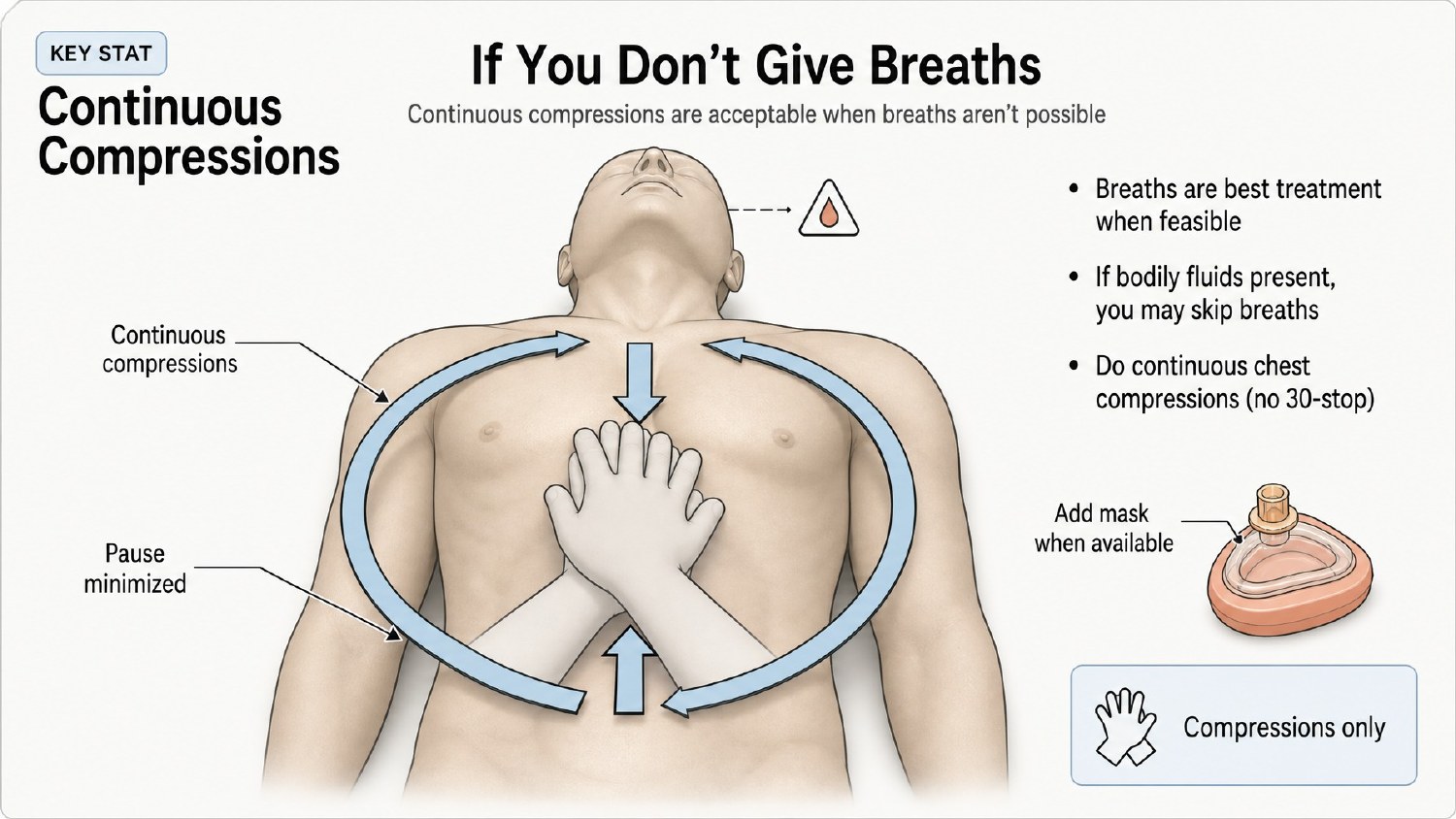
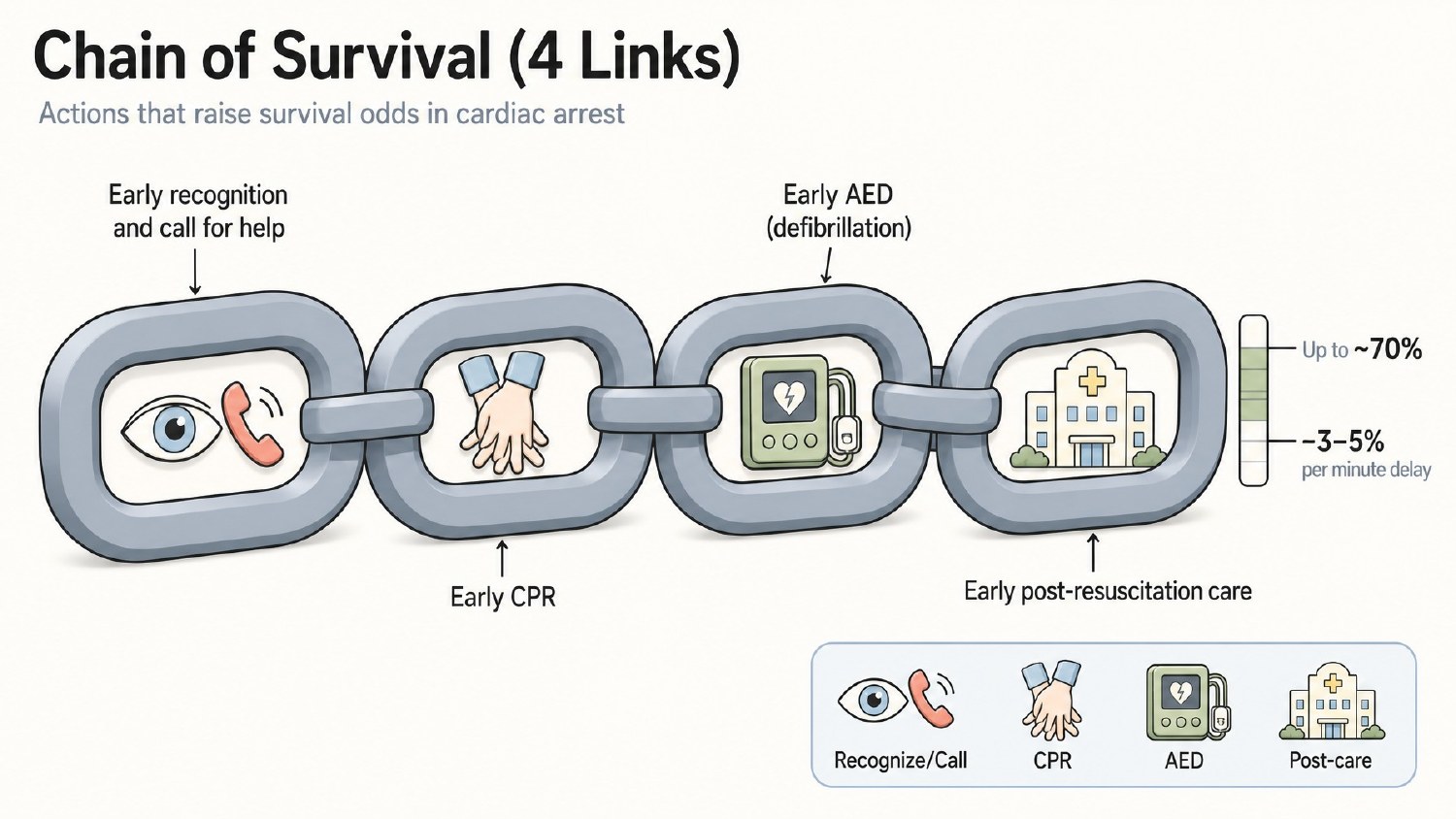
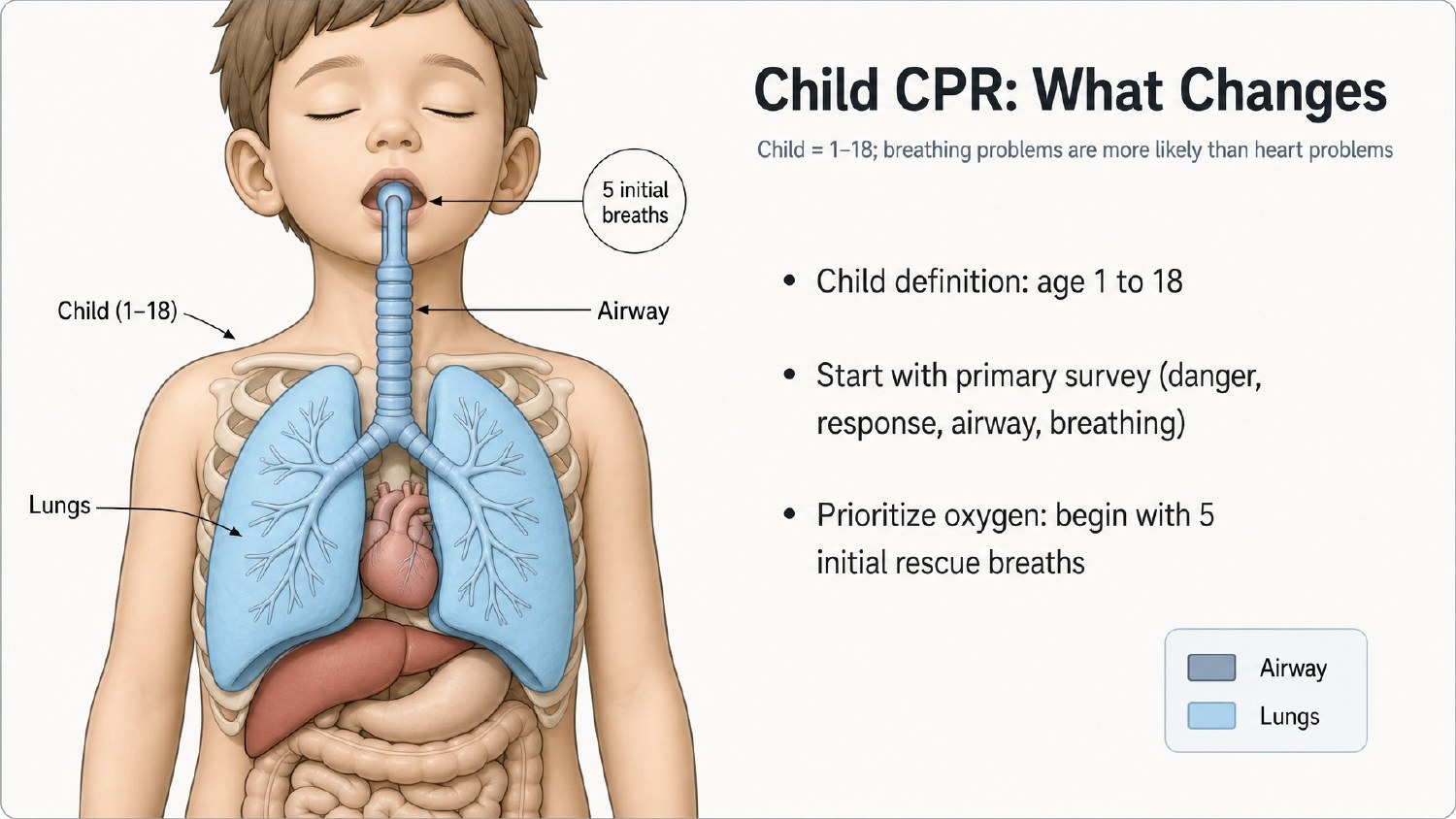
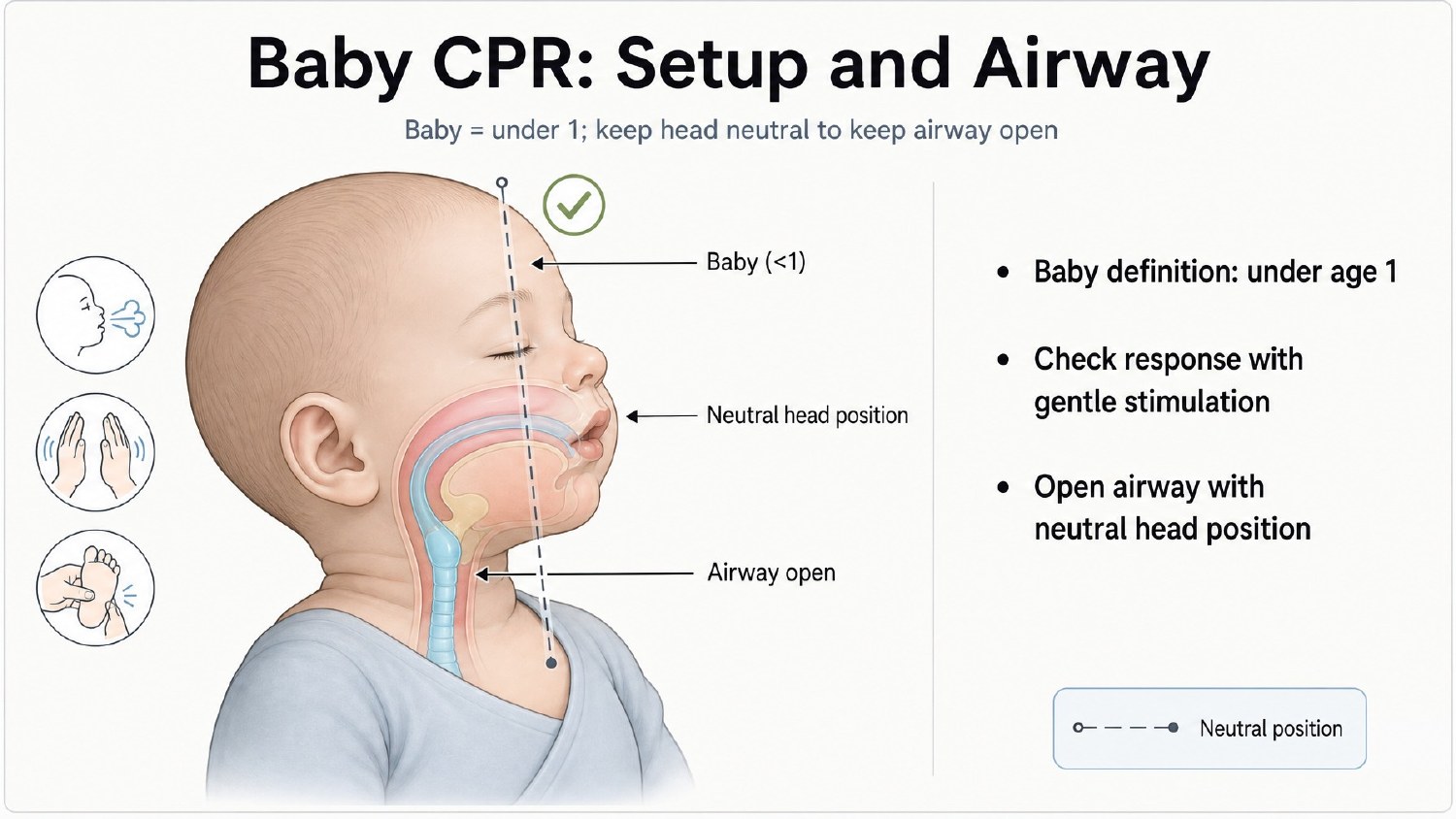
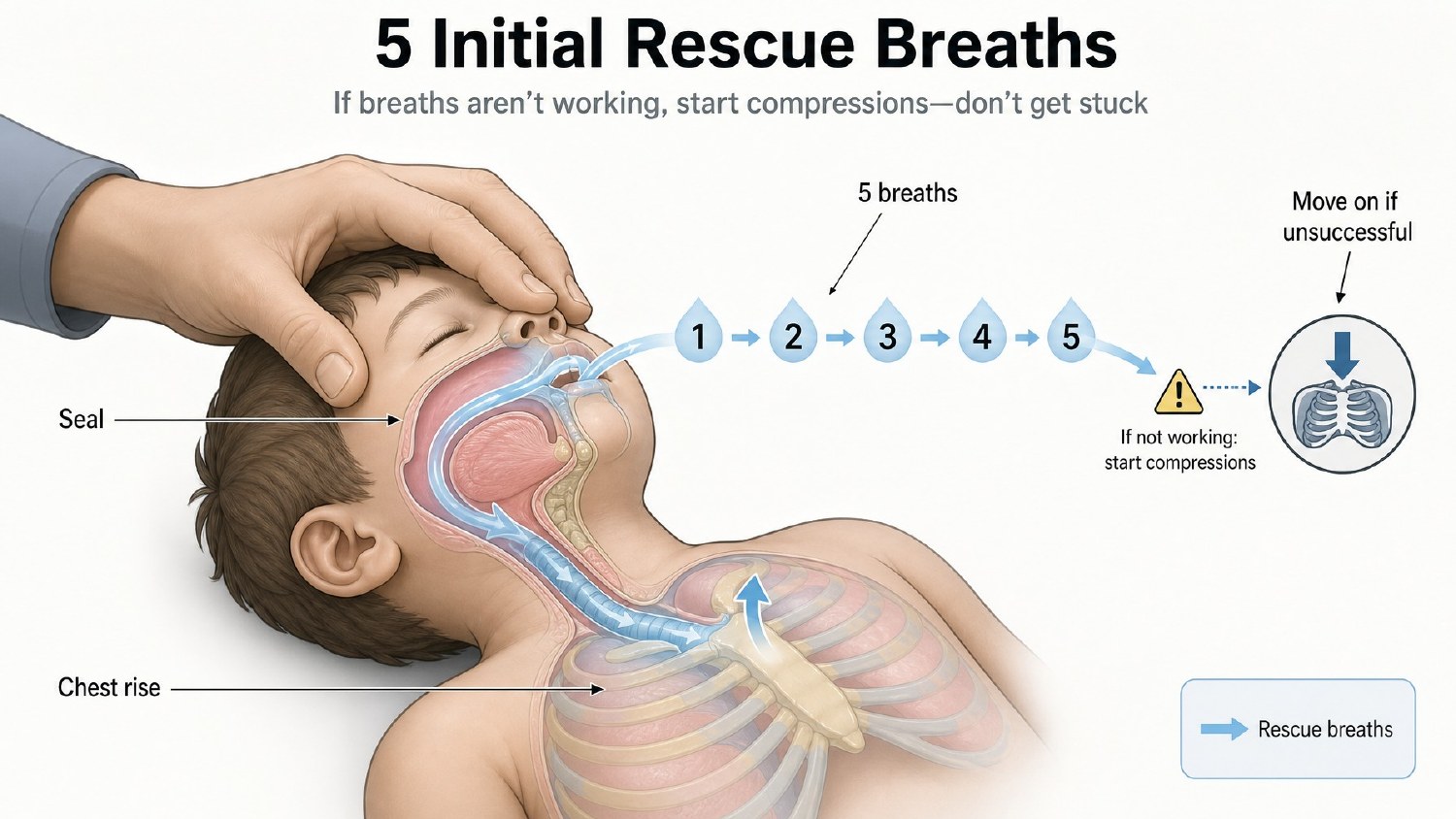
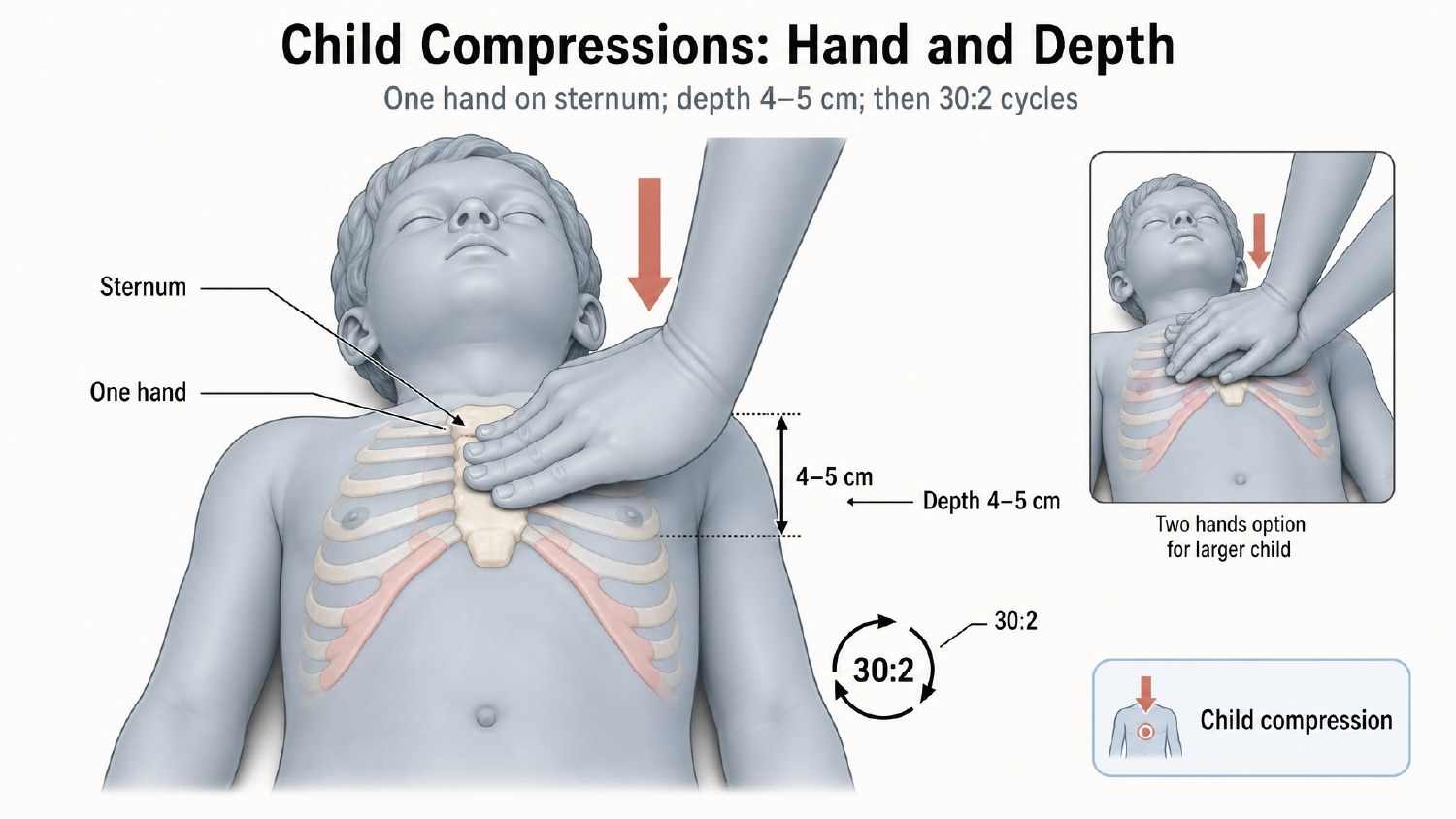
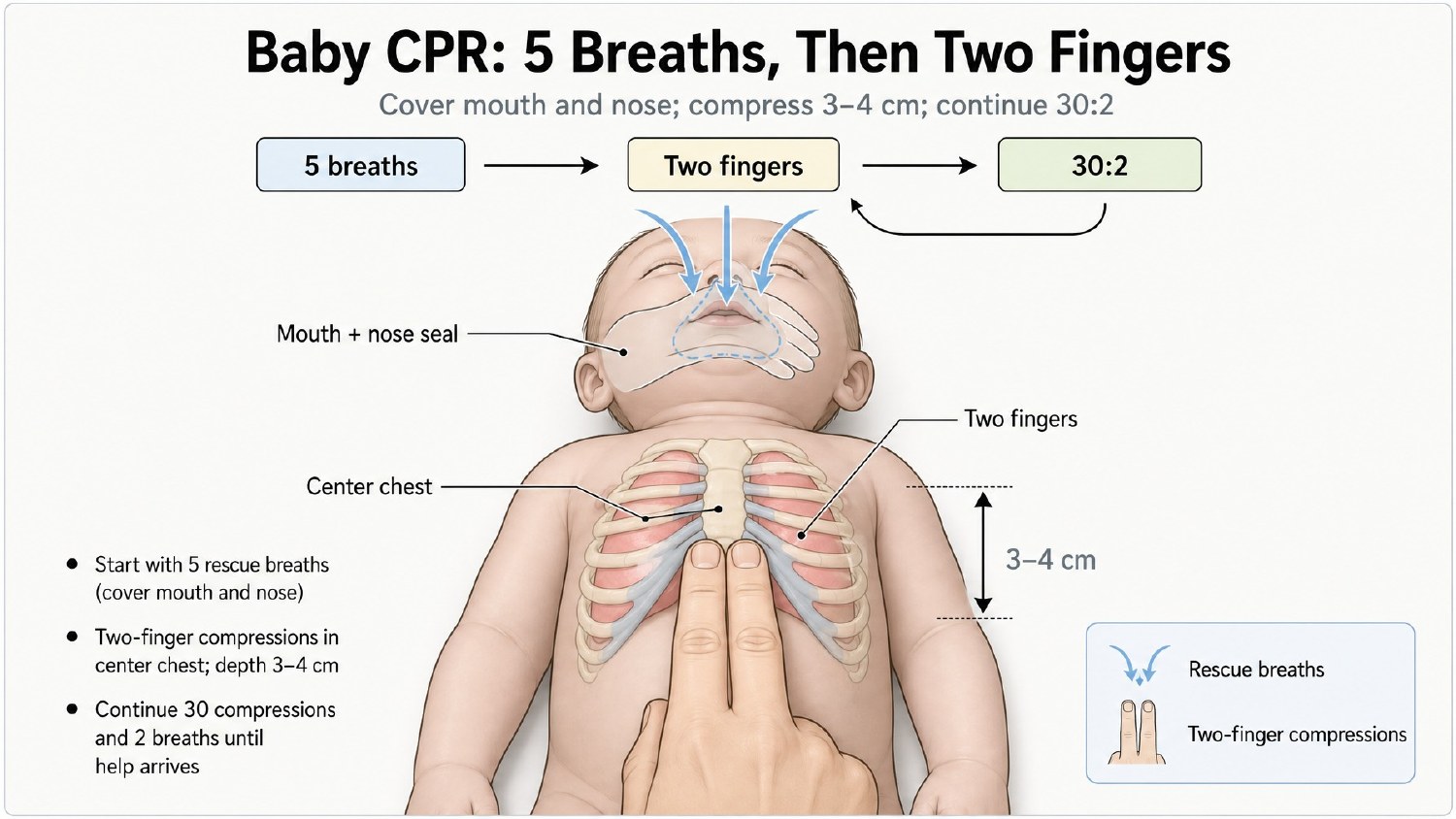
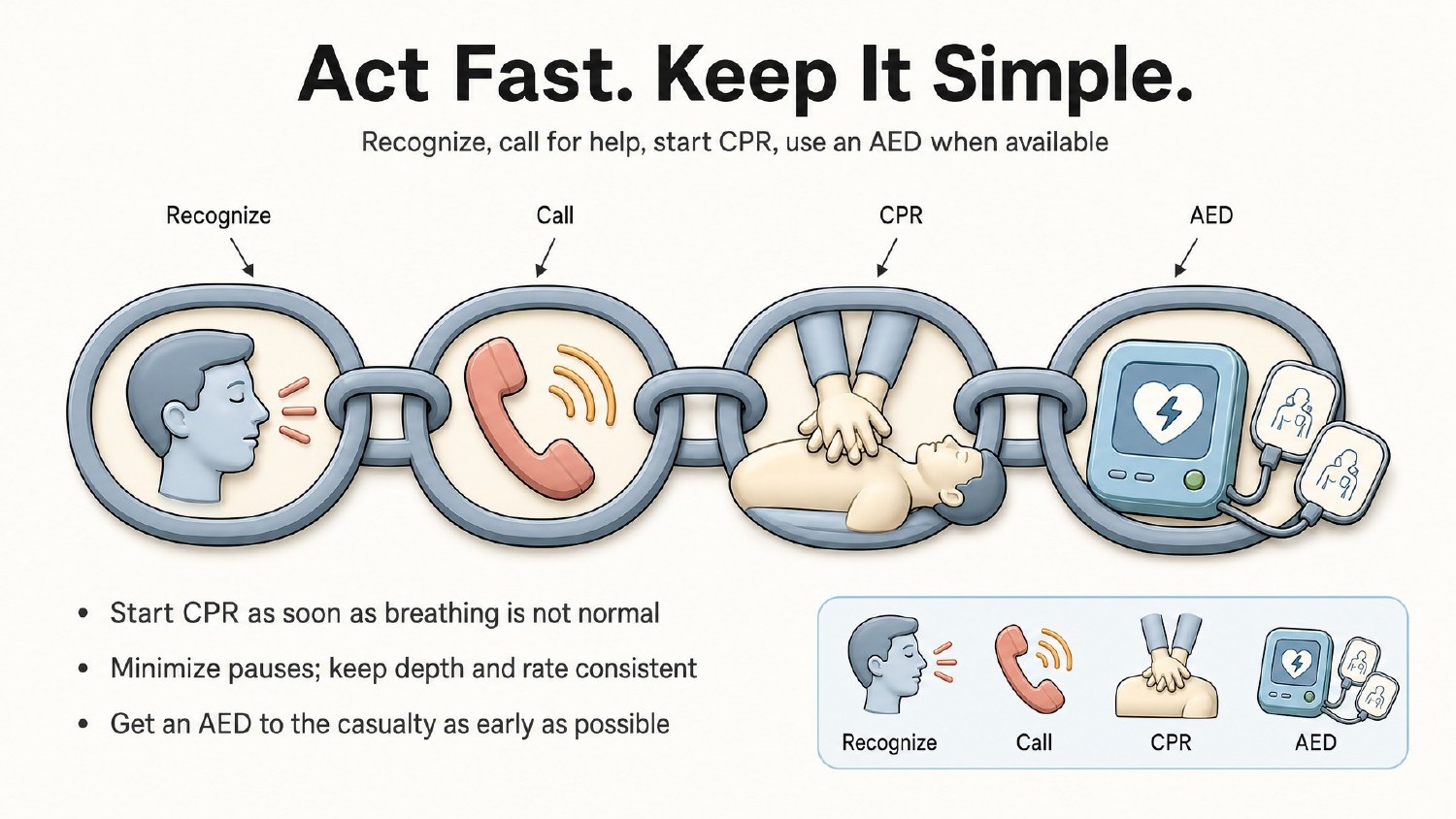
This lesson demonstrates how to perform CPR when a casualty is unresponsive and not breathing normally. It covers adult CPR (30 compressions : 2 breaths), when to use or omit rescue breaths, how to use a pocket mask, the “chain of survival,” and key differences for child and baby CPR (including 5 initial rescue breaths and age-appropriate compression technique/depth).
 Get early-access updates
UYI remembers what you’re learning, proactively helps you review and organize, and turns scattered study tasks into a clear next step.
See how UYI supports your learning ↗Learning happens everywhere.
Keep it connected with UYI.
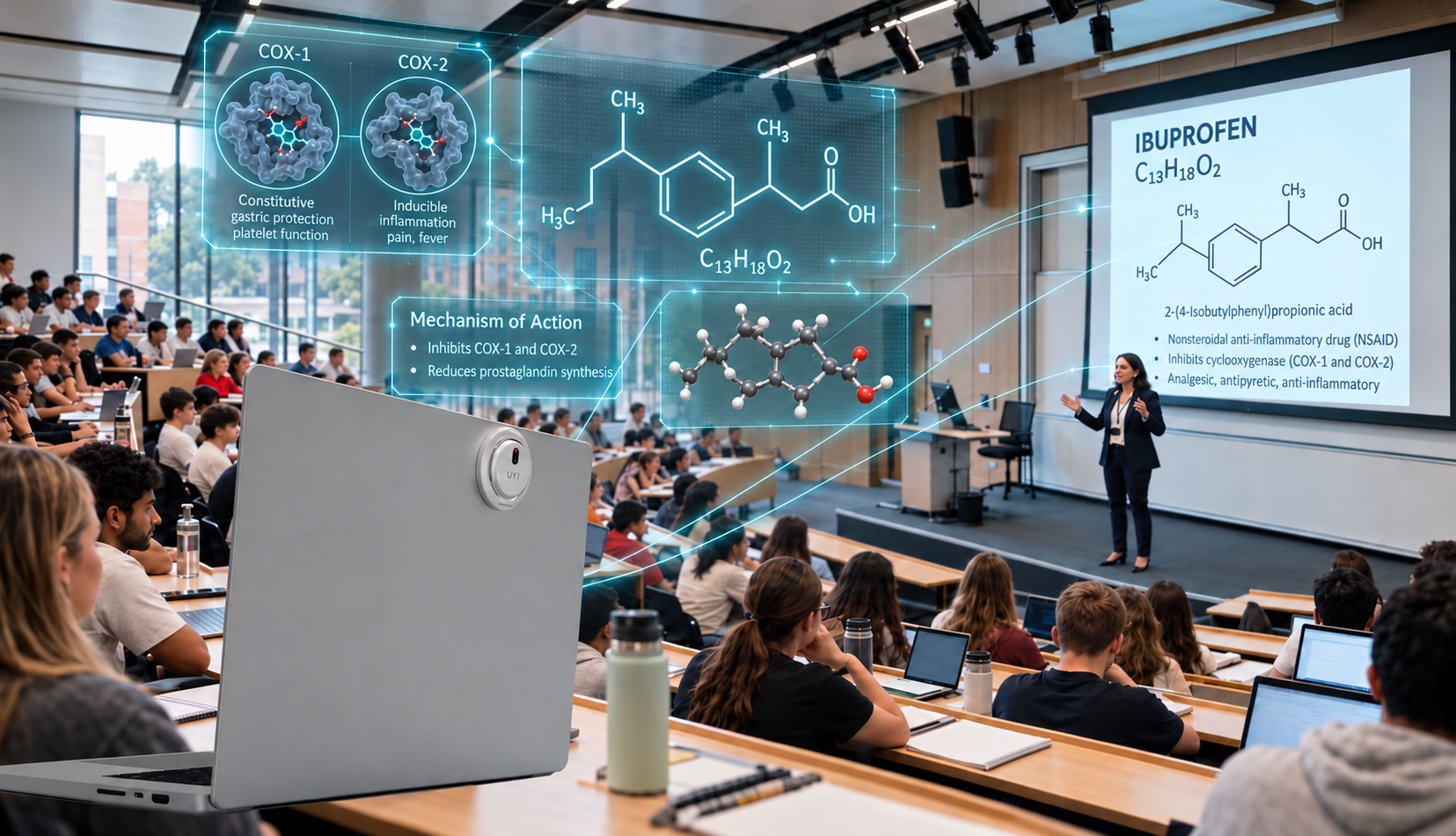
UYI keeps the diagrams and explanations together, so you can focus in class and revisit how each idea works afterward.
UYI brings together what you hear, see, read, and write — and automatically turns it into clear, editable visual explanations.
From a lecture diagram to a visual explanation.
From a hands-on demonstration to a clear, connected recap.
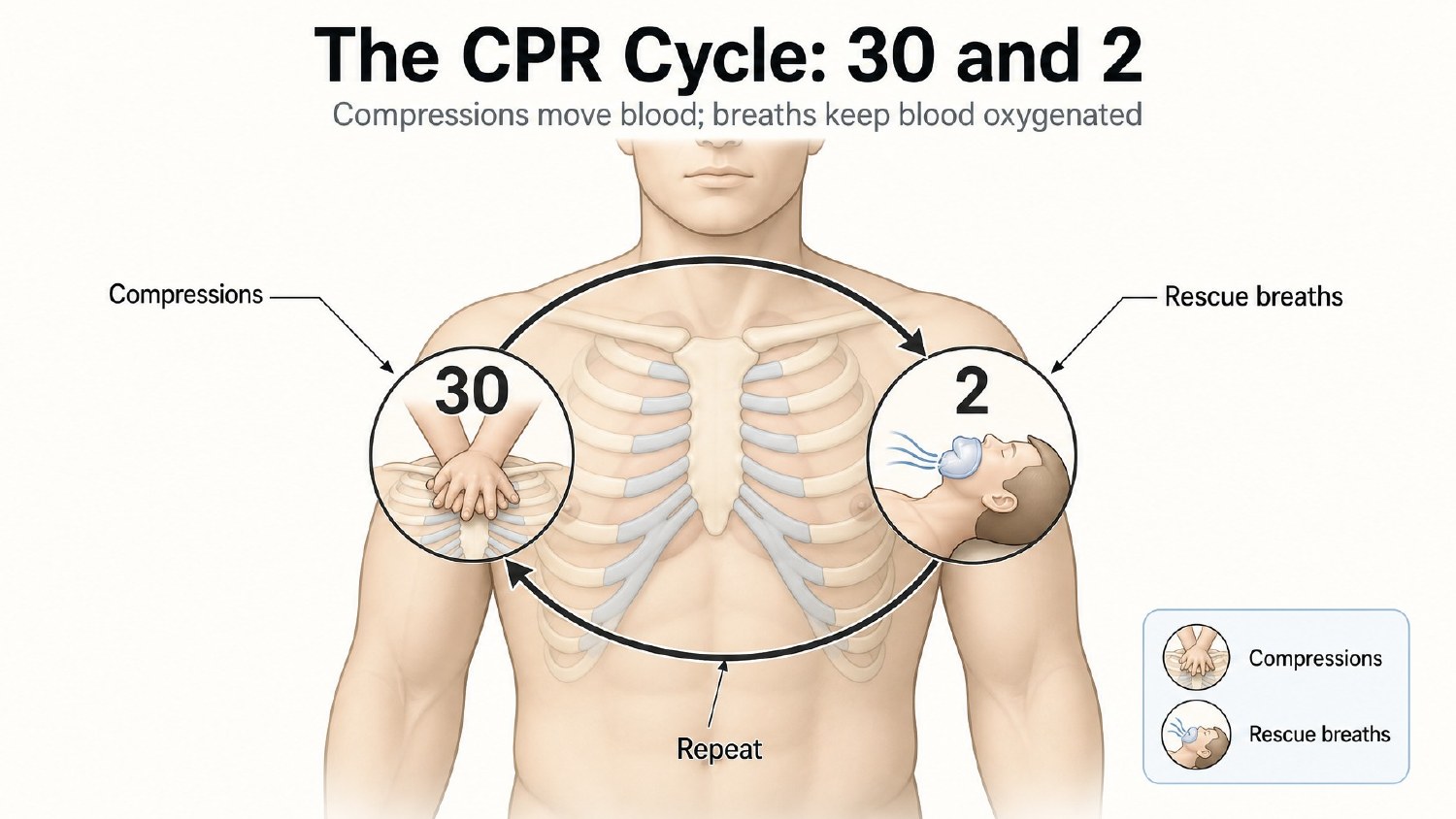
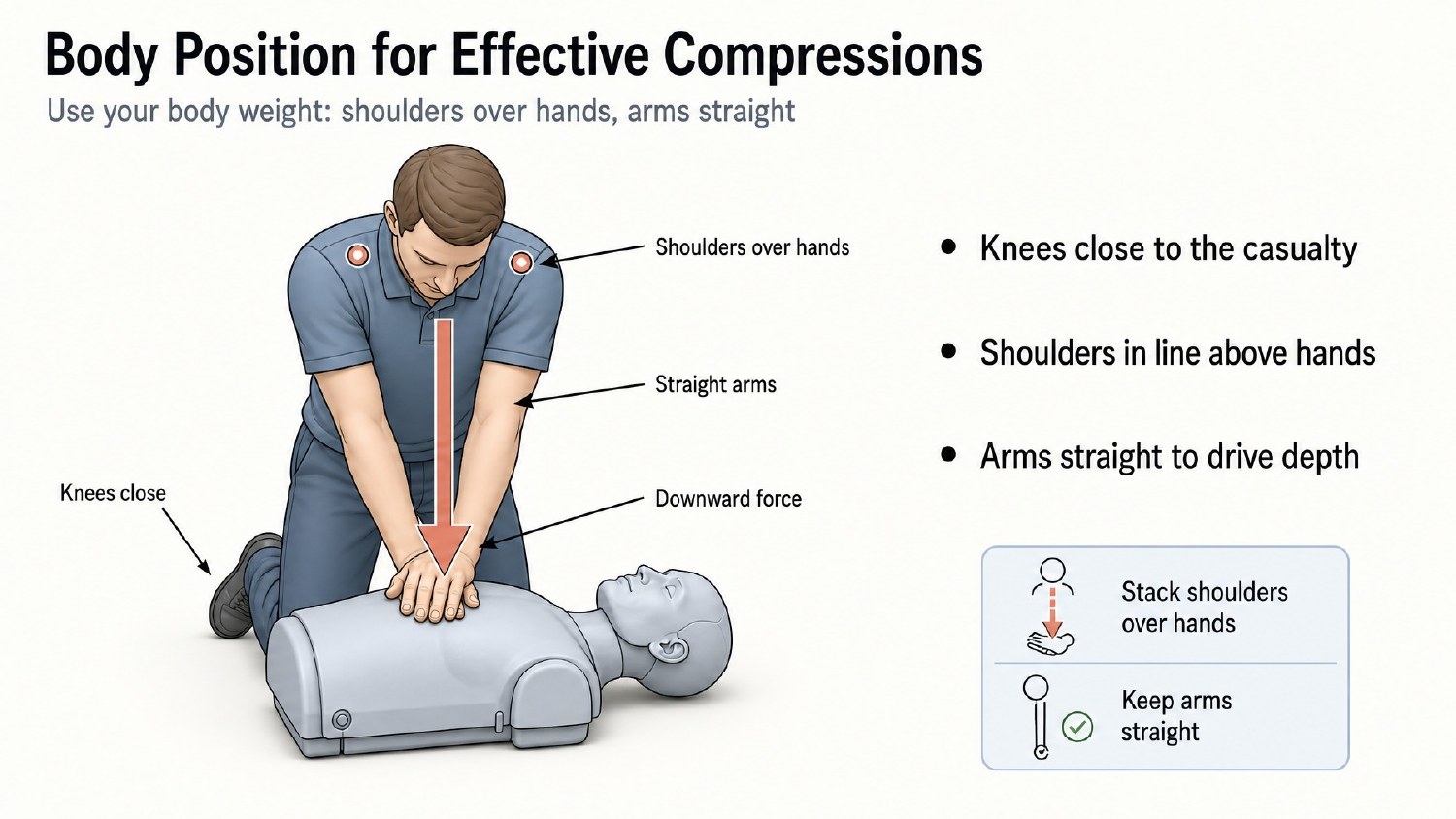
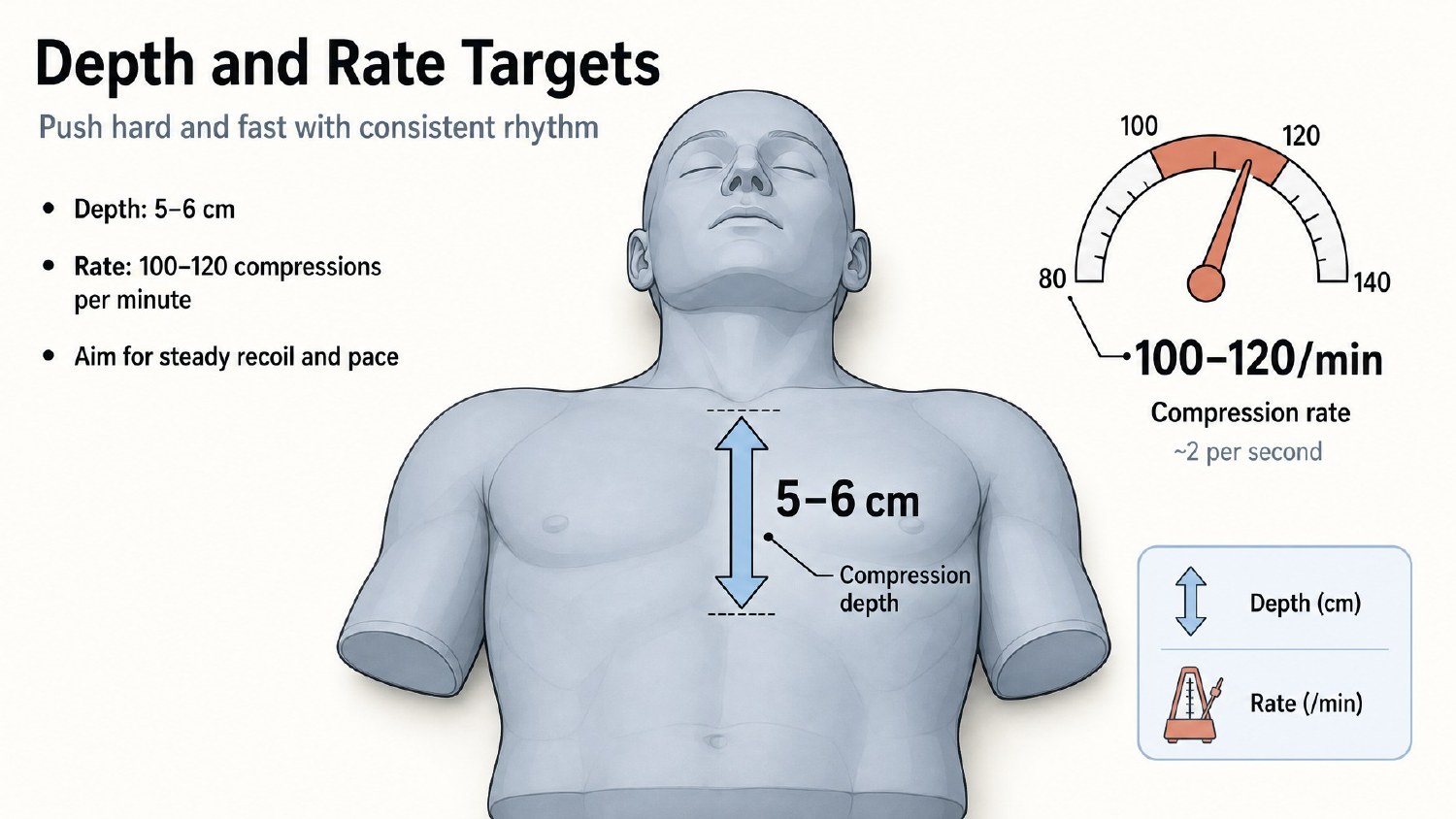
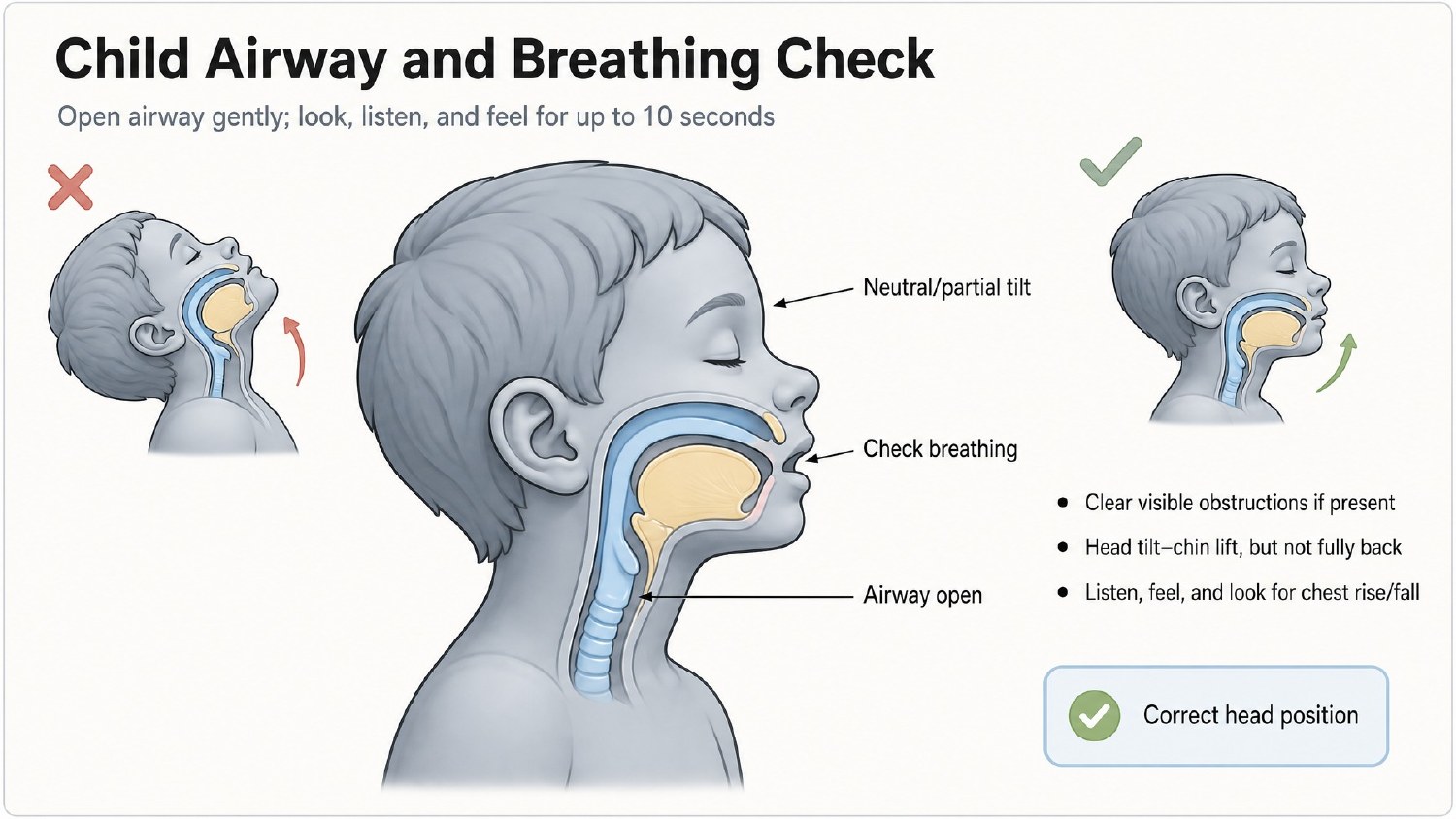
From moving parts to a step-by-step cycle.
See how the ideas connect.
Follow the explanation in a structured form.
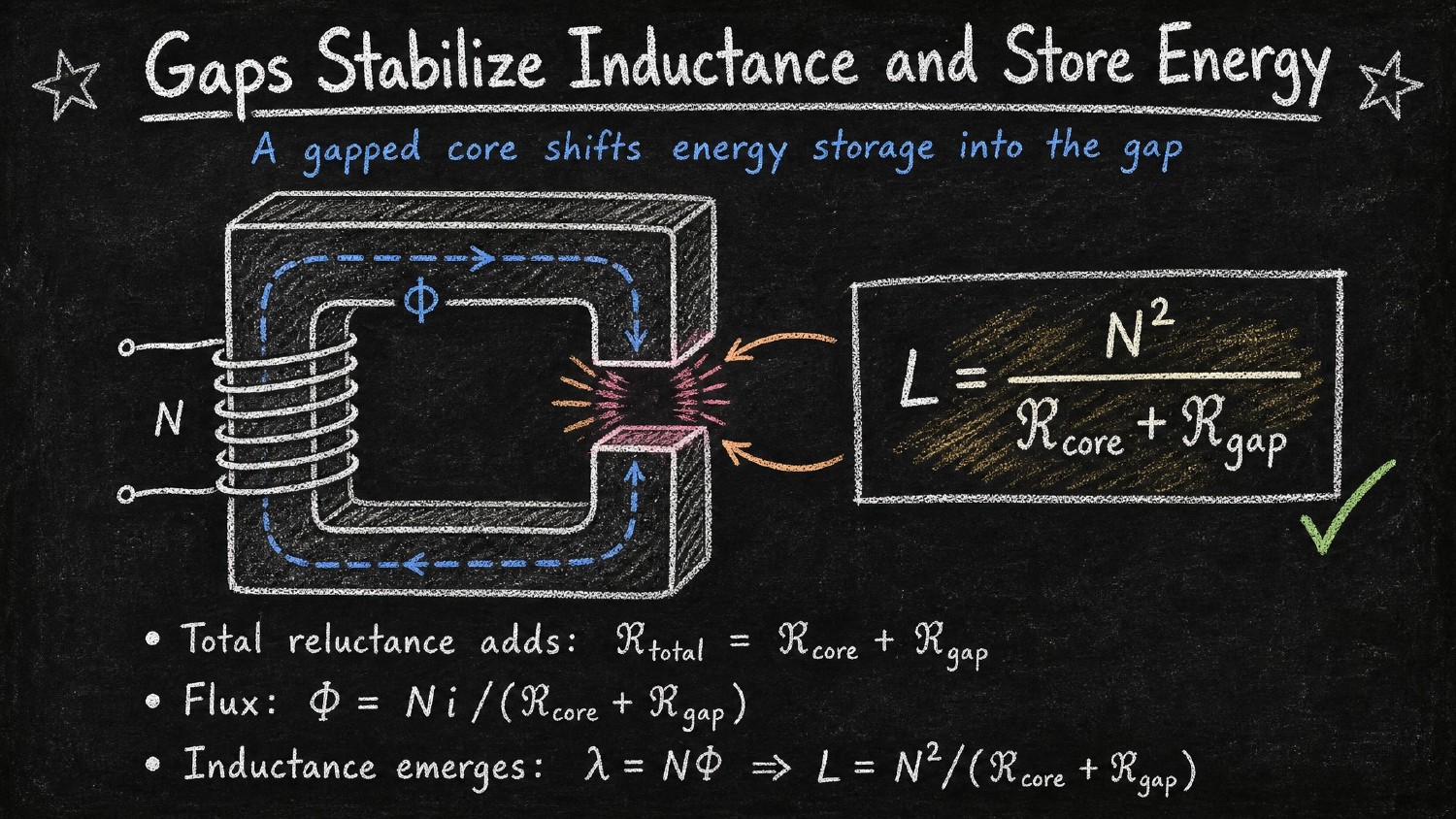
A core and an air gap contribute to the total magnetic reluctance.
Adding a gap increases reluctance and changes the flux for a given current.
Connect the circuit diagram, the equations, and the lecturer’s explanation.
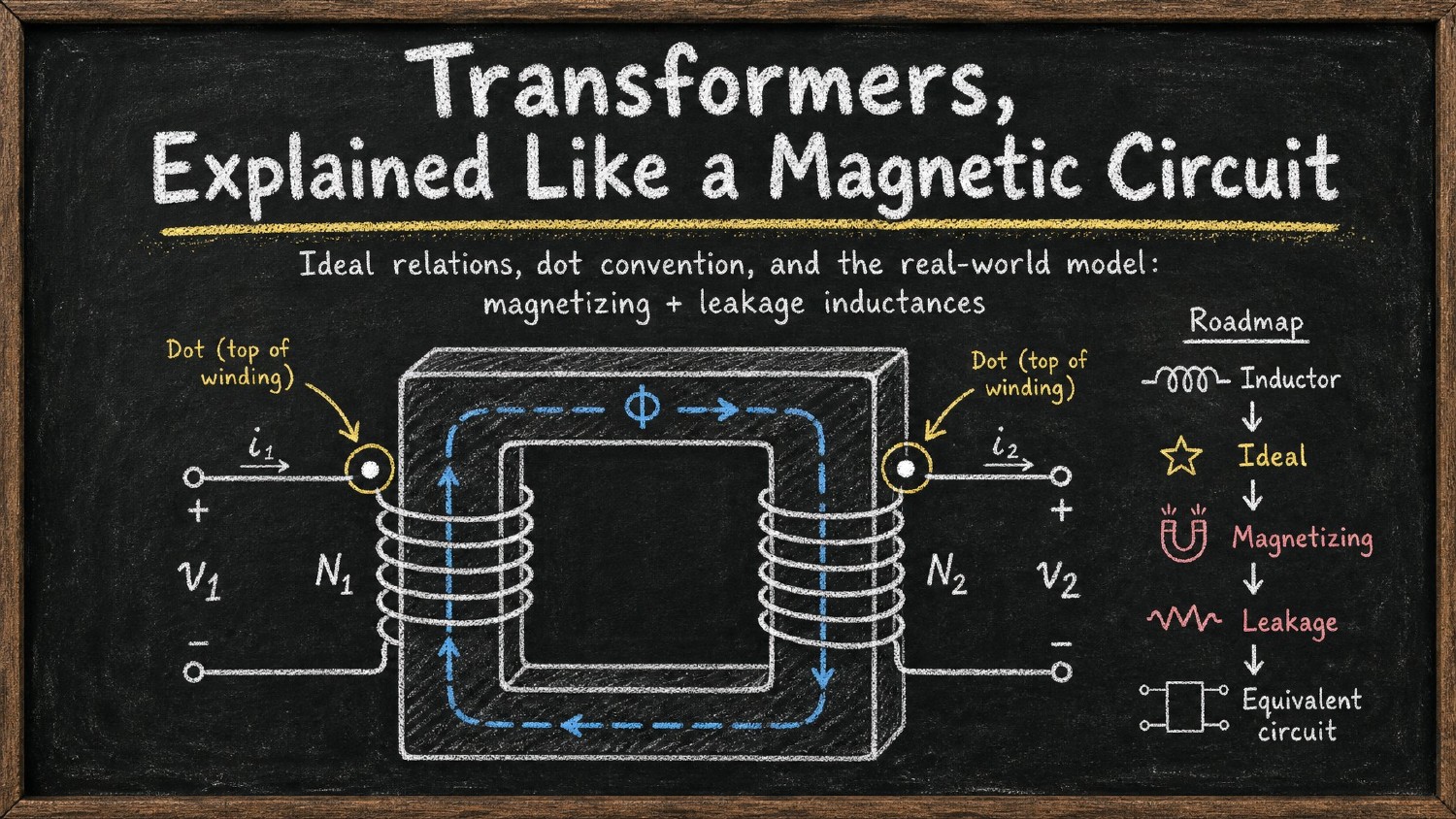
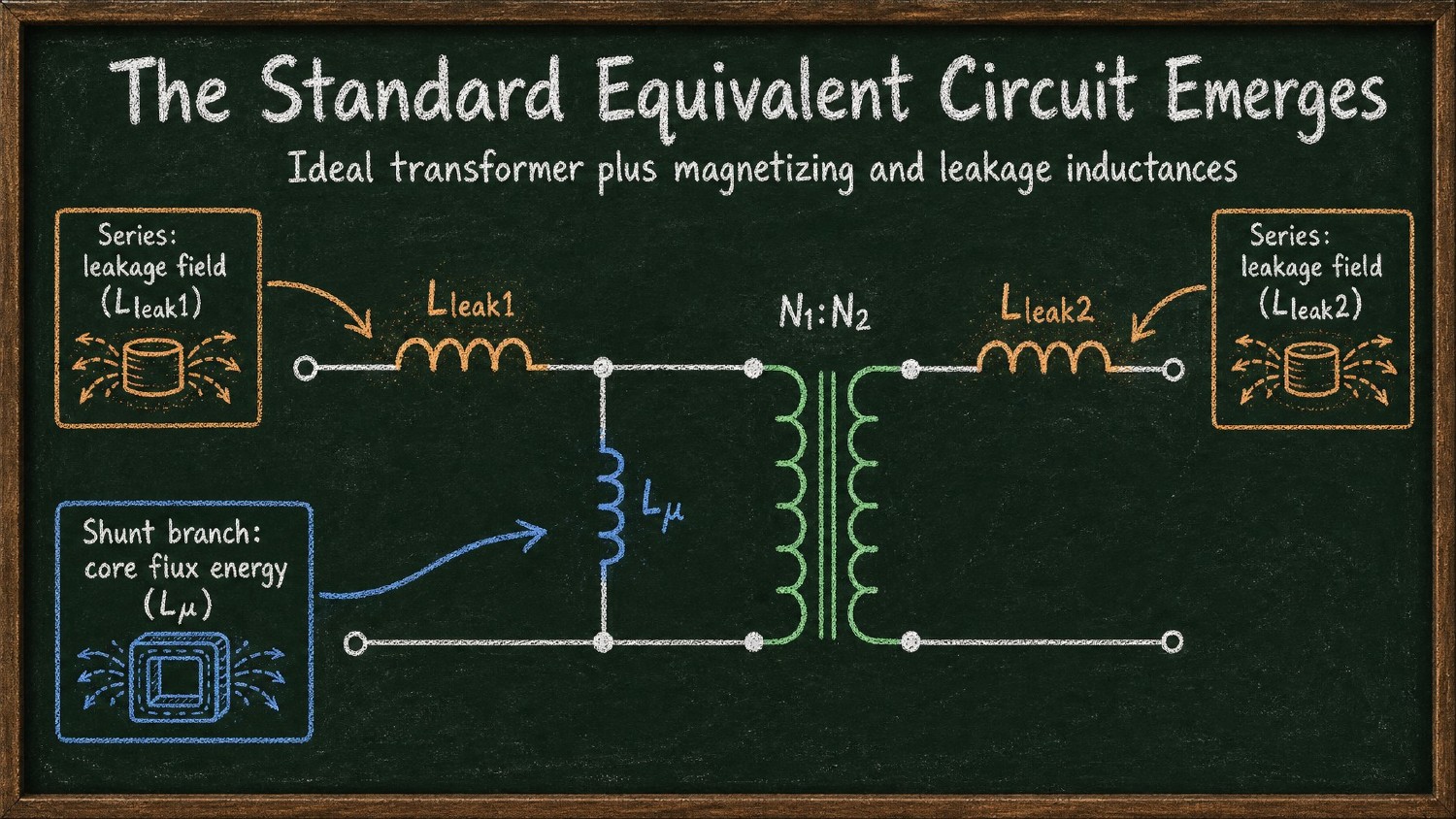
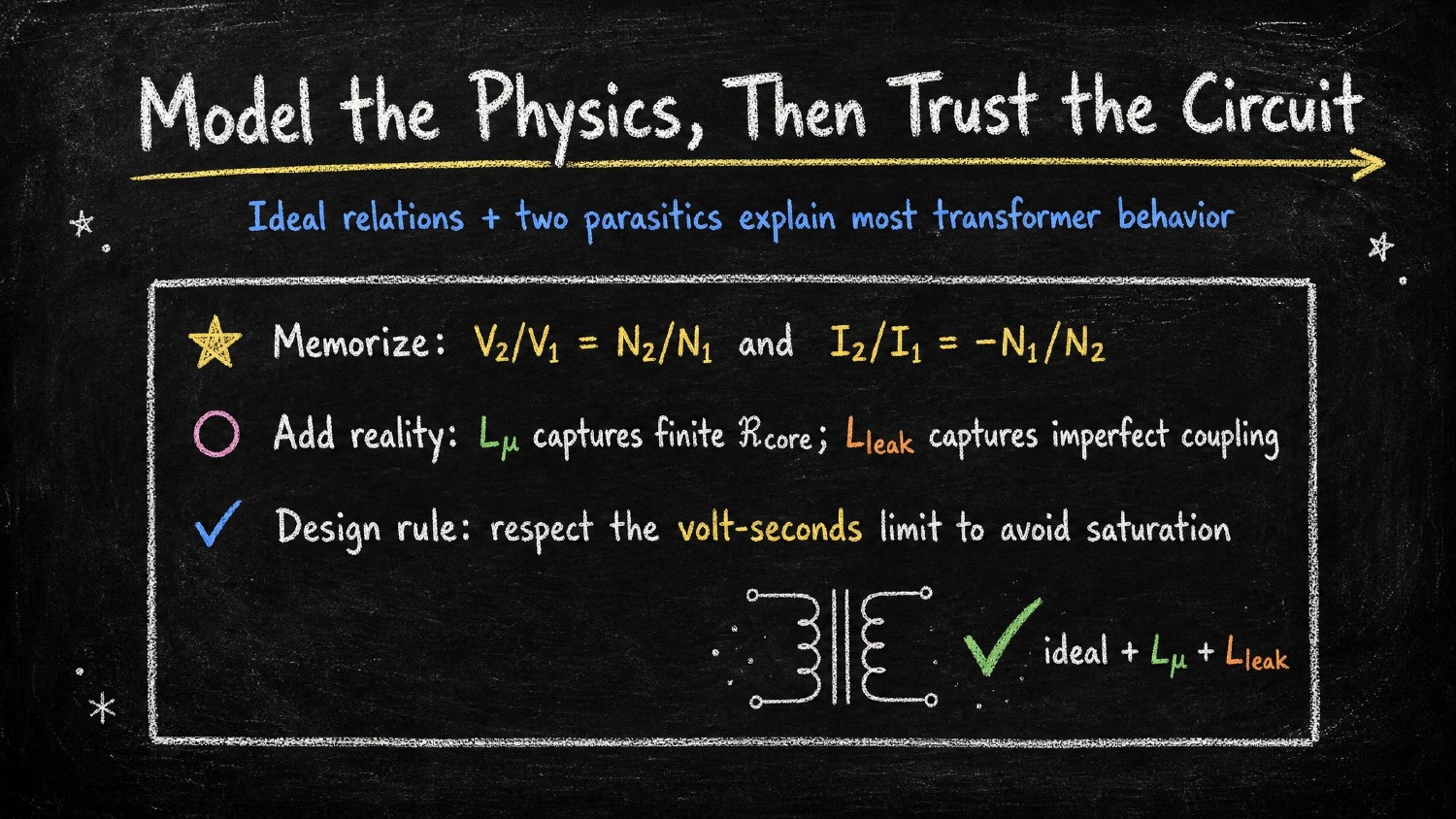
This lecture transitions from last class’s inductor/magnetic-circuit foundations to two-winding transformers. It derives the ideal transformer voltage/current relations from Faraday’s law and magnetic-circuit assumptions, then explains why real transformers deviate—introducing magnetizing inductance (finite core reluctance) and leakage inductances (leakage flux paths)—and builds the standard non-ideal transformer equivalent circuit.
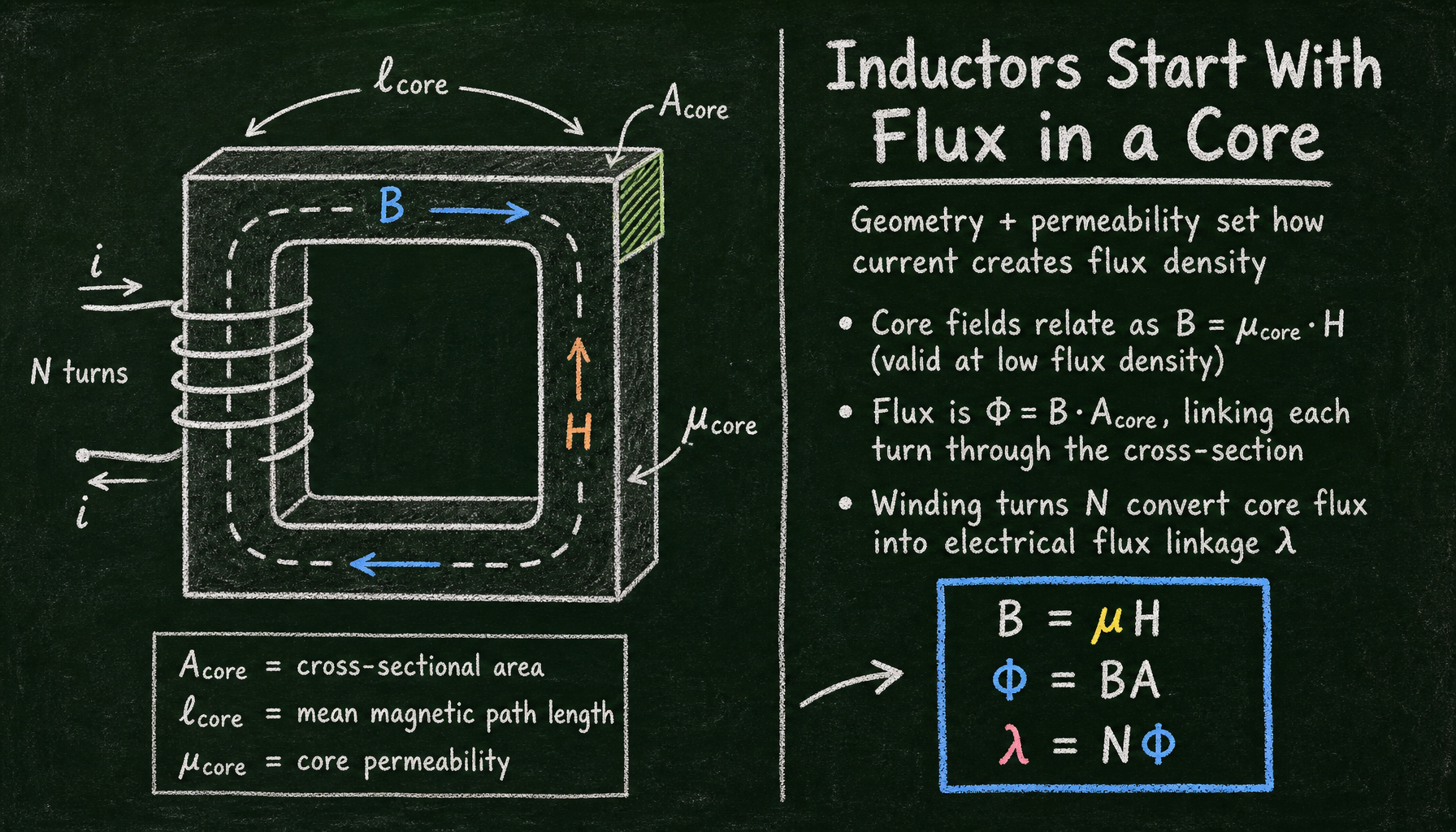
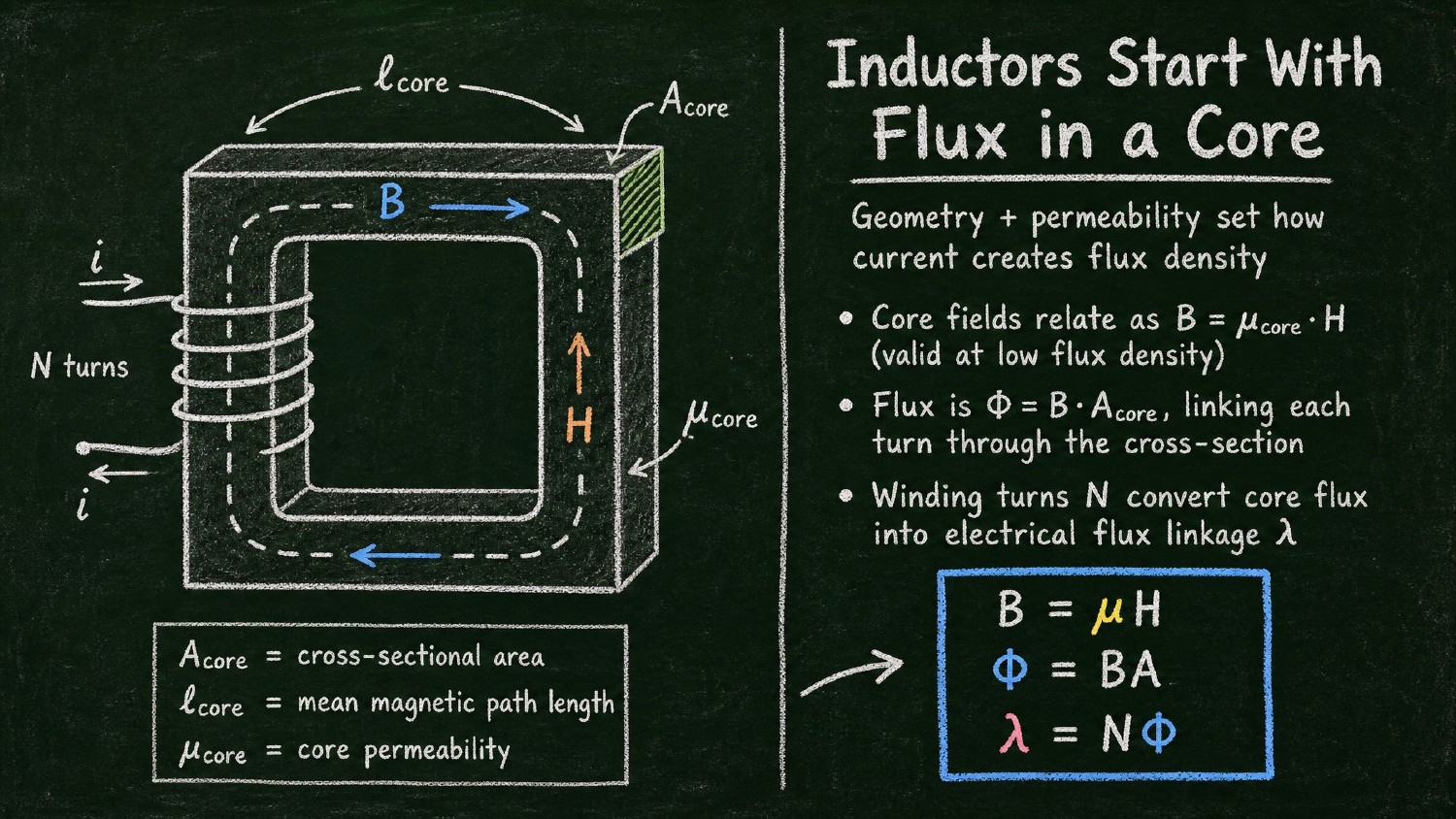
Linkage is turns times core flux.
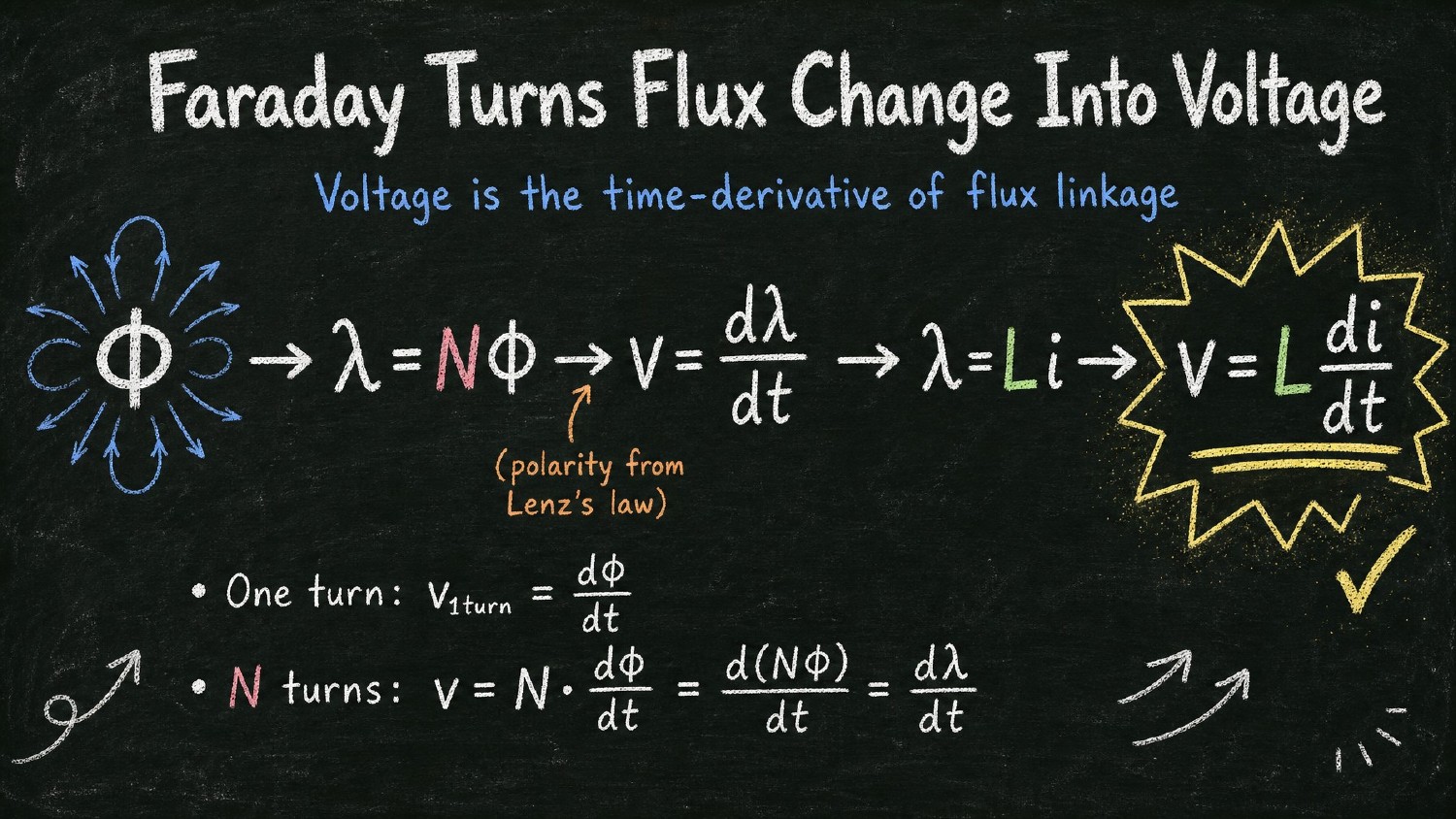
Voltage equals time change of linkage.
With λ=Li, v equals L di/dt.
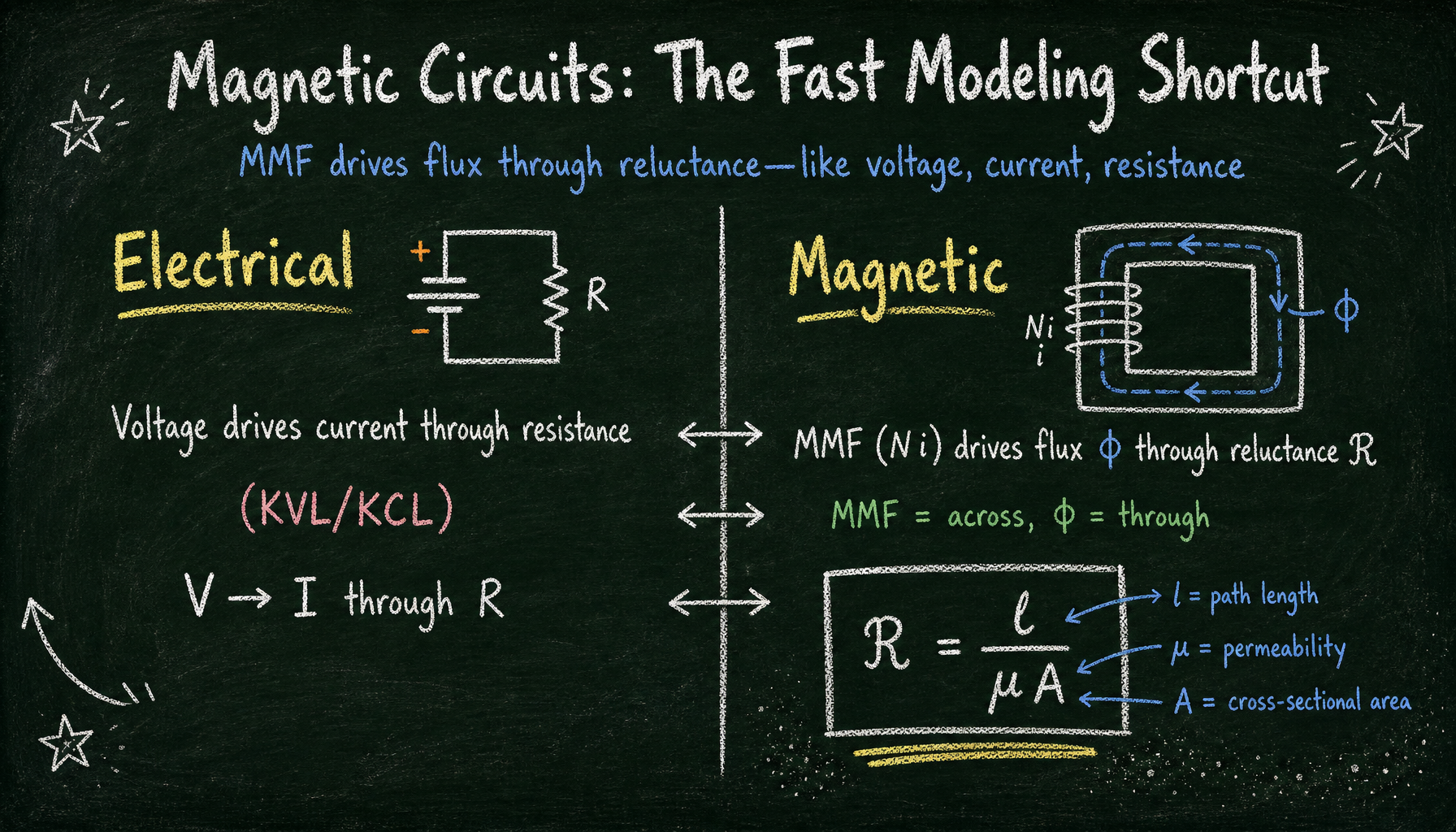
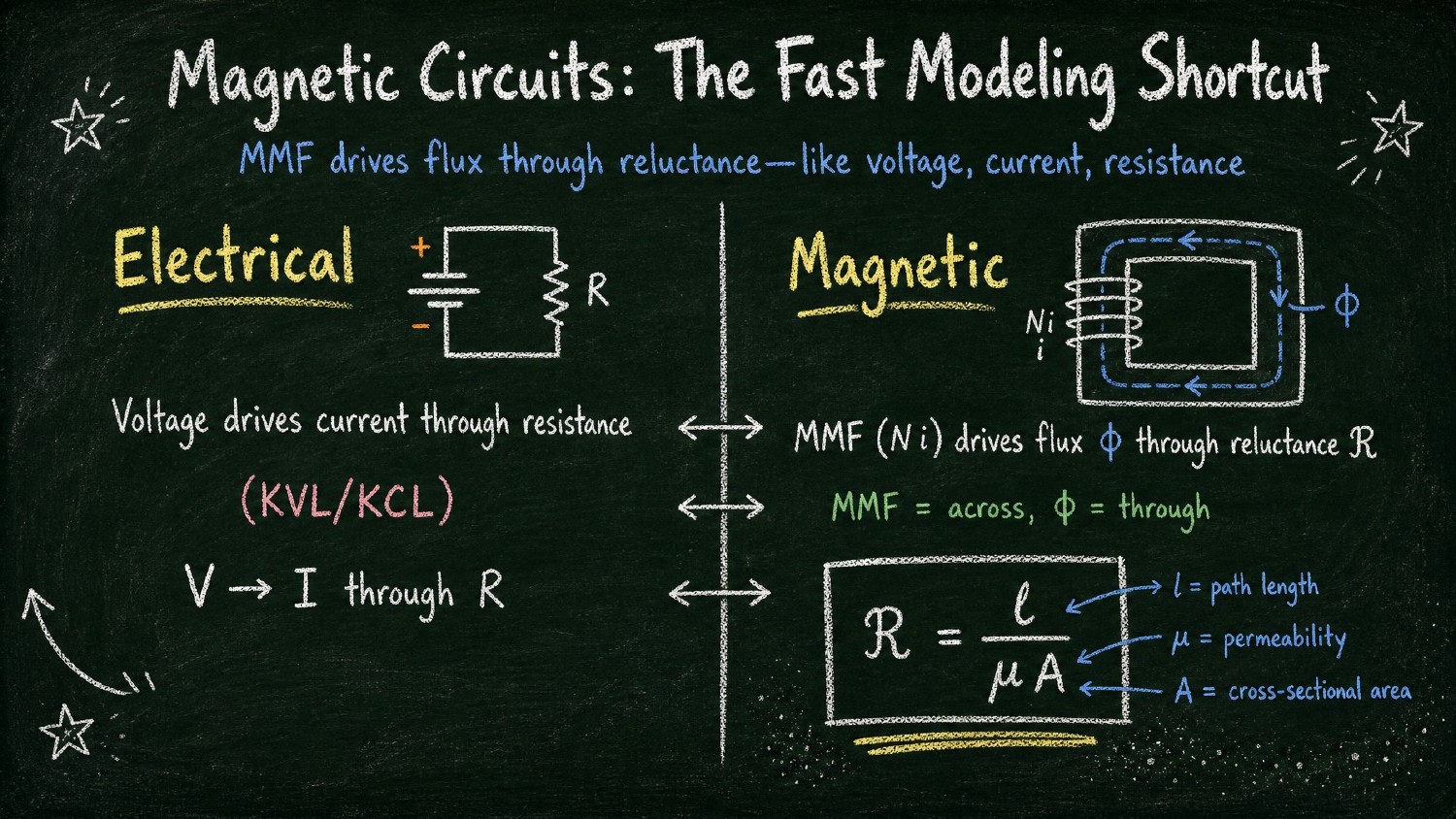
Simplifies field problems into lumped models.
Maps V-I-R to MMF-flux-reluctance.
Reluctance sets flux for a given MMF.
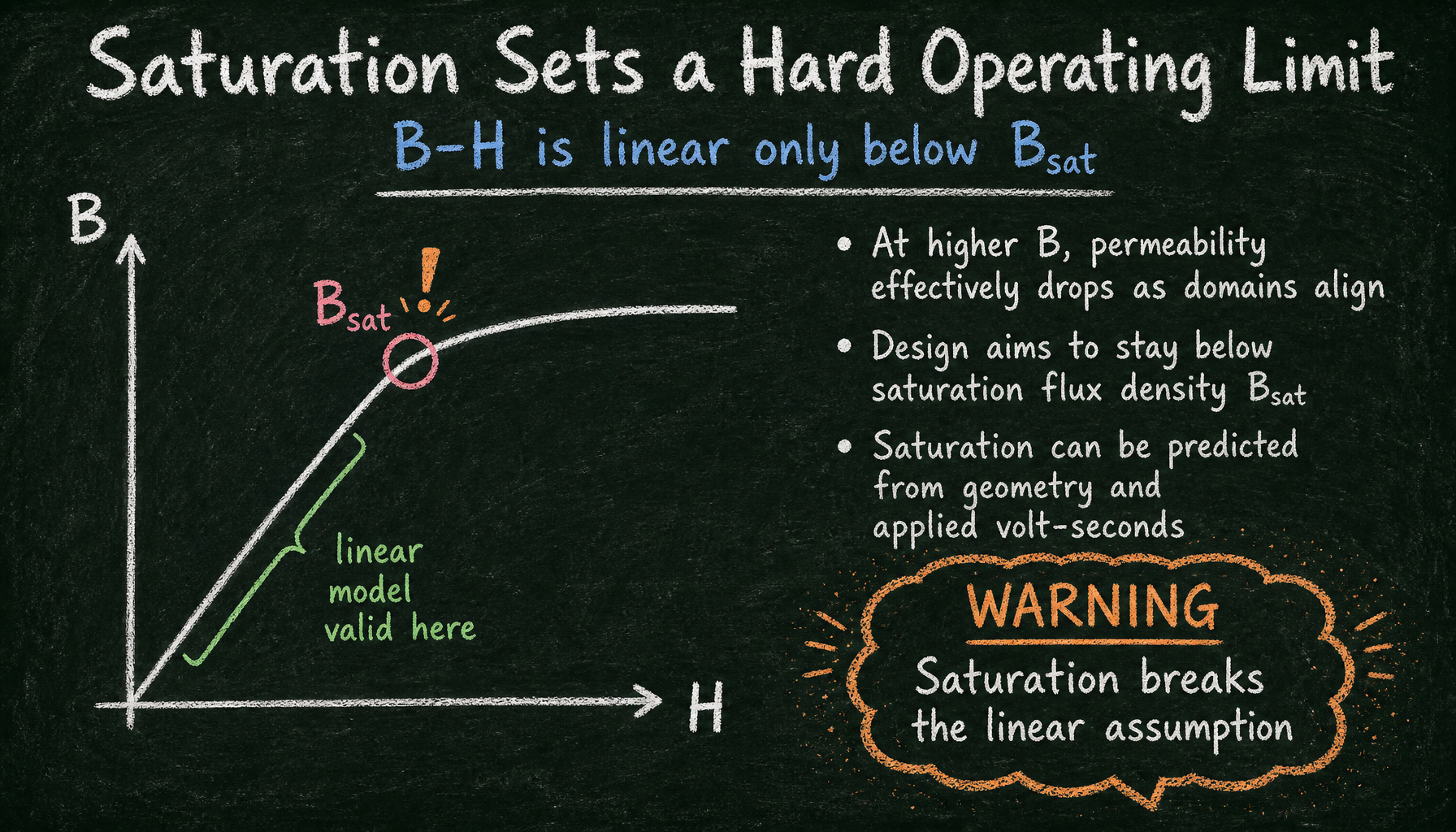
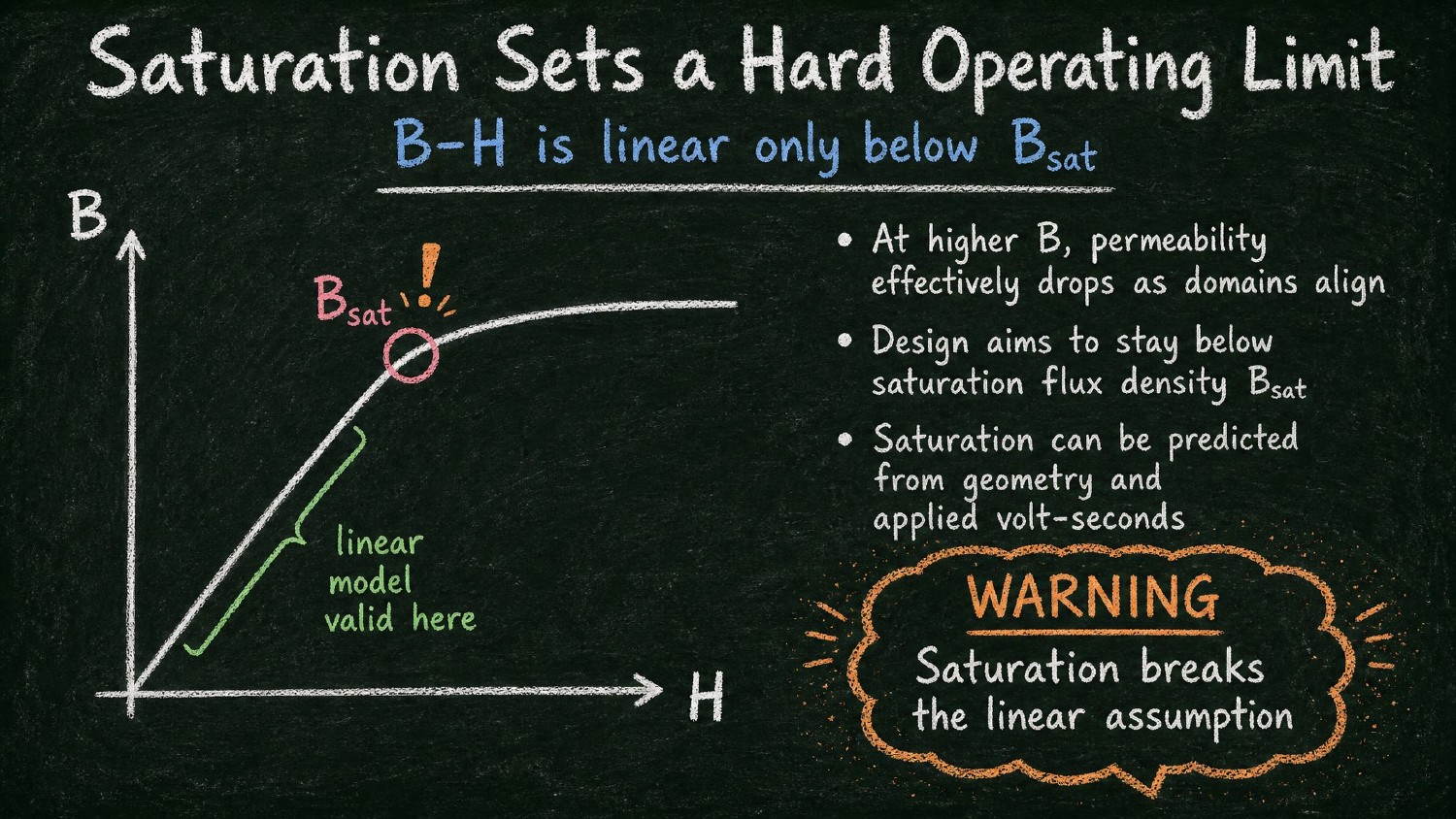
B equals µH only at low flux density.
Beyond Bsat, permeability drops sharply.
Use model to estimate current at saturation.
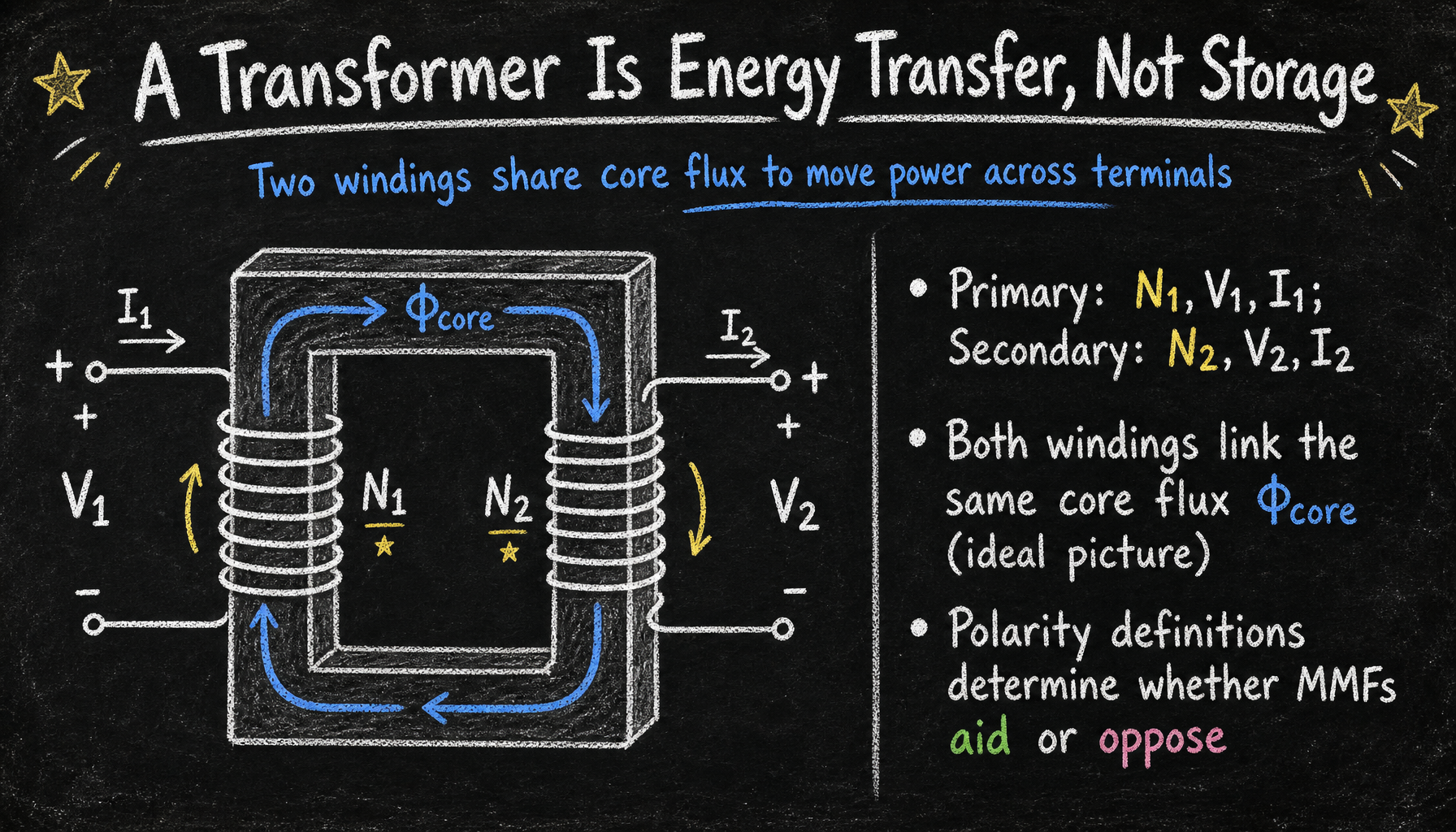
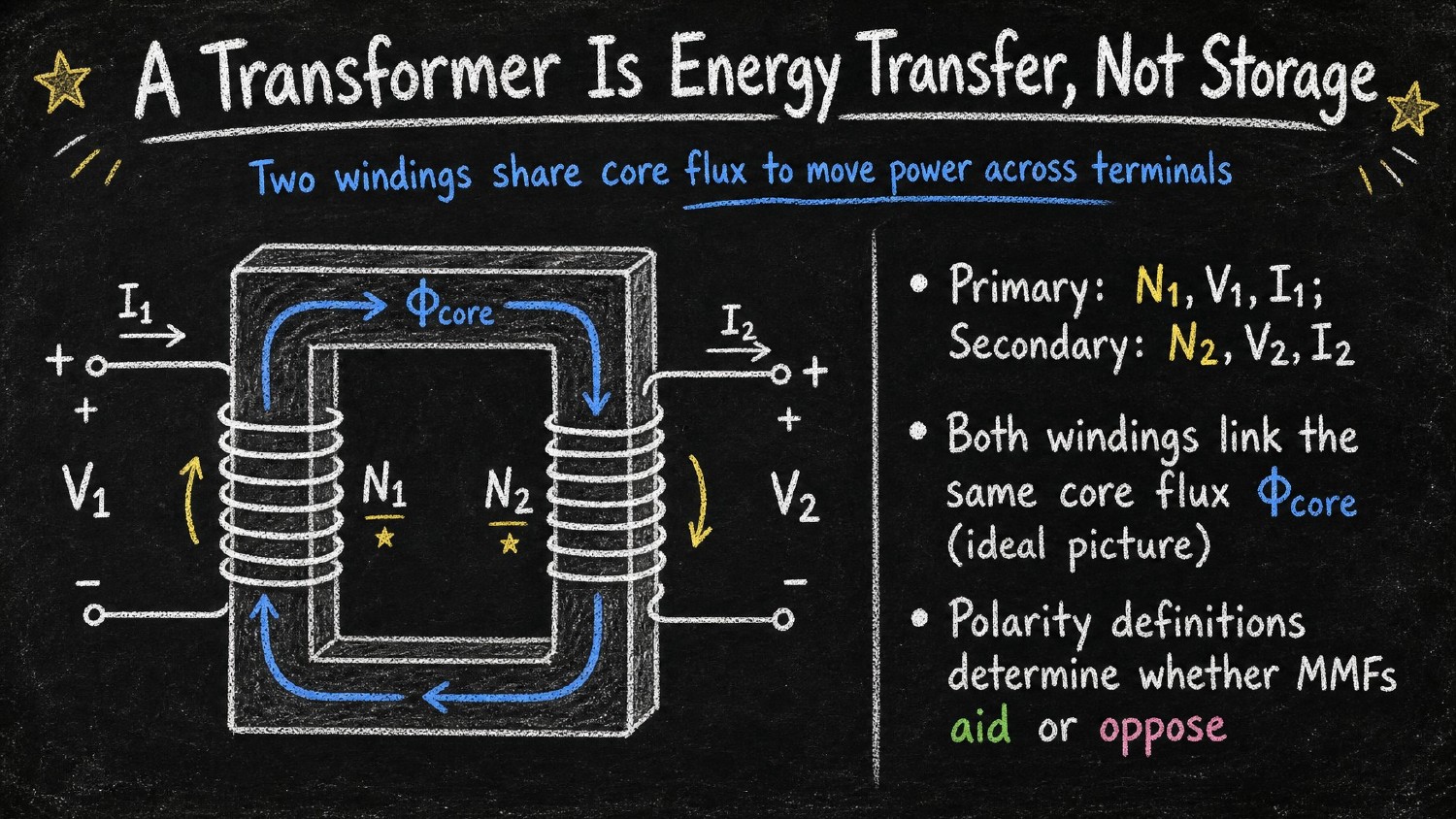
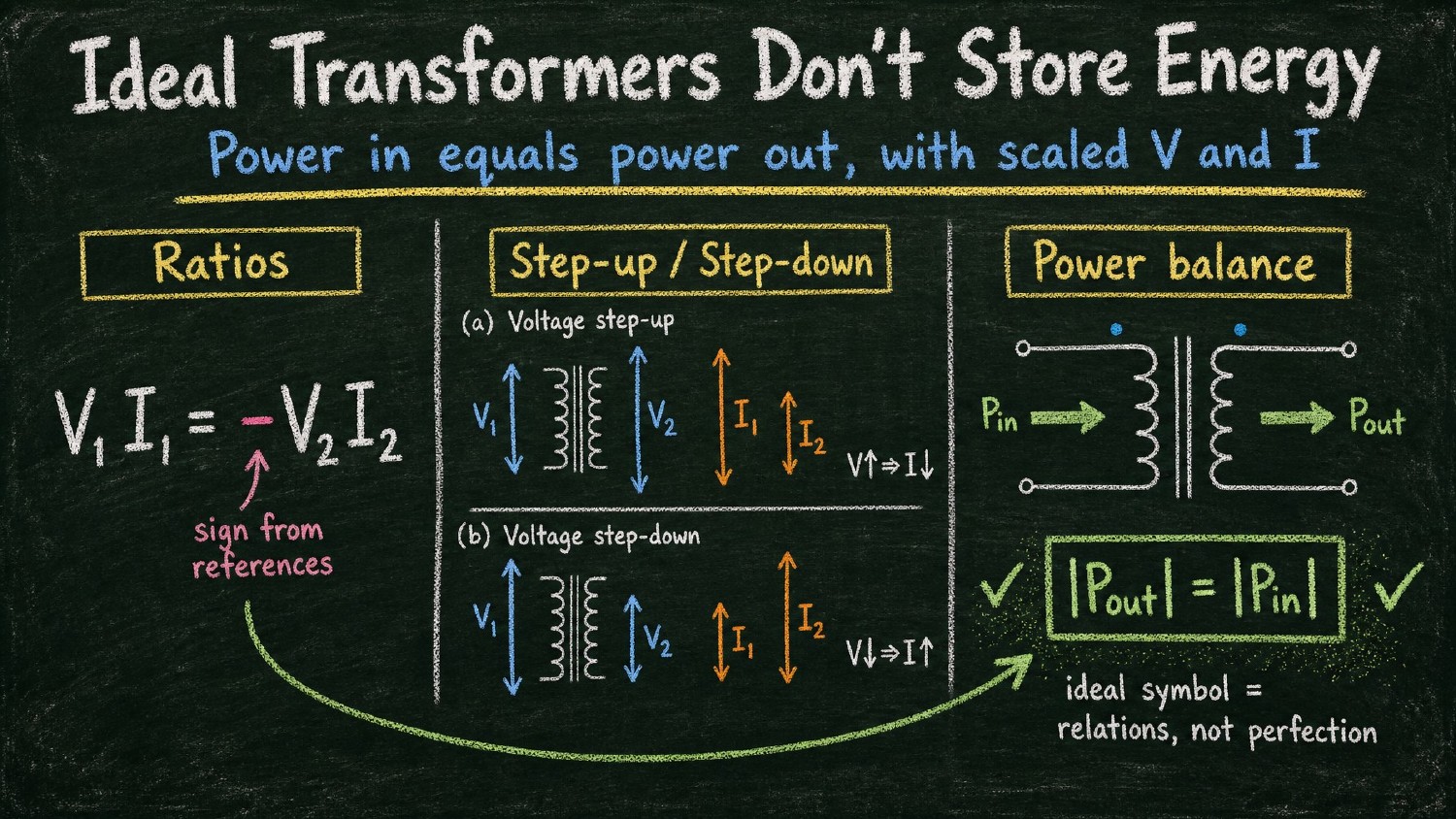
Transfers energy via shared mutual flux.
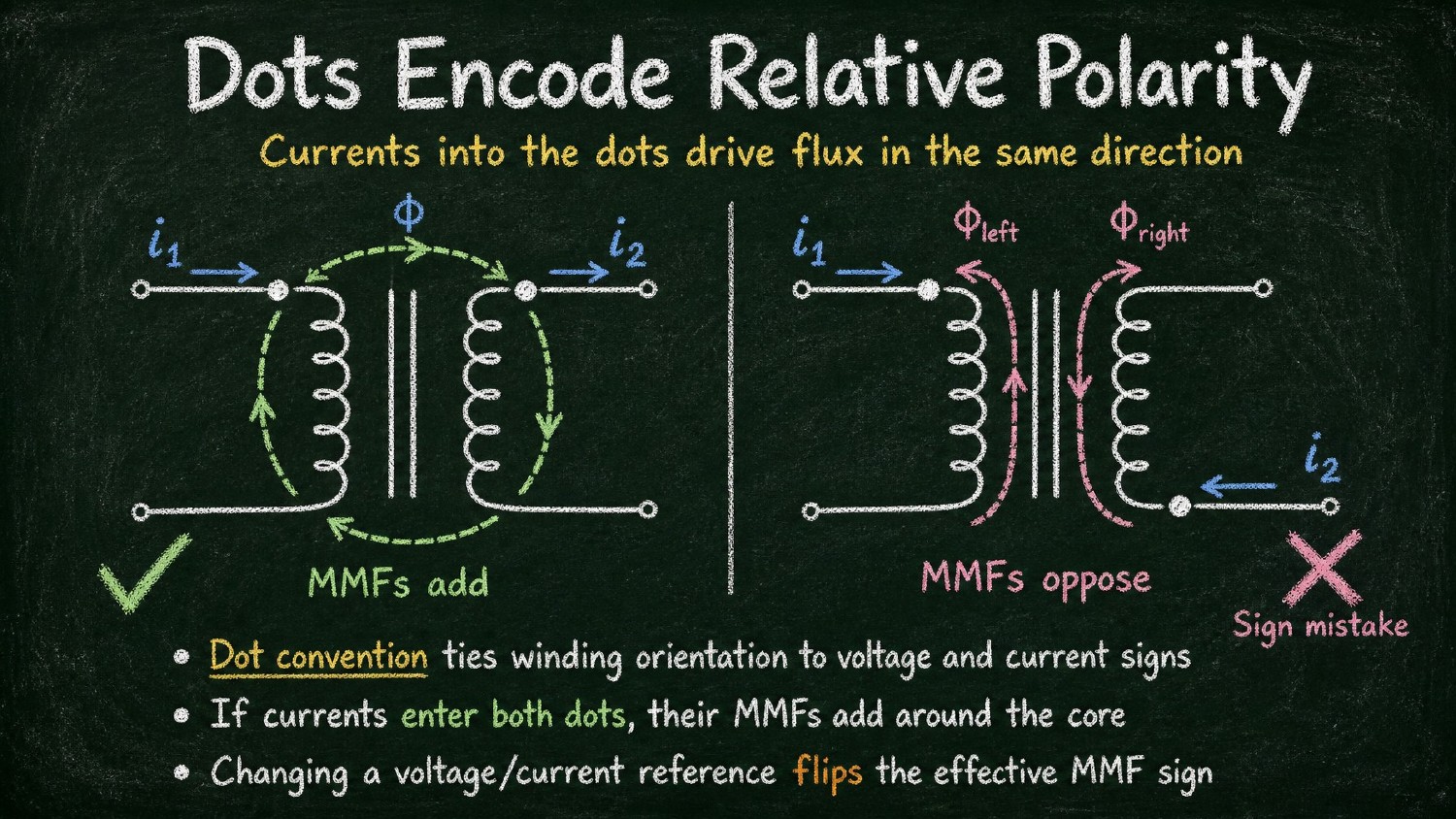
Primary and secondary MMFs drive core flux.
Currents into dots add flux direction.
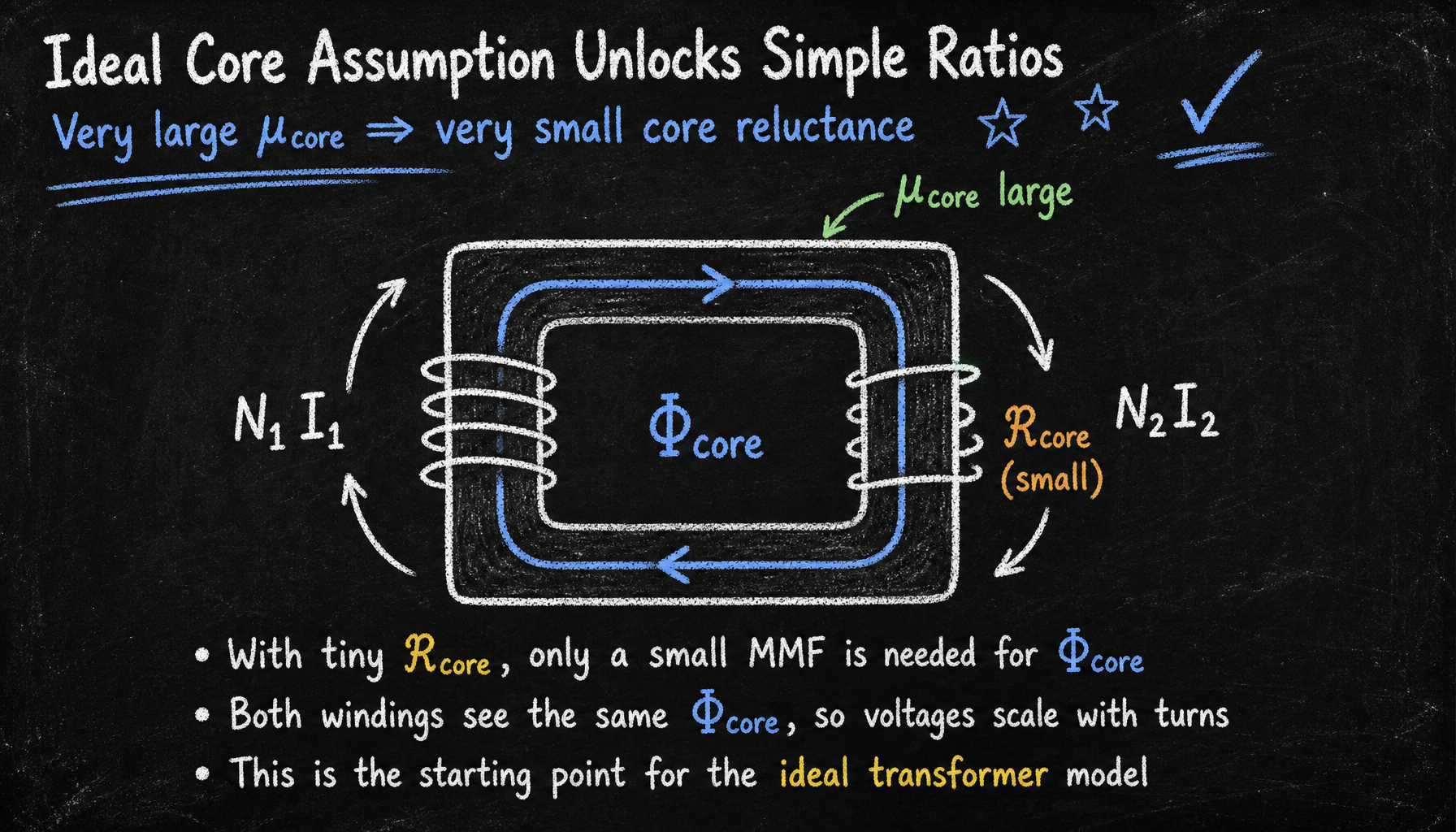
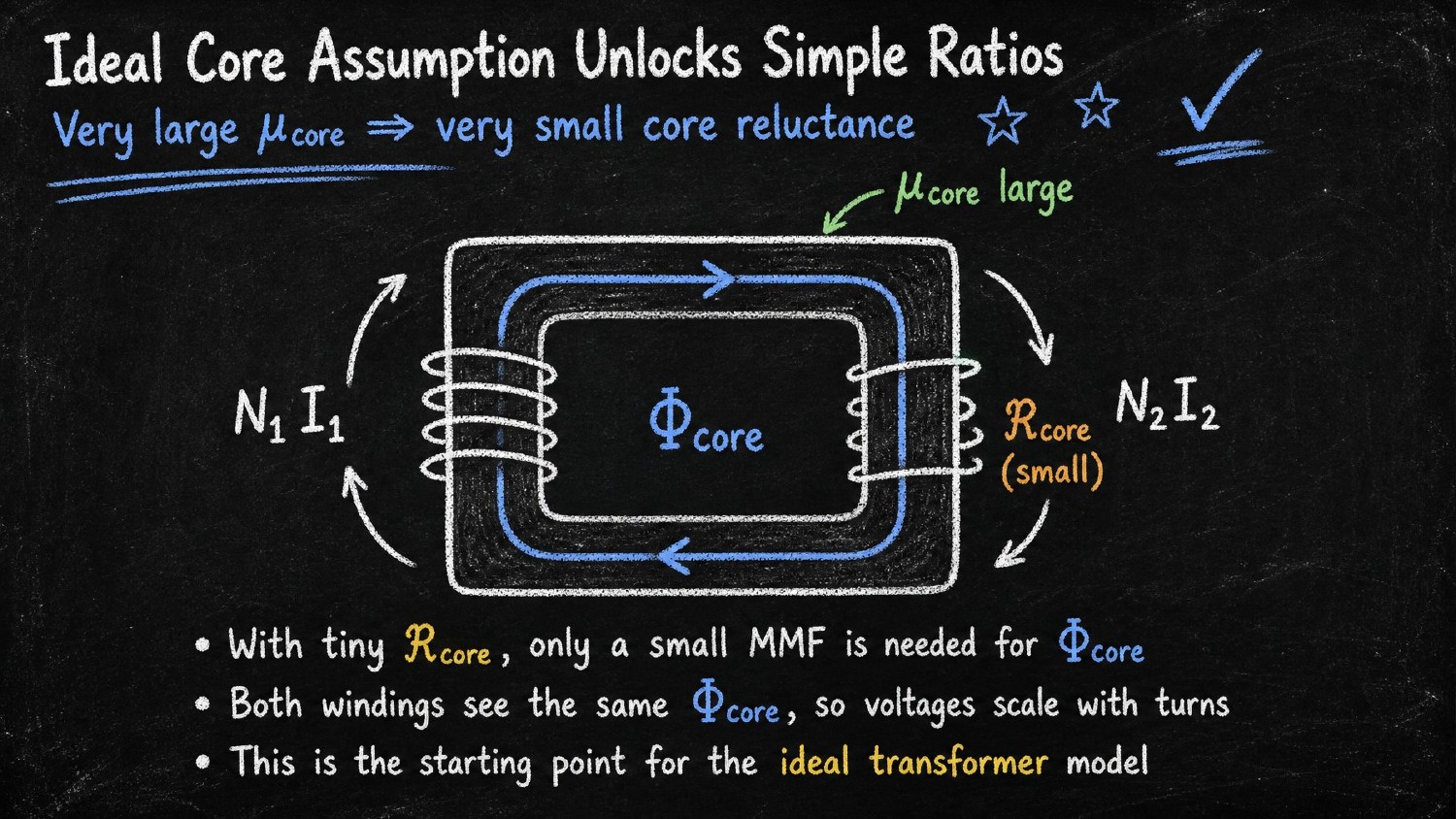
Large µ makes core reluctance nearly zero.
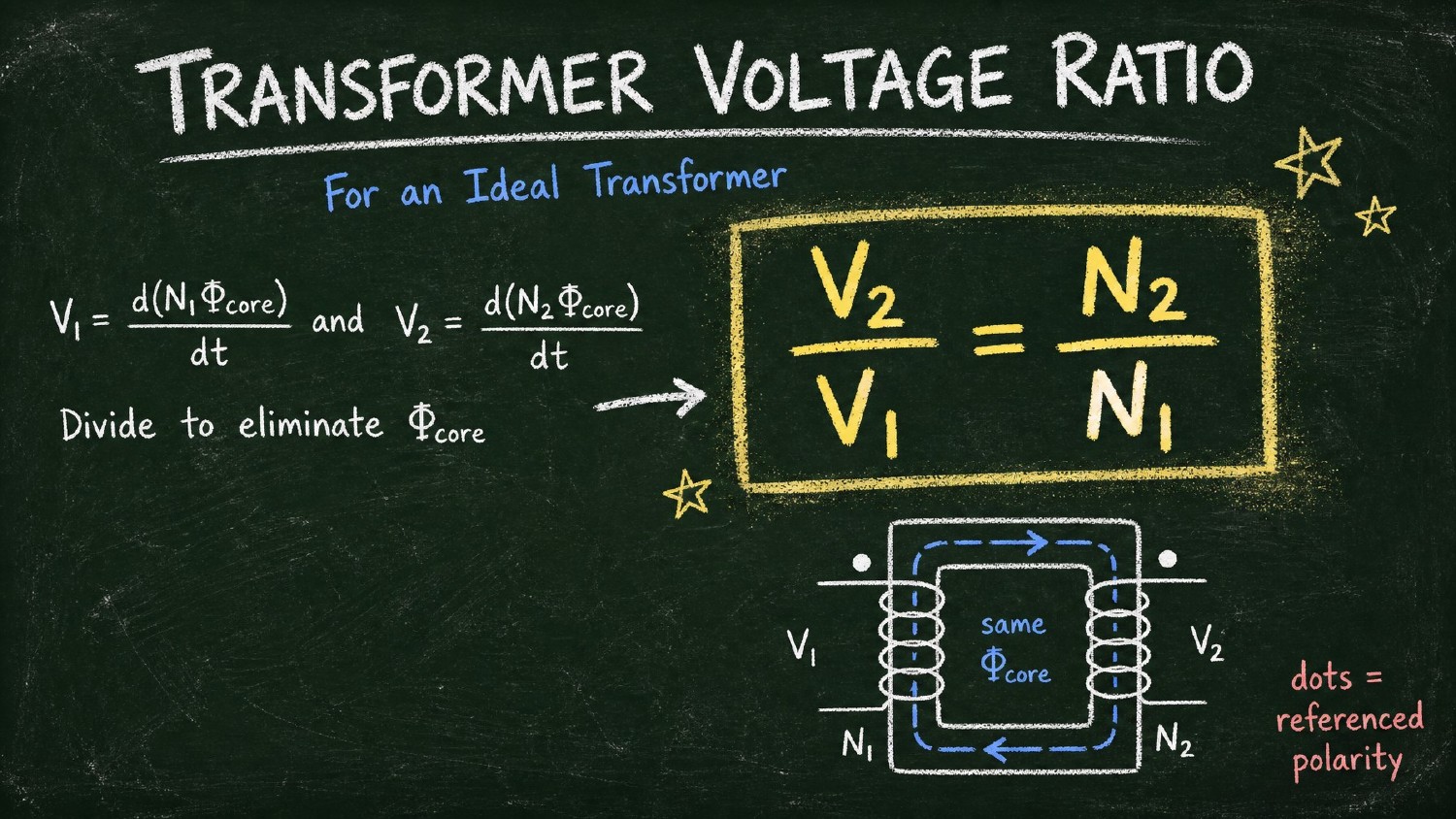
Voltages scale with turns ratio N2/N1.
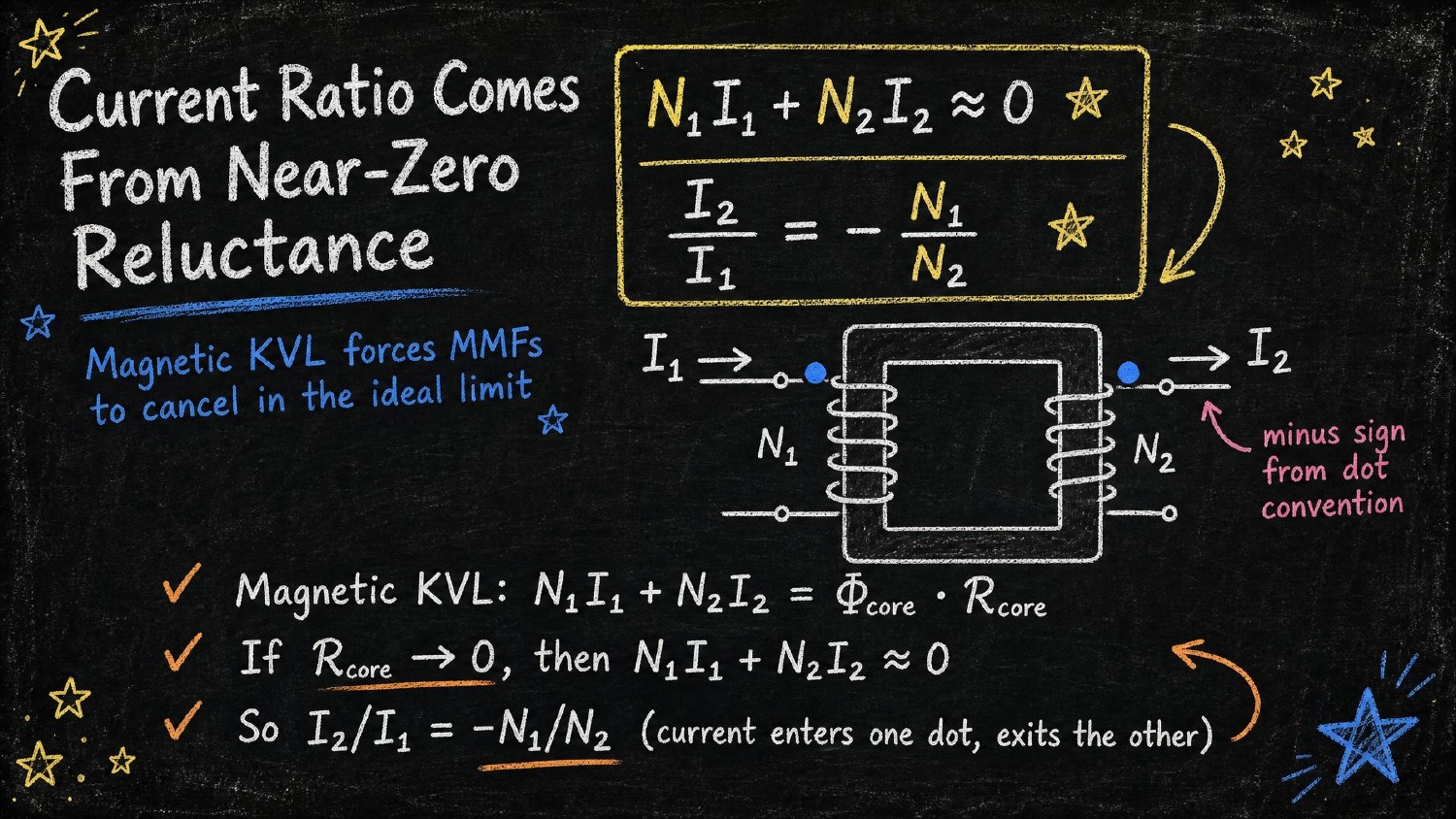
Currents scale inversely with turns ratio.
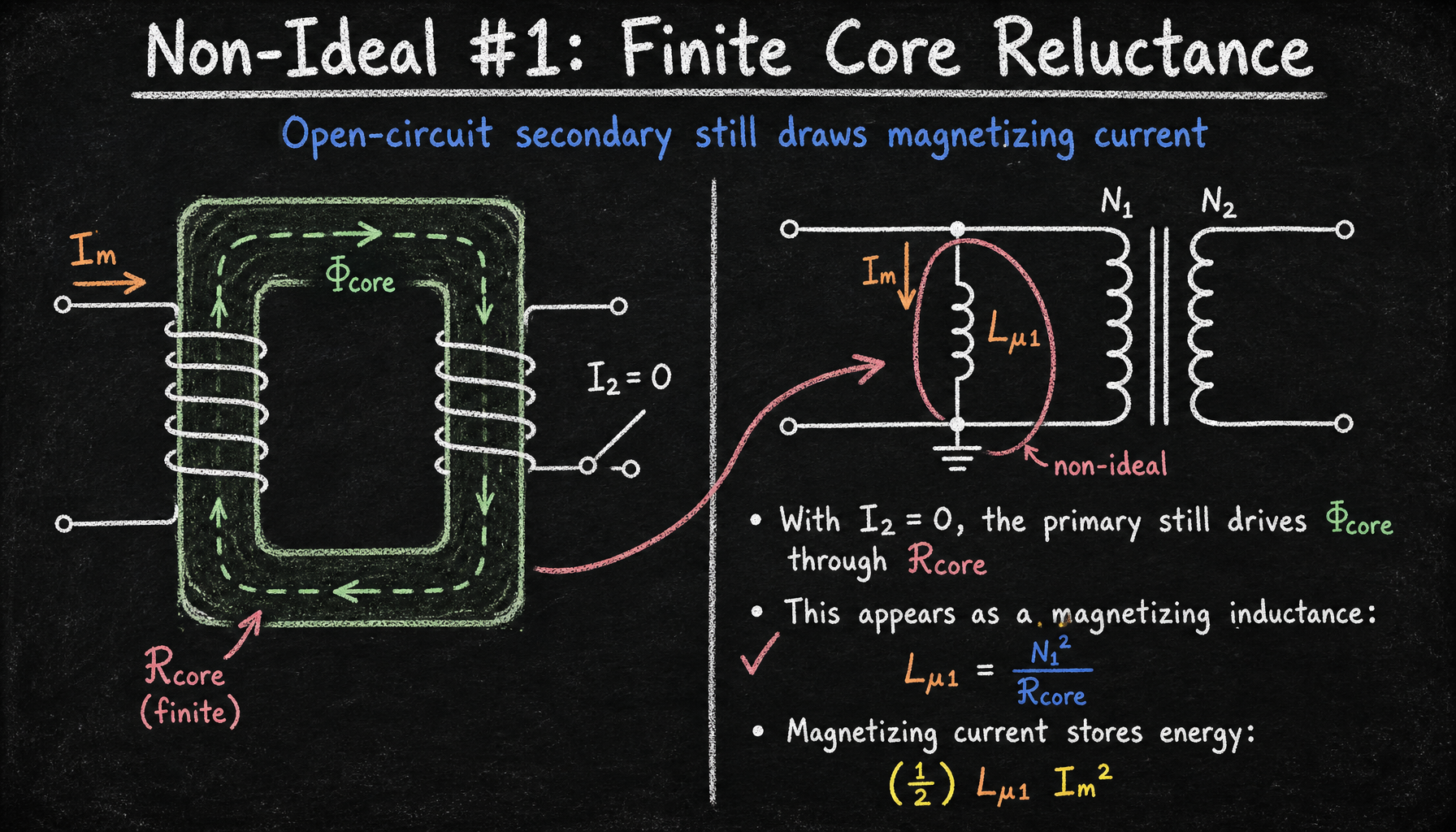
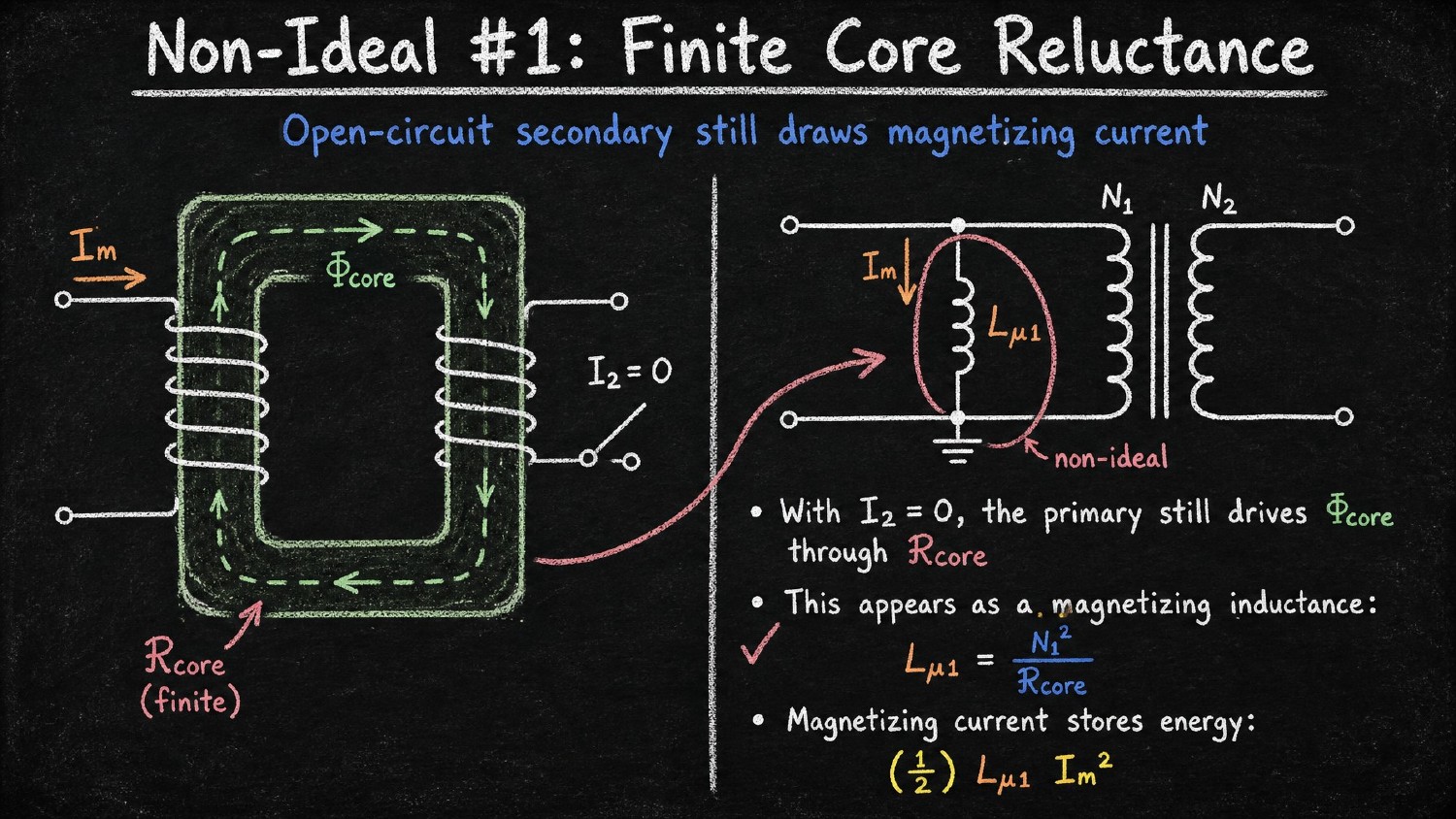
Nonzero reluctance breaks ideal current scaling.
Open secondary still draws primary current.
Lm models flux needed to magnetize the core.
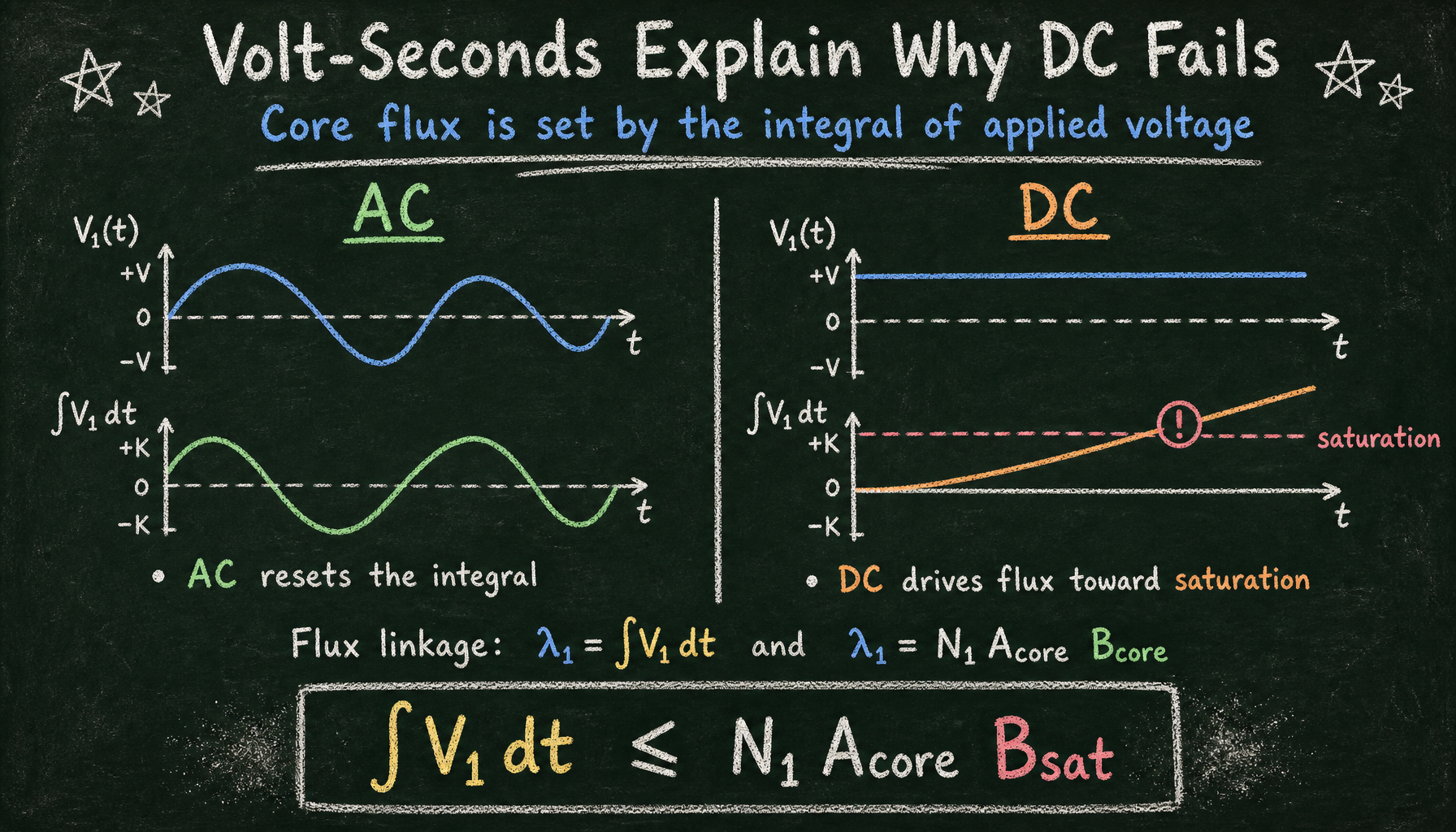
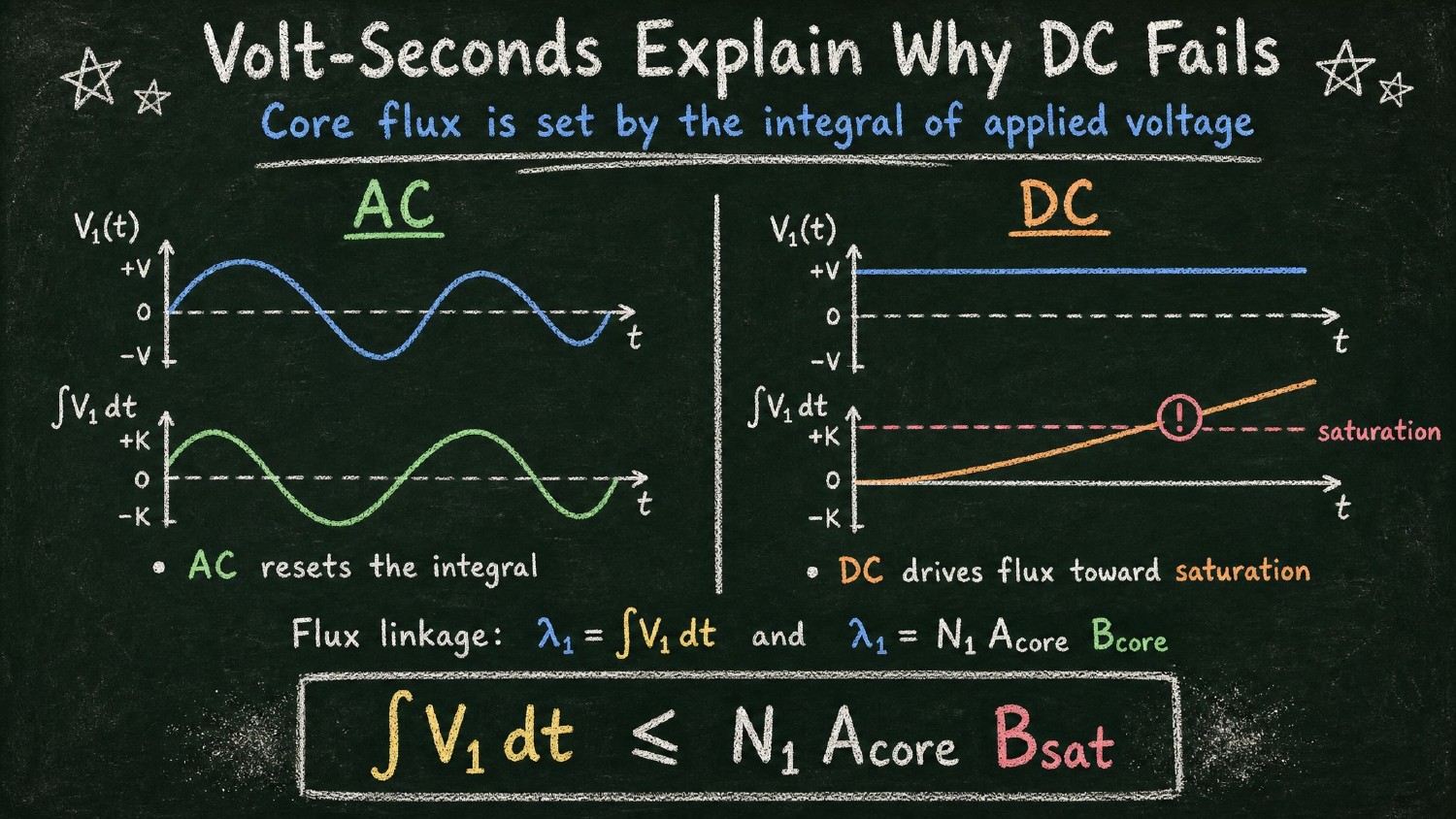
Applied voltage sets flux change over time.
Constant V makes magnetizing current ramp up.
DC drives core toward saturation and overheating.
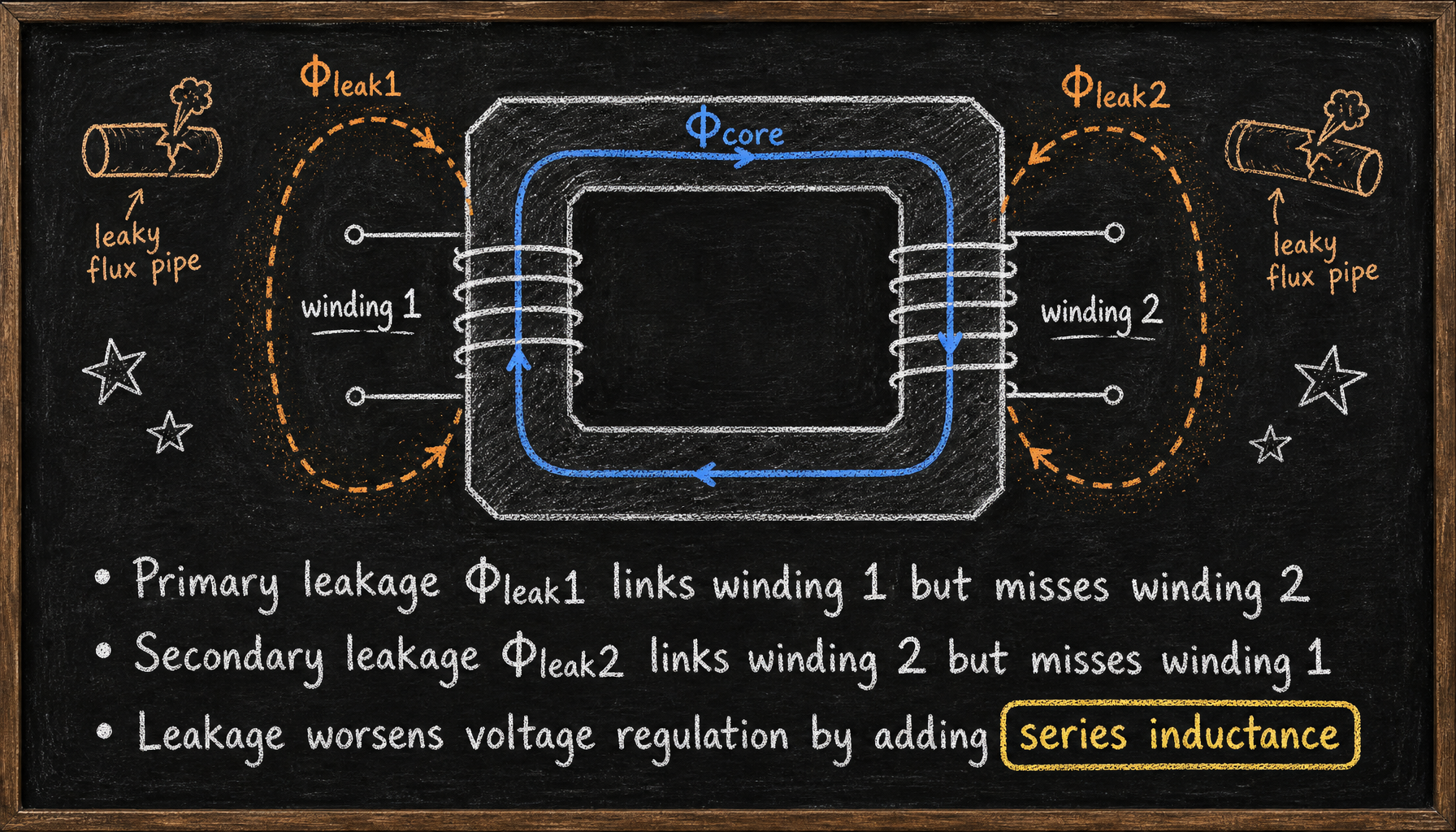
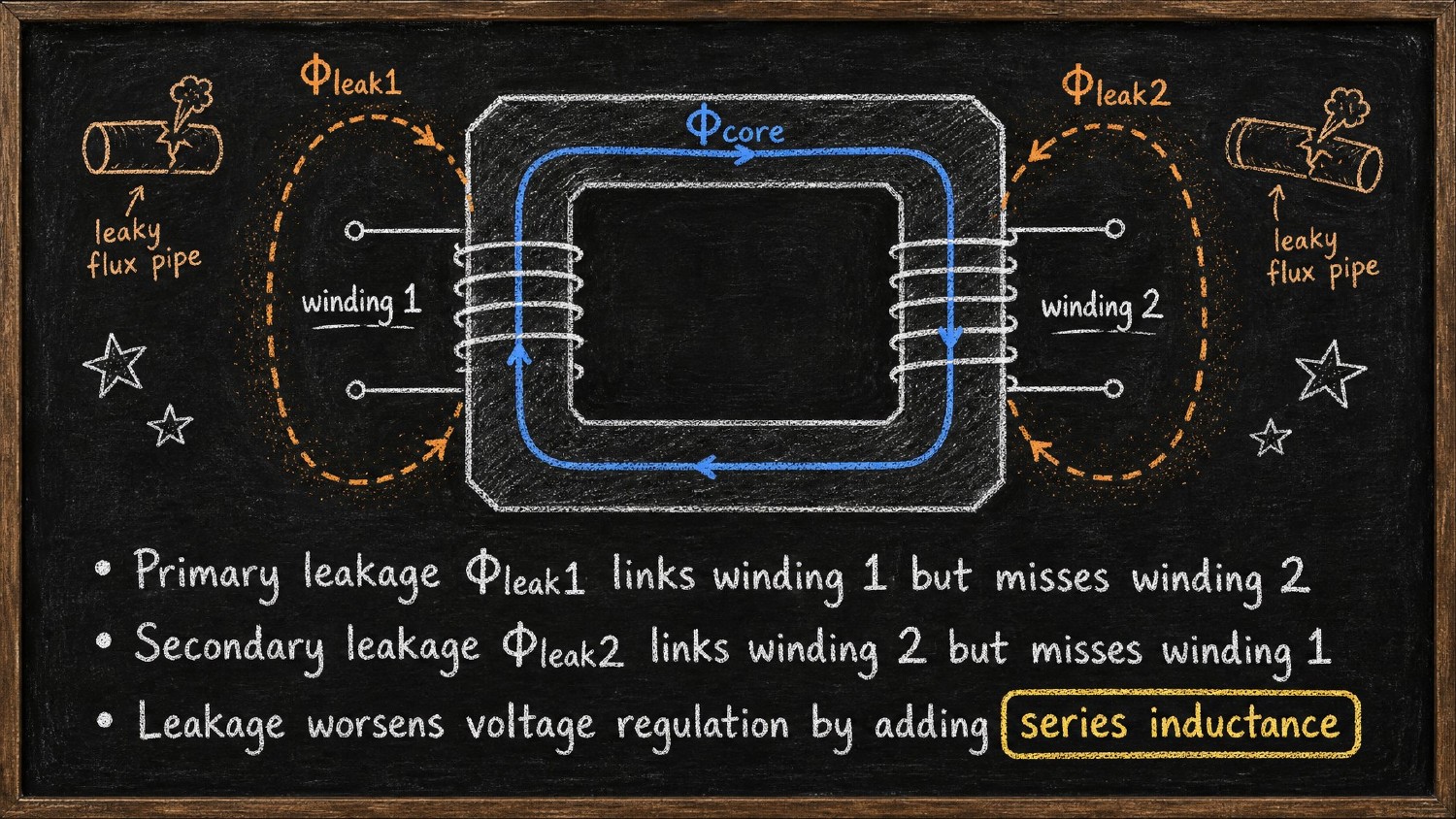
Some flux does not link both windings.
Flux links primary only, acting as series L.
Flux links secondary only, adding series L.
1. Re-derive and ; connect to .
2. Build magnetic circuit for two-winding transformer; apply dot convention.
3. Derive ideal relations from shared and .
4. Add finite ⇒ define ; interpret magnetizing current and stored energy.
5. Use to explain volt-second limit and saturation.
6. Add leakage flux paths ⇒ leakage reluctances ⇒ leakage inductances; assemble full equivalent circuit and interpret which ideal relations are degraded.
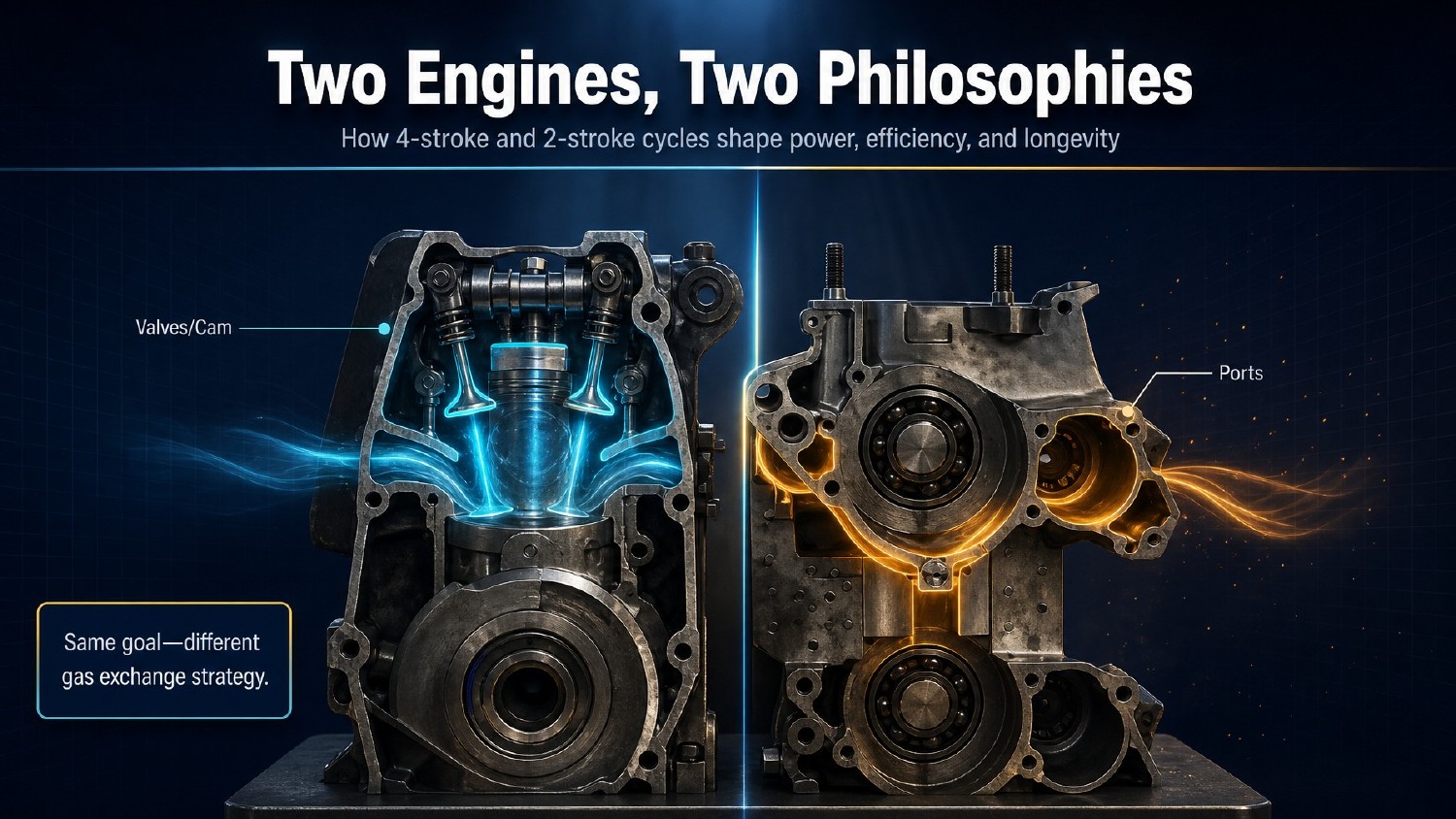
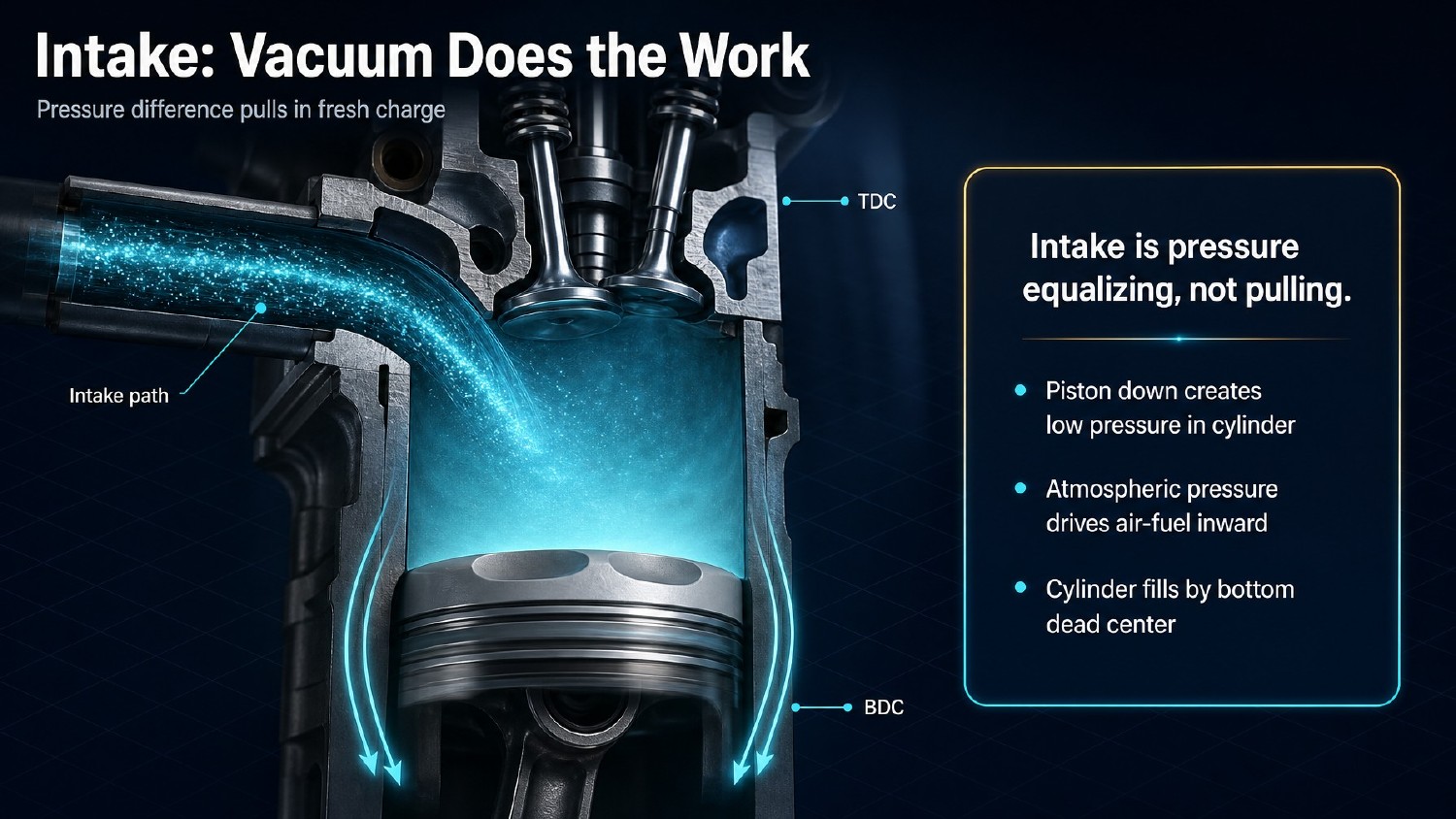
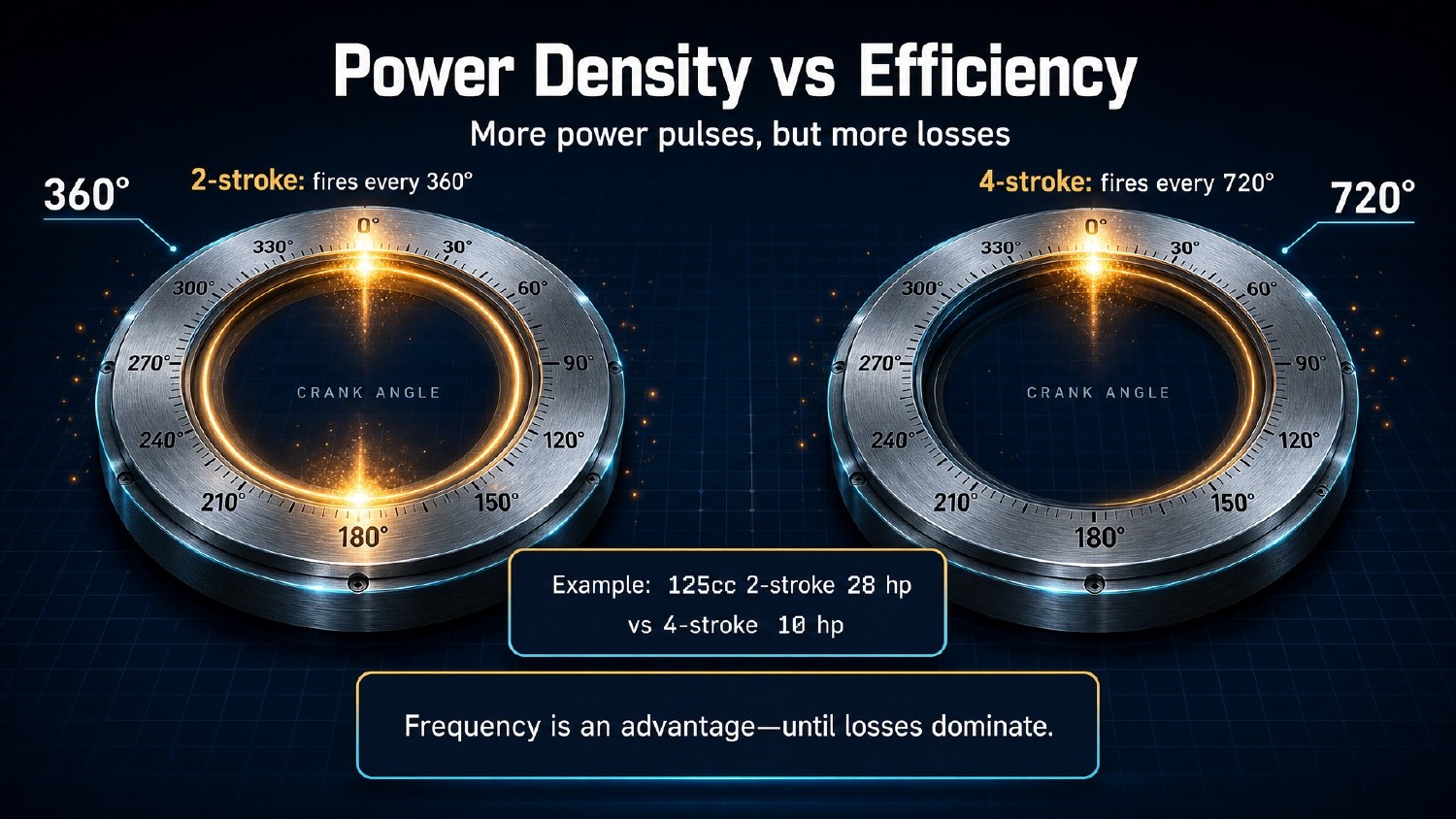
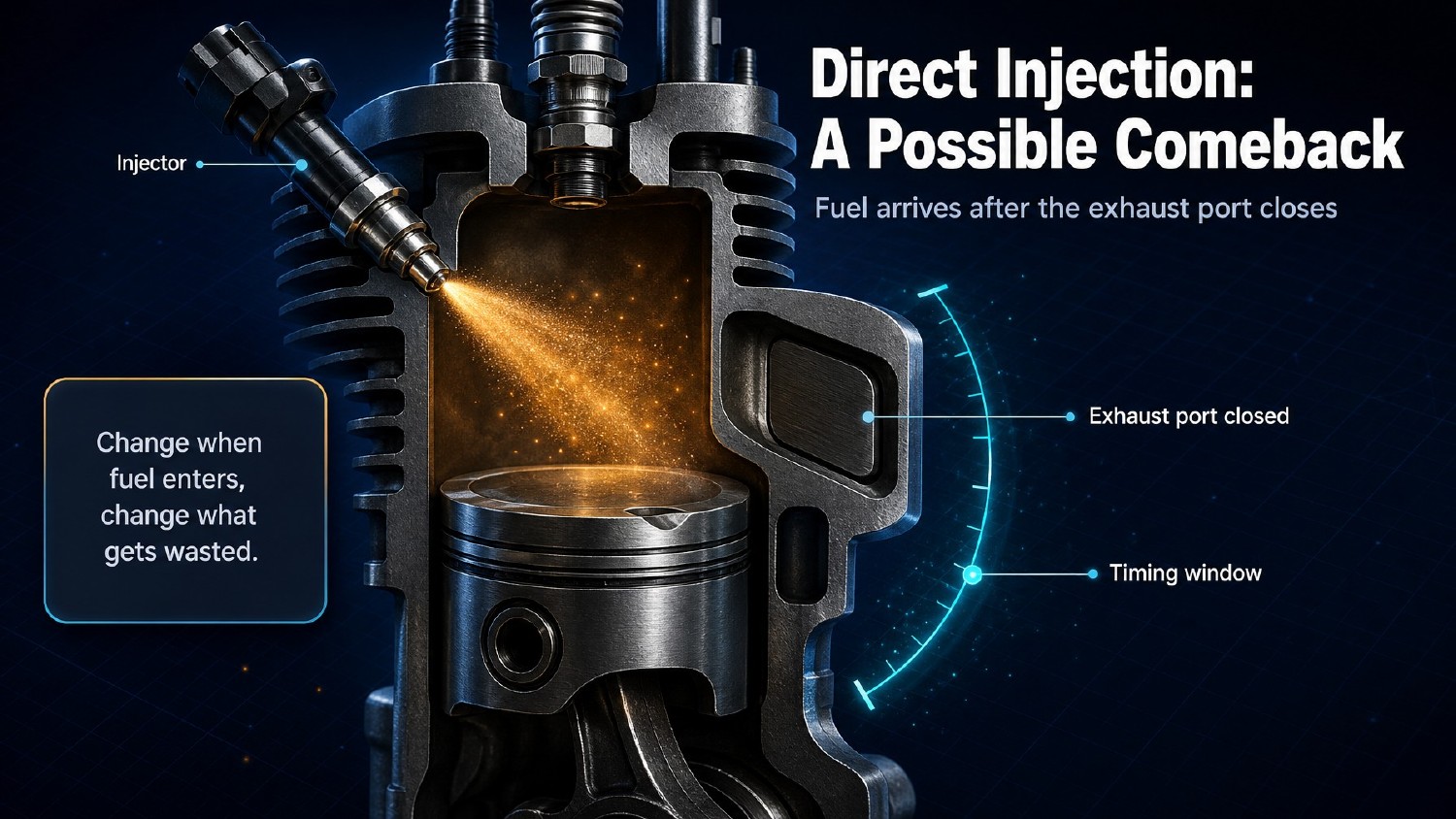
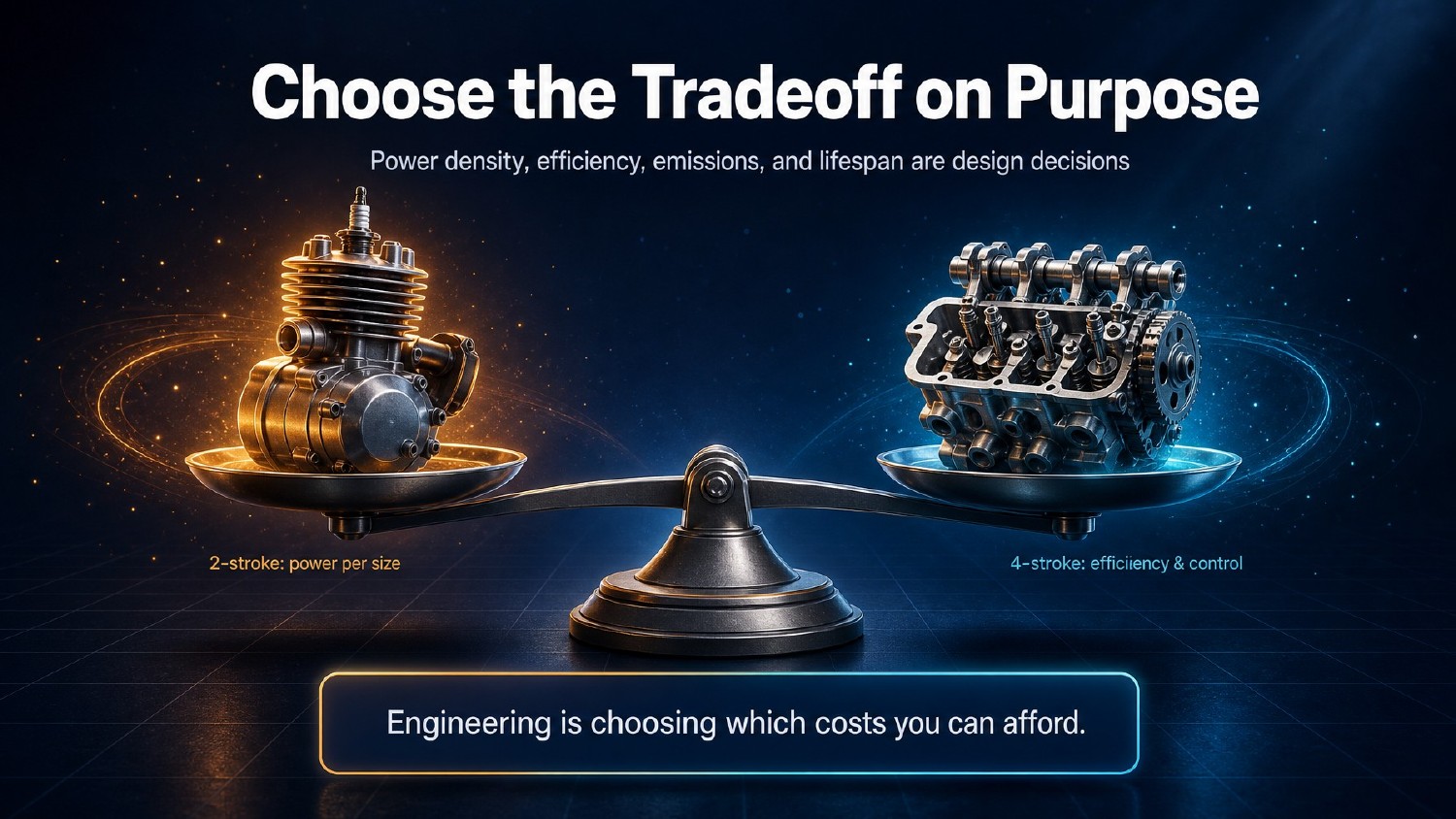
The text explains, step by step, how 4-stroke and 2-stroke internal combustion engines complete a combustion cycle, then compares their mechanical designs and real-world consequences (power density, efficiency, emissions, reliability, and flexibility). It concludes that 4-strokes prevailed mainly because 2-strokes’ inherent scavenging and lubrication constraints hurt efficiency, emissions, and lifespan—though direct injection could mitigate some issues.
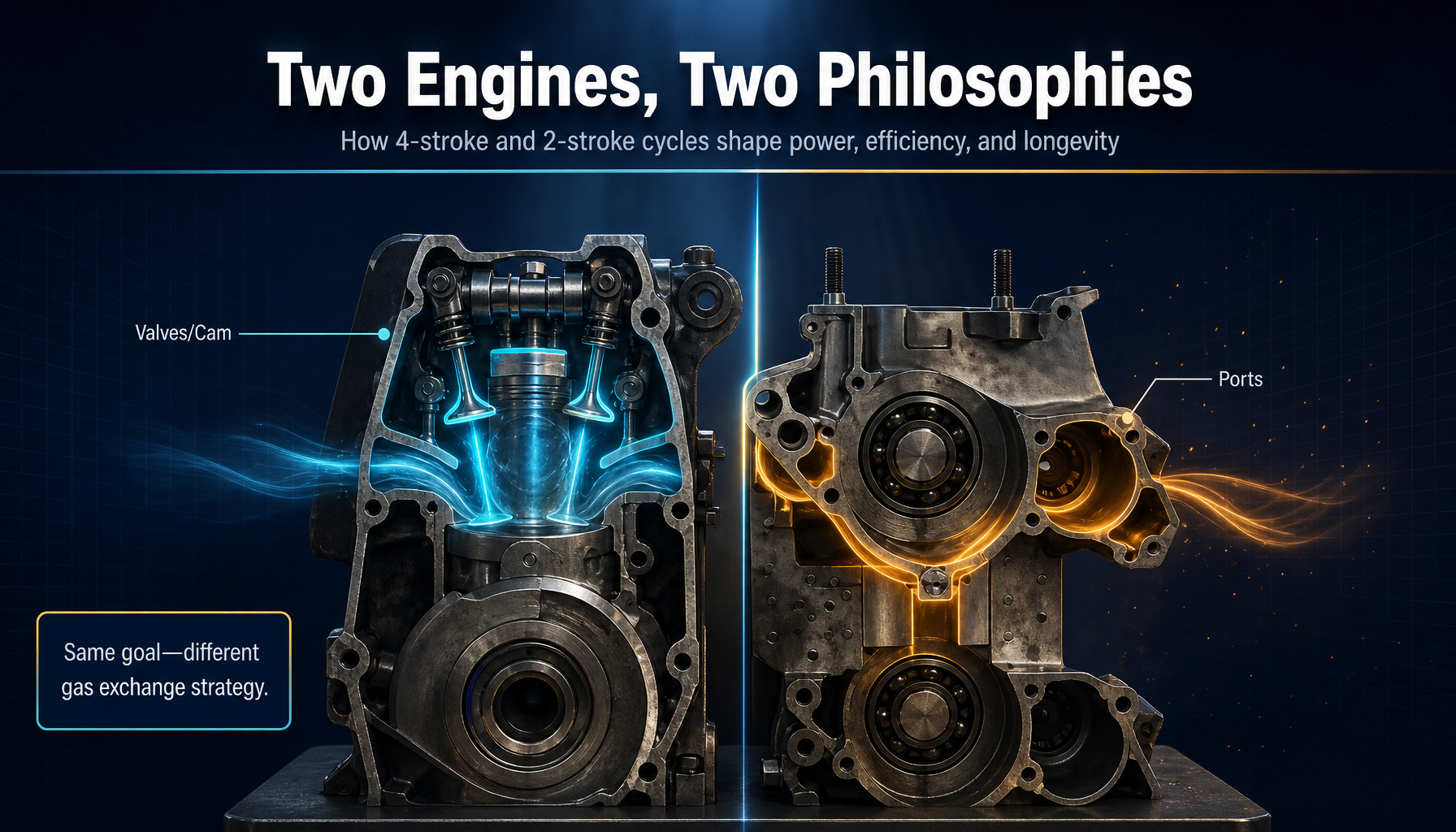
Explains 4-stroke vs 2-stroke cycles
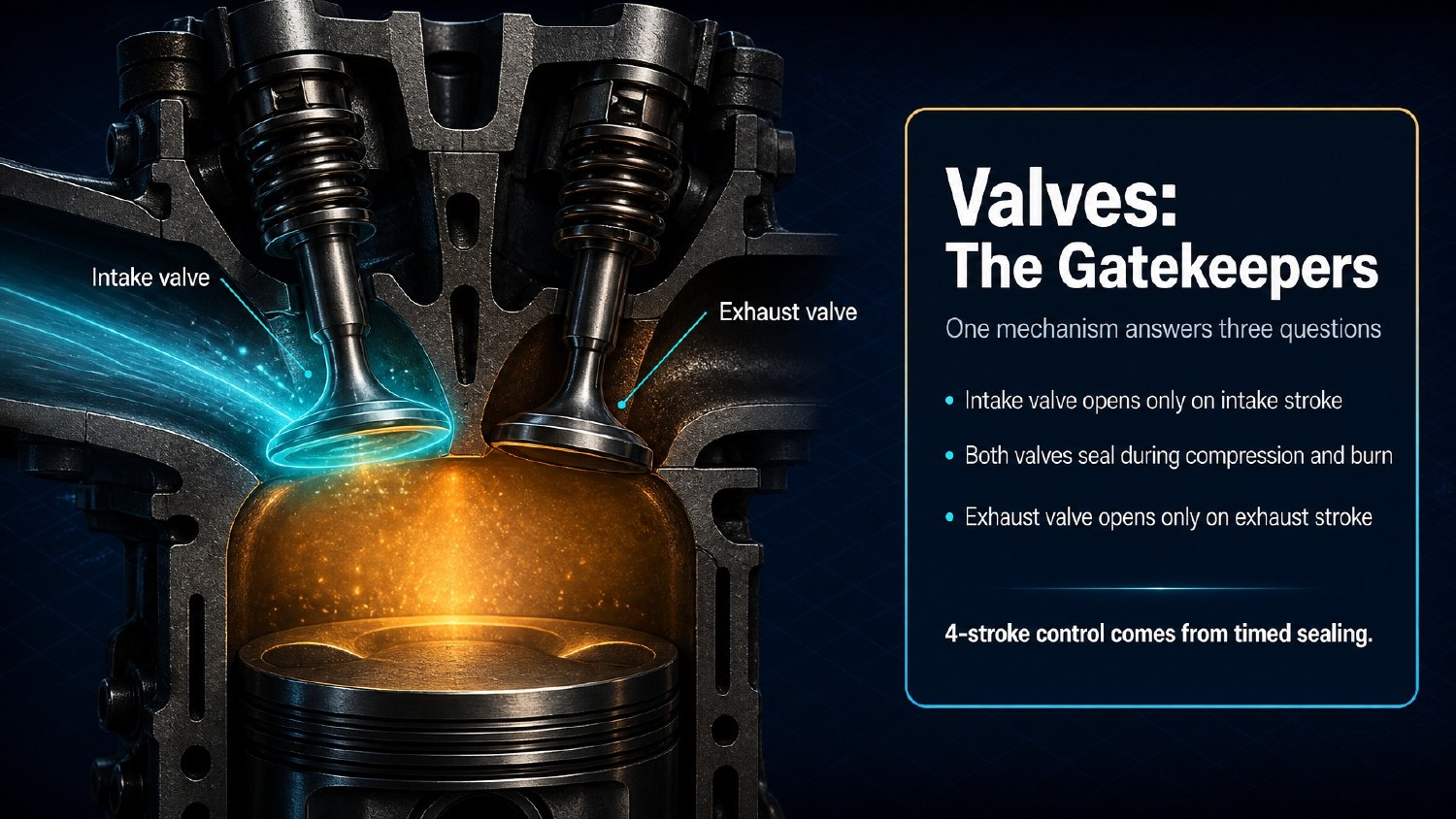
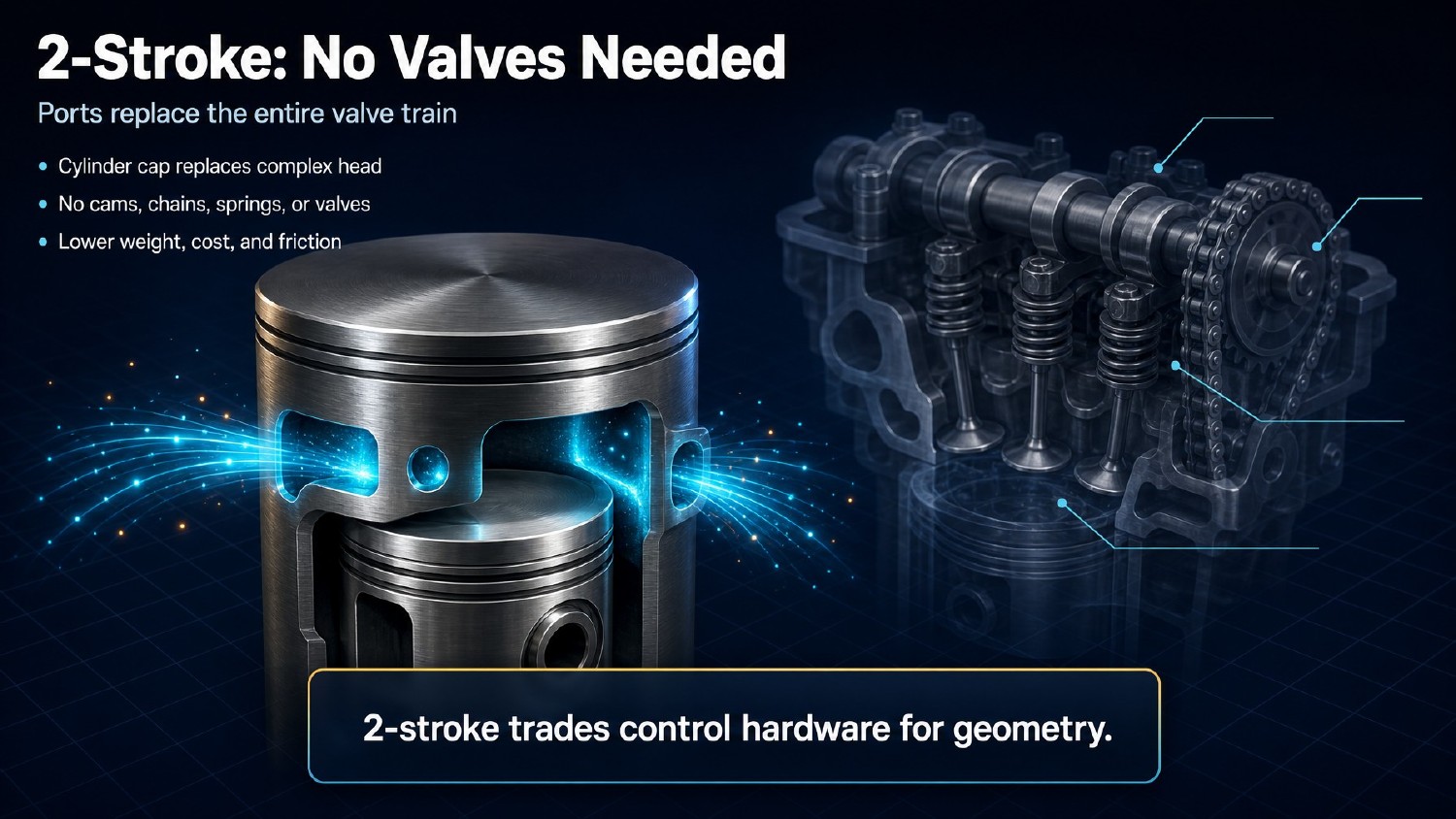
Valves vs ports drive key differences
Trade power, efficiency, emissions, life
2-stroke limits hurt mass adoption
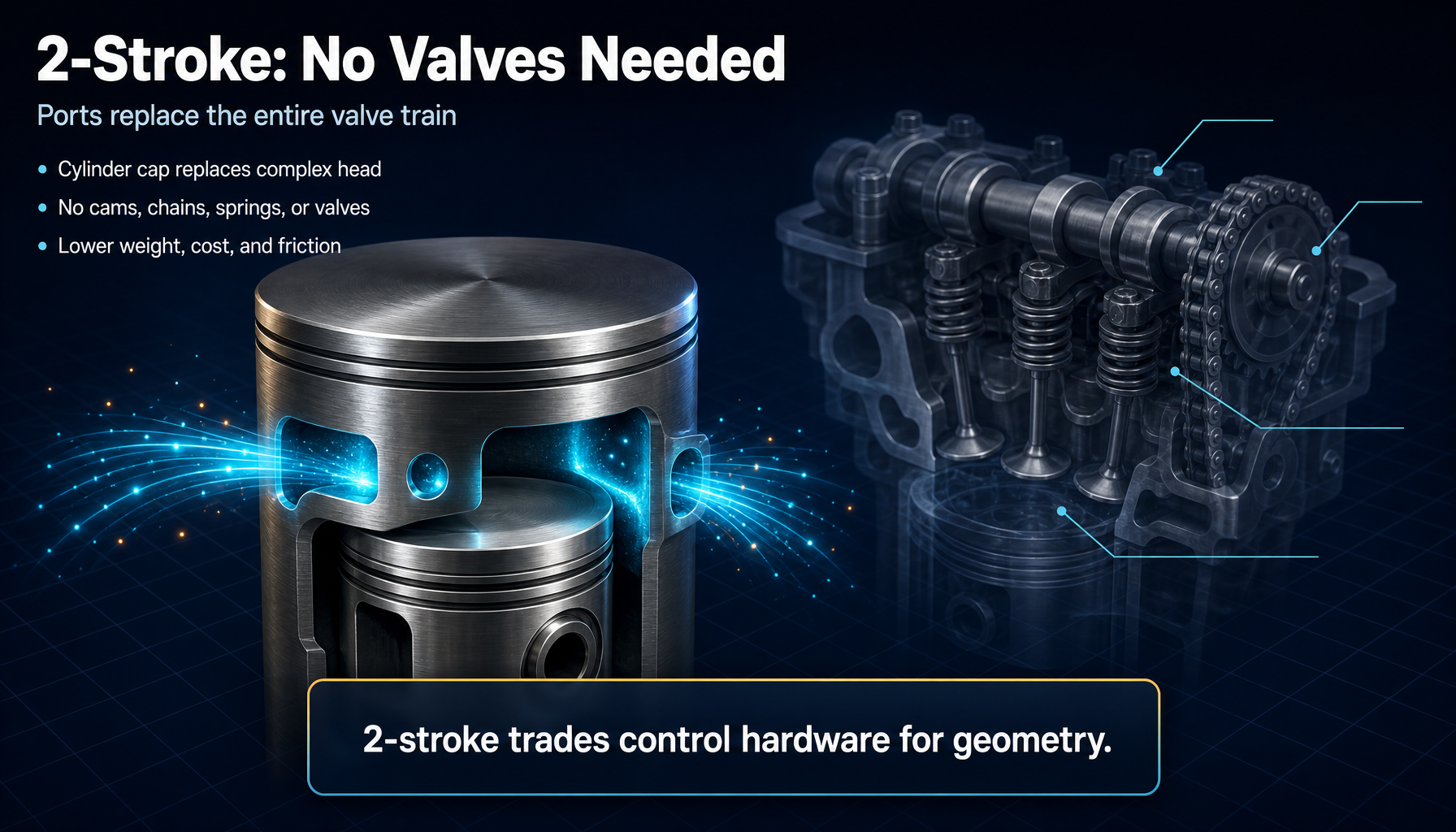
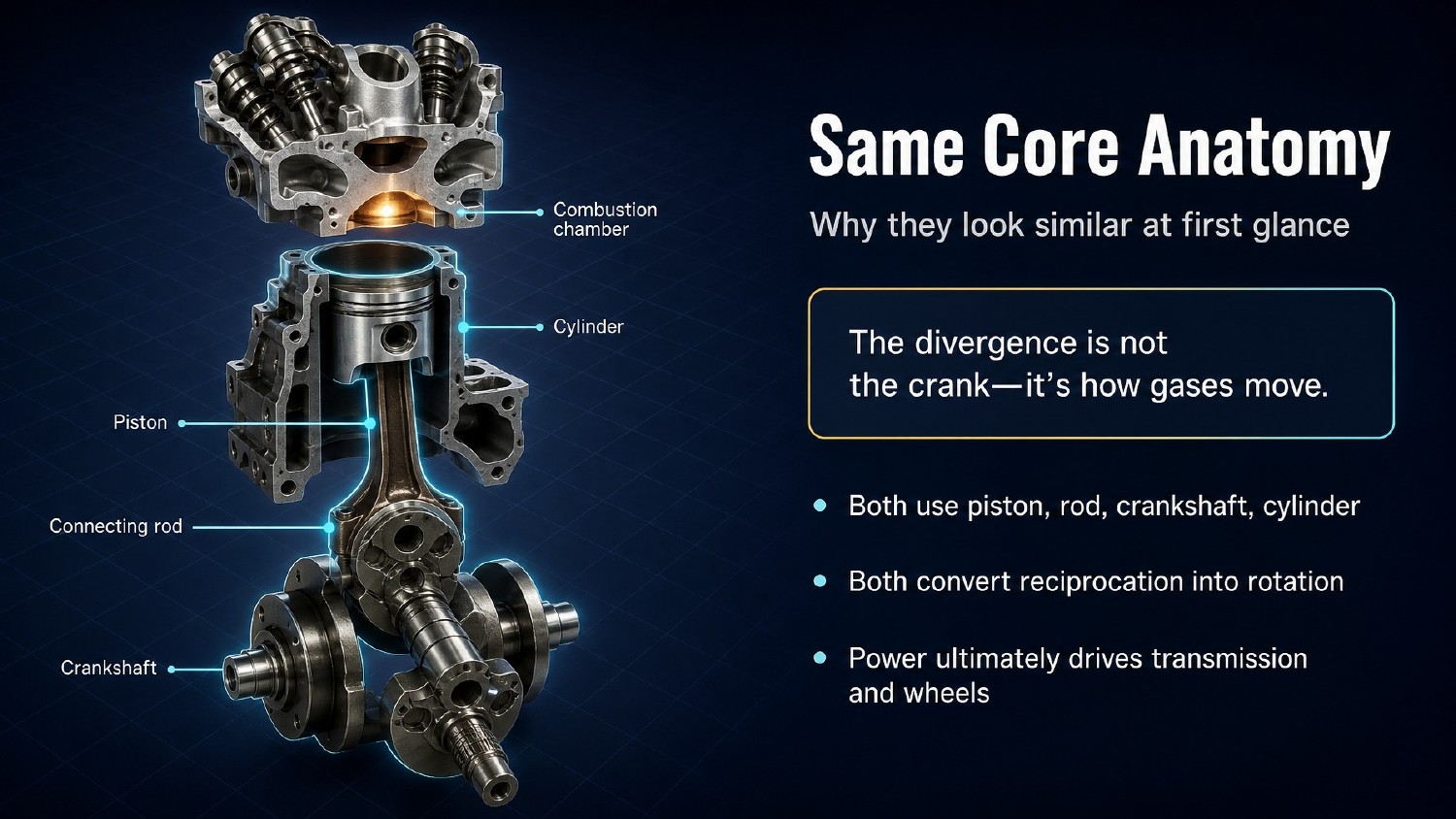
Piston-rod-crank turns motion to torque
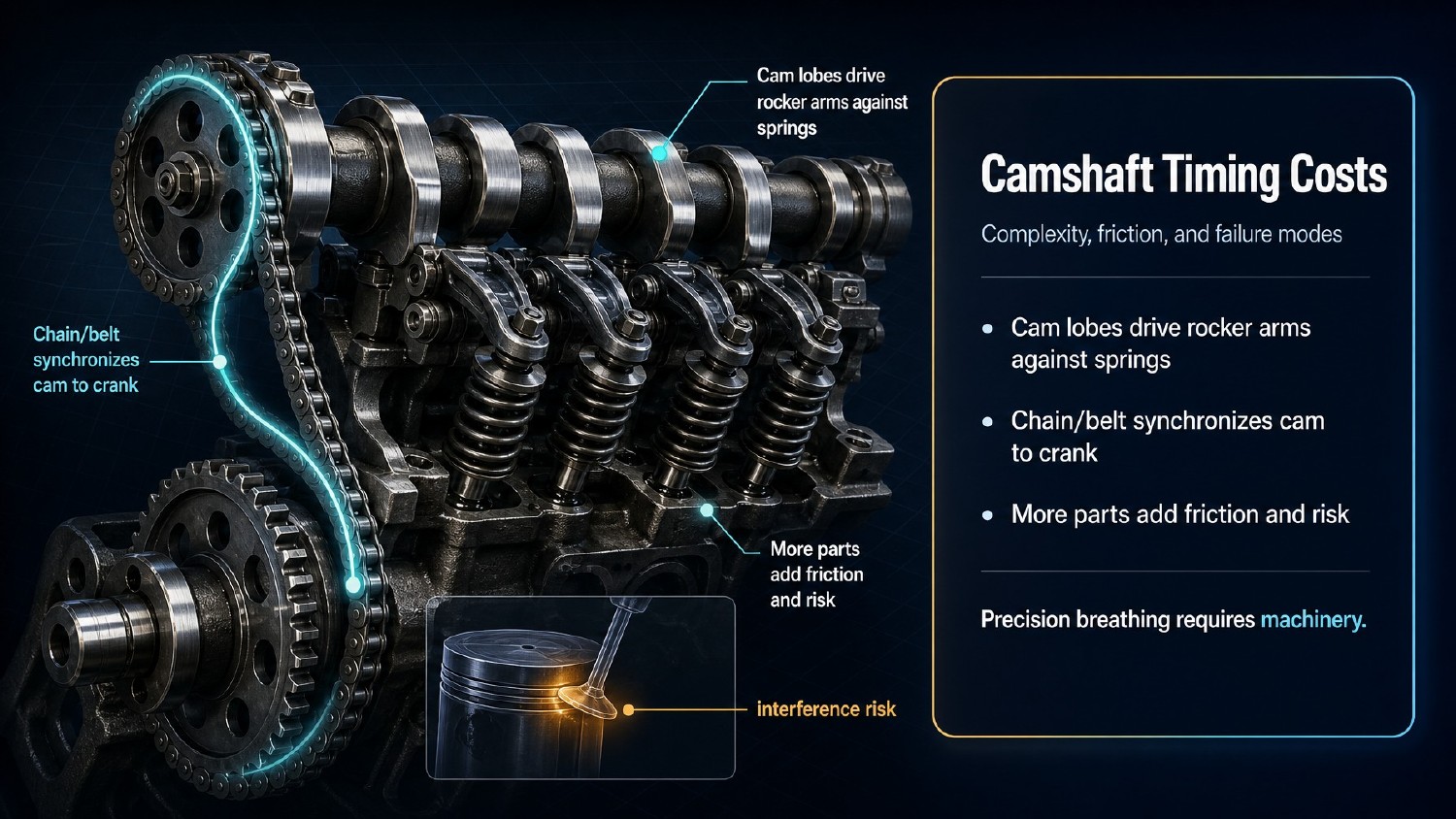
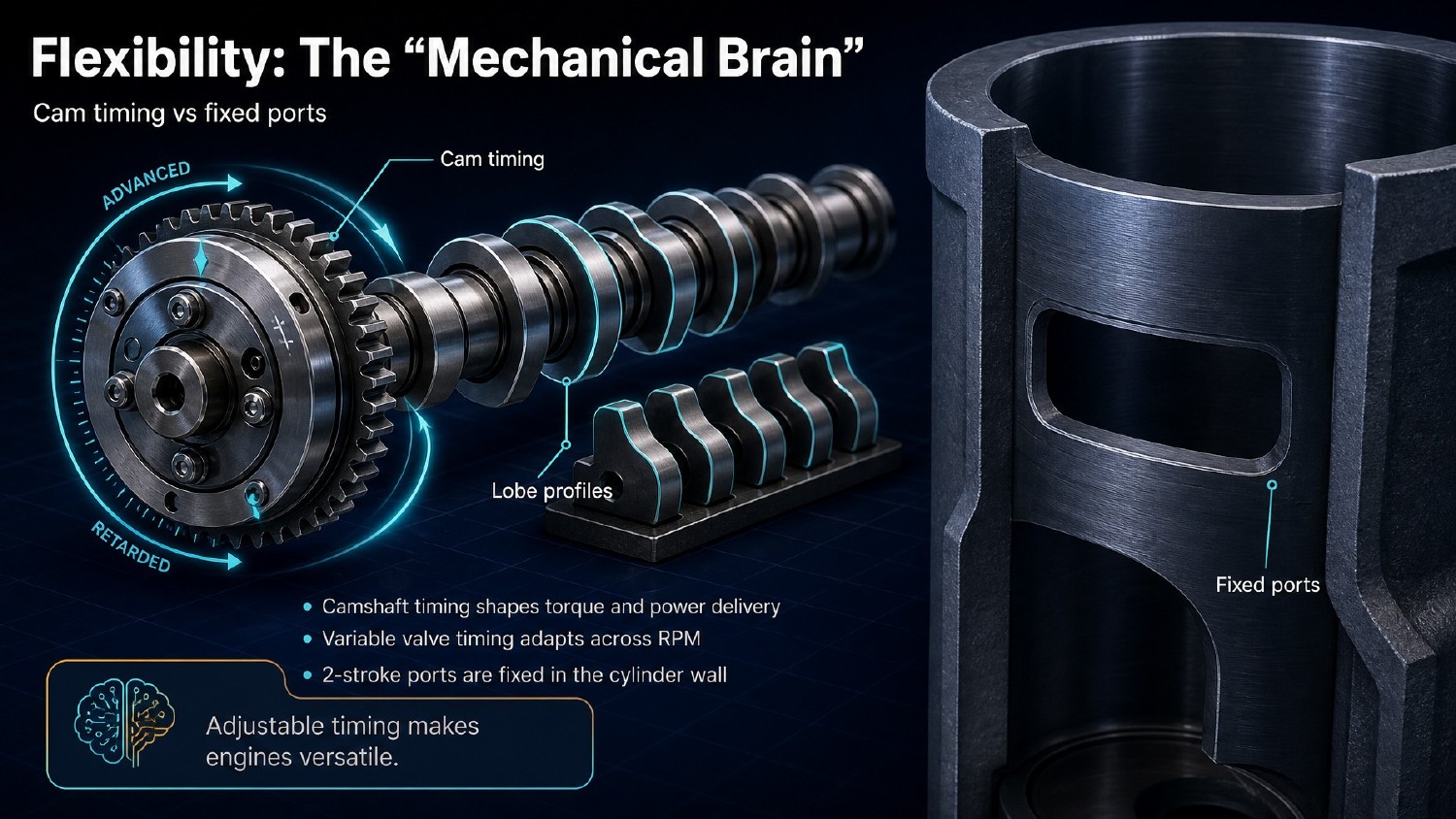
Valves timed by a camshaft
Ports plus crankcase compression
Simplicity vs control and cleanliness
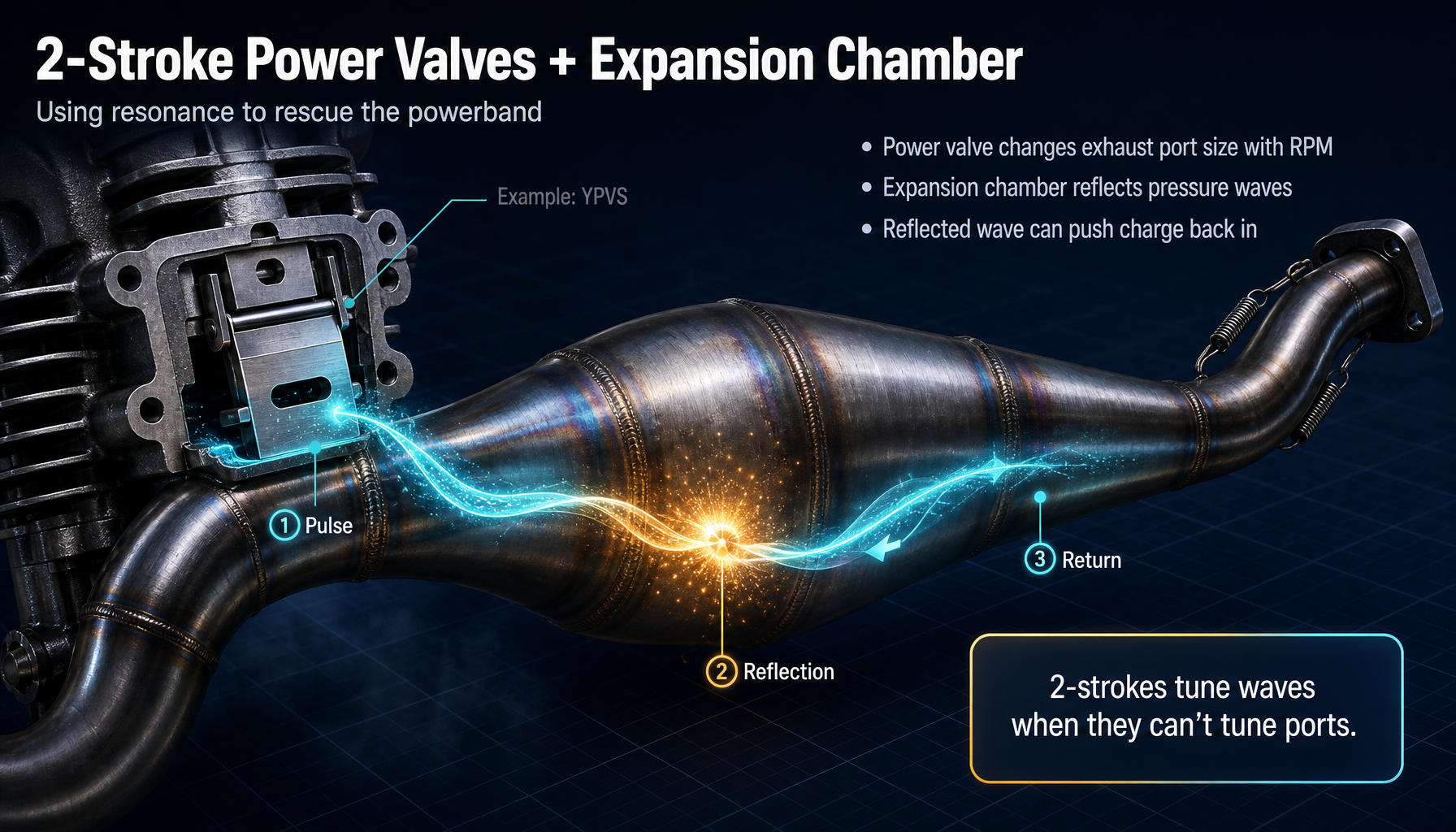
Add fuel after exhaust port closes
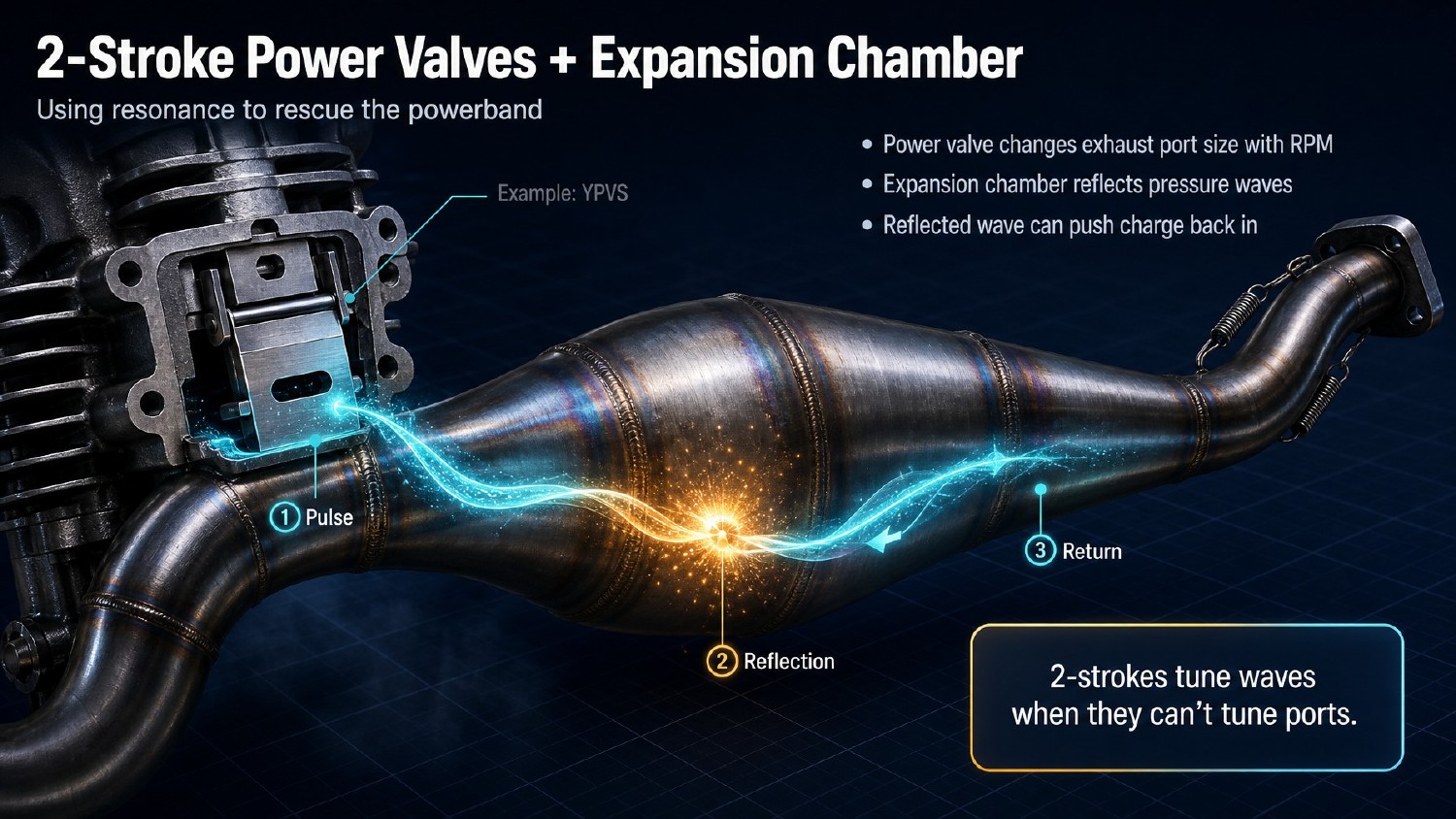
Vary exhaust-port height to widen band
Use pressure waves to boost scavenging
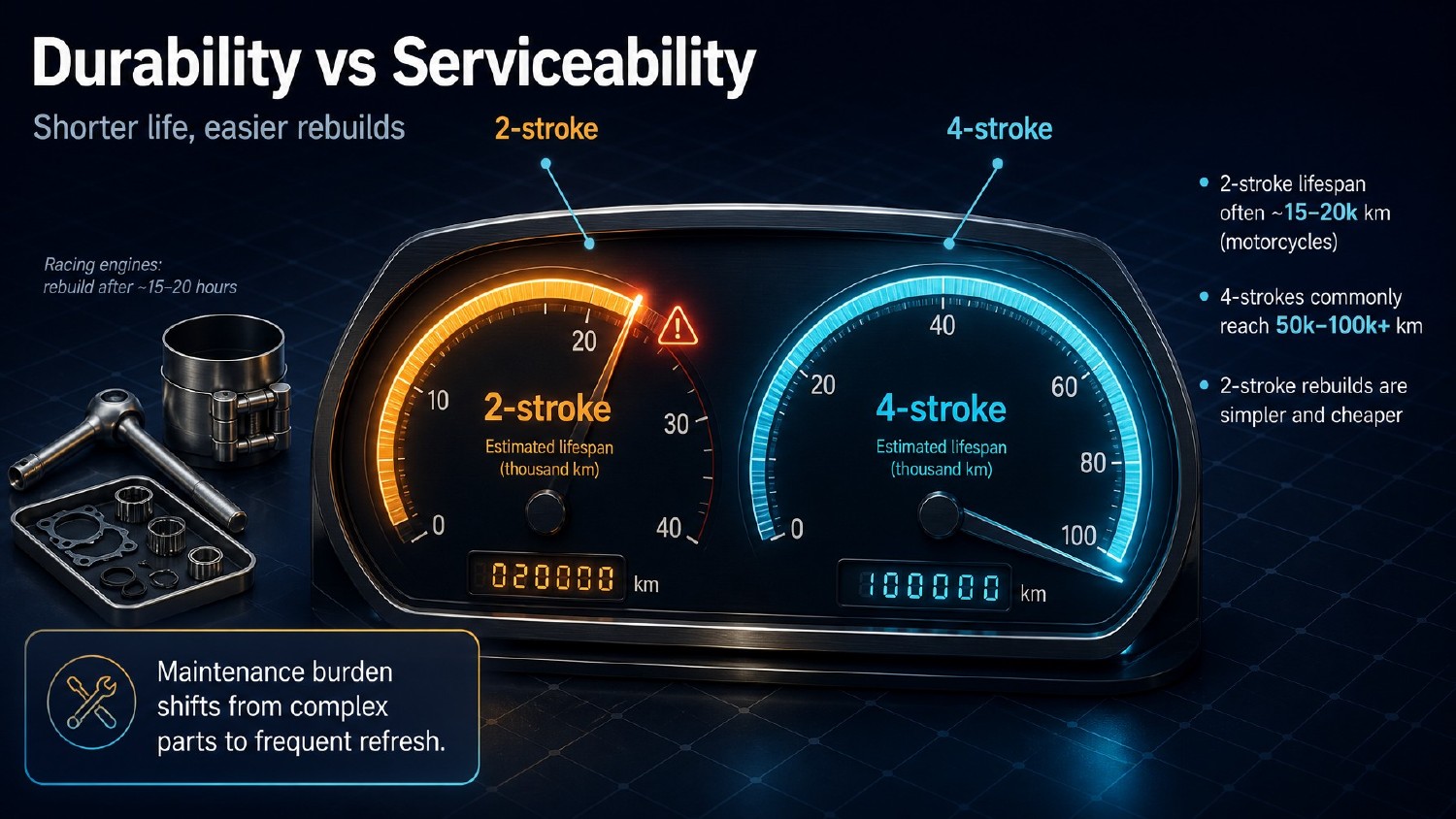
2-strokes rebuild easier but sooner
Crankcase, crank, rod, piston, cylinder
Reciprocation becomes crank rotation
Gas exchange and lube differ radically
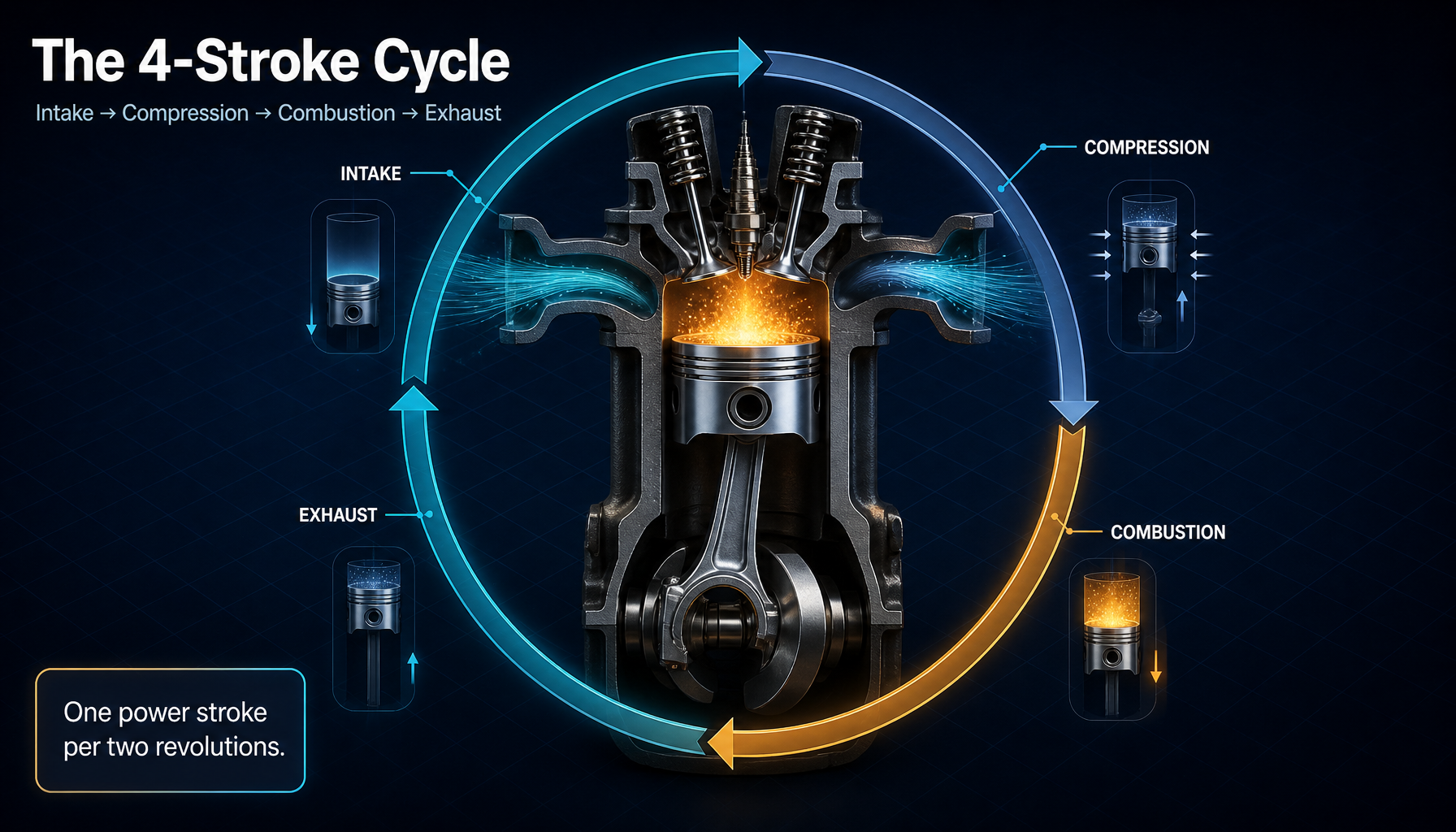
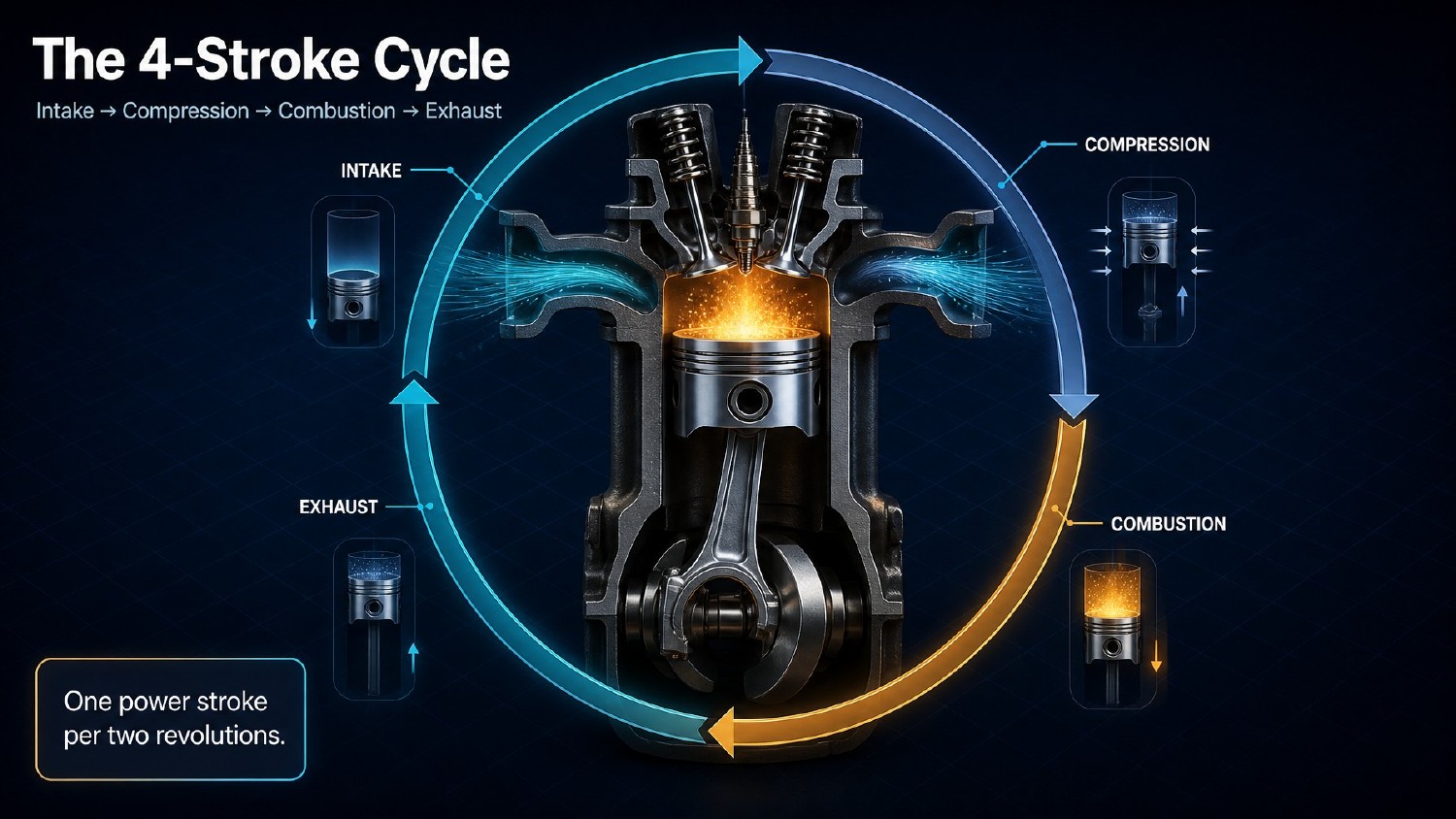
Piston down draws air-fuel in
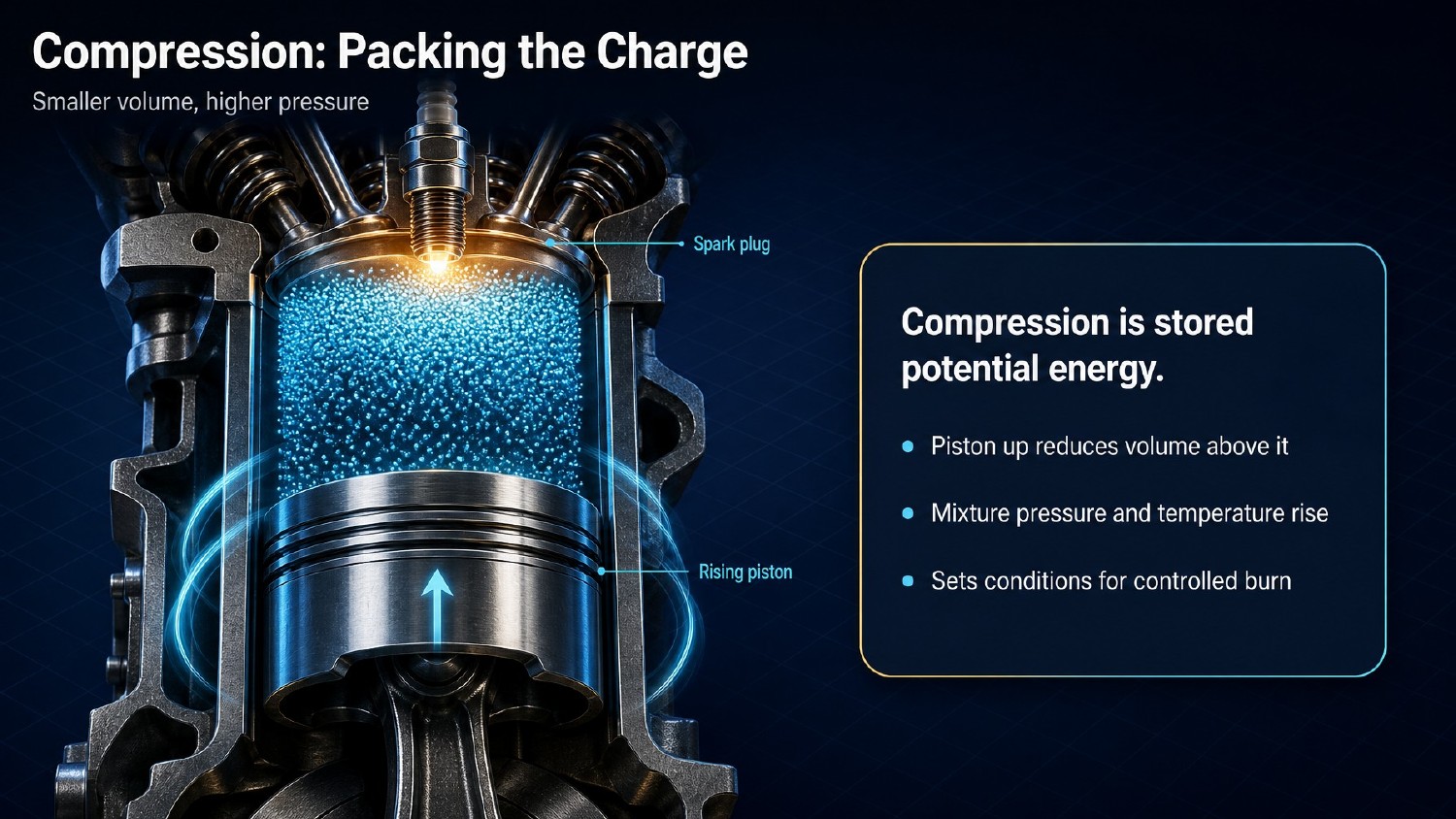
Piston up compresses the mixture
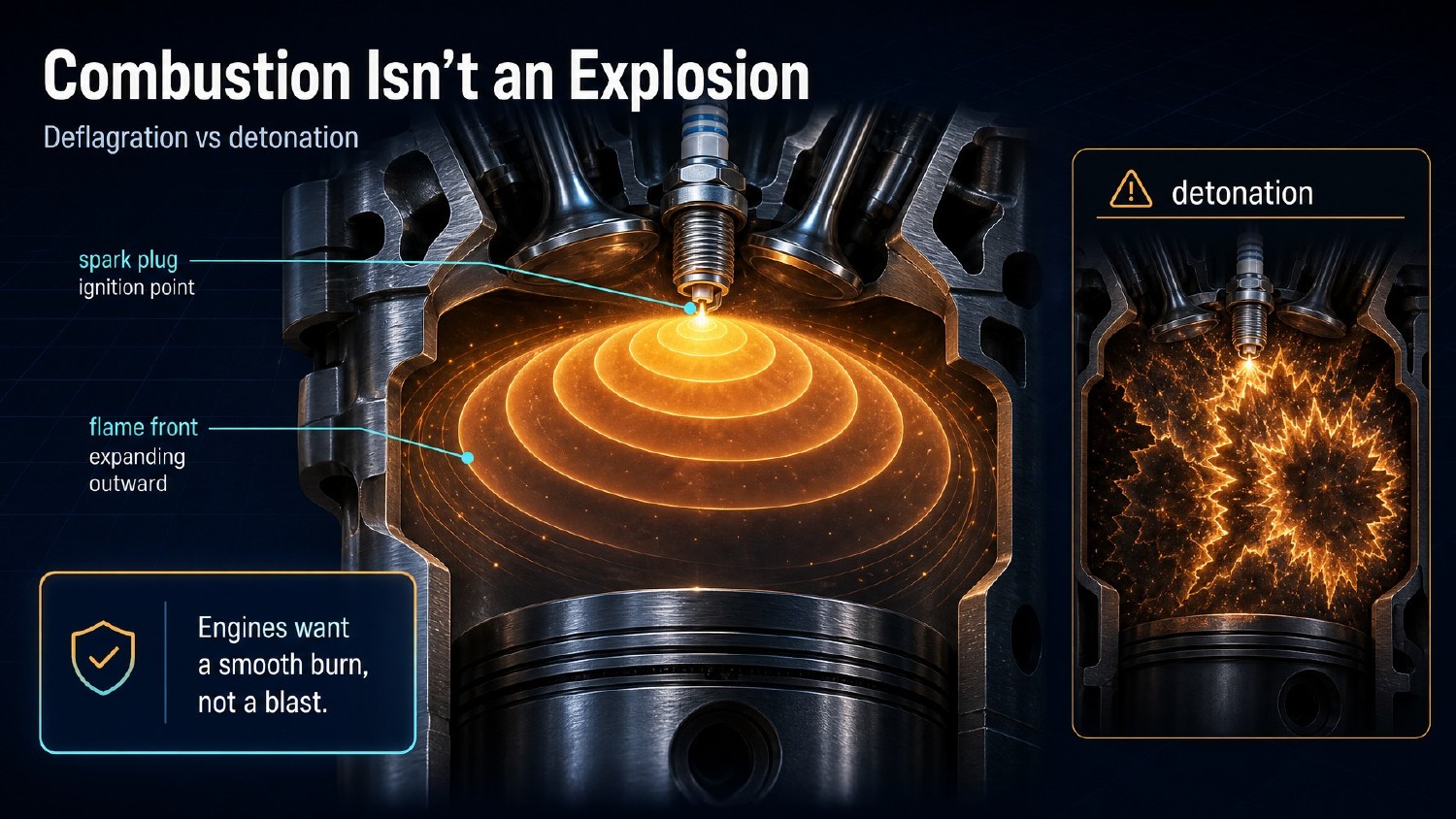
Ignition near TDC drives piston down
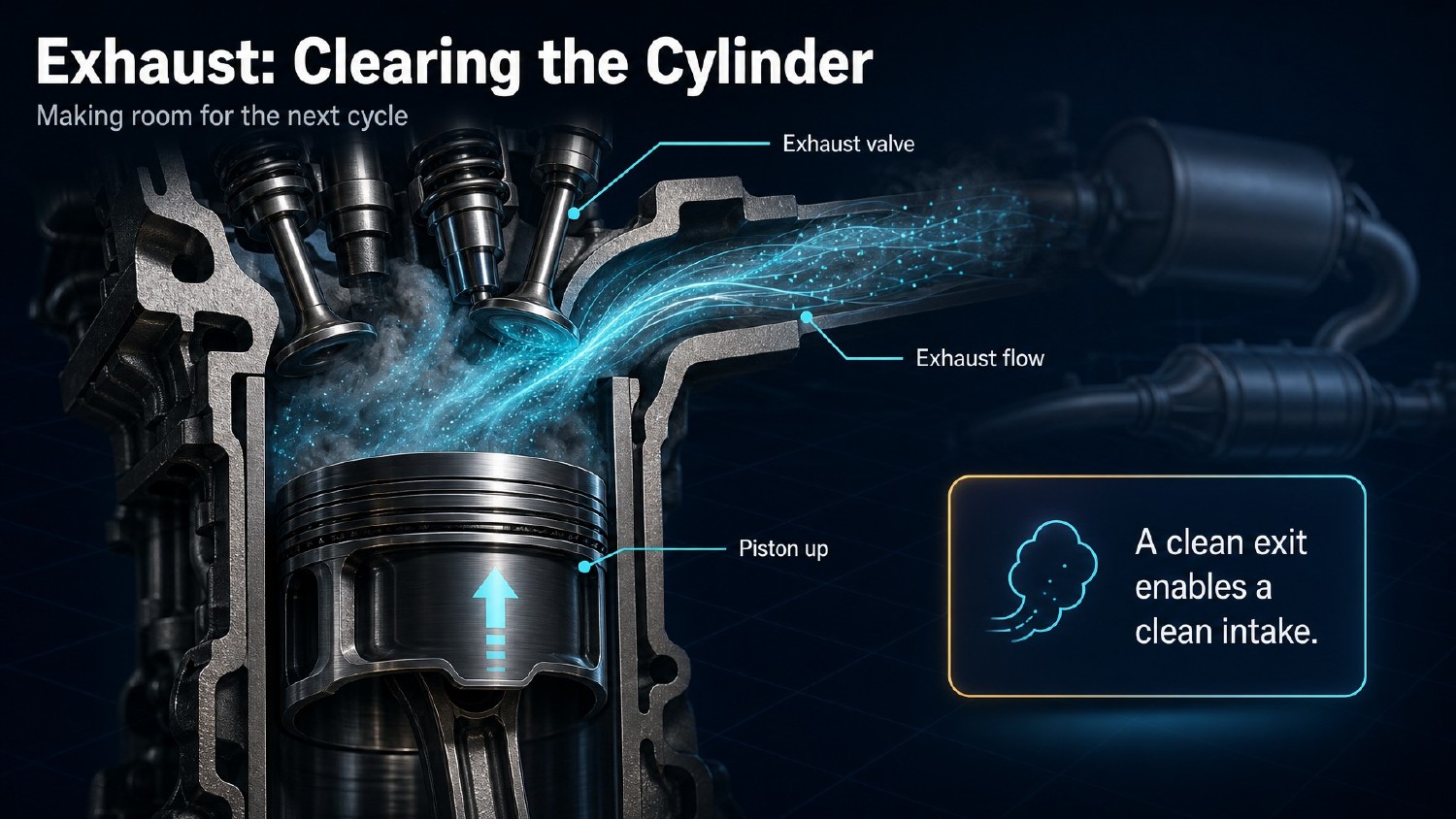
Piston up pushes exhaust out
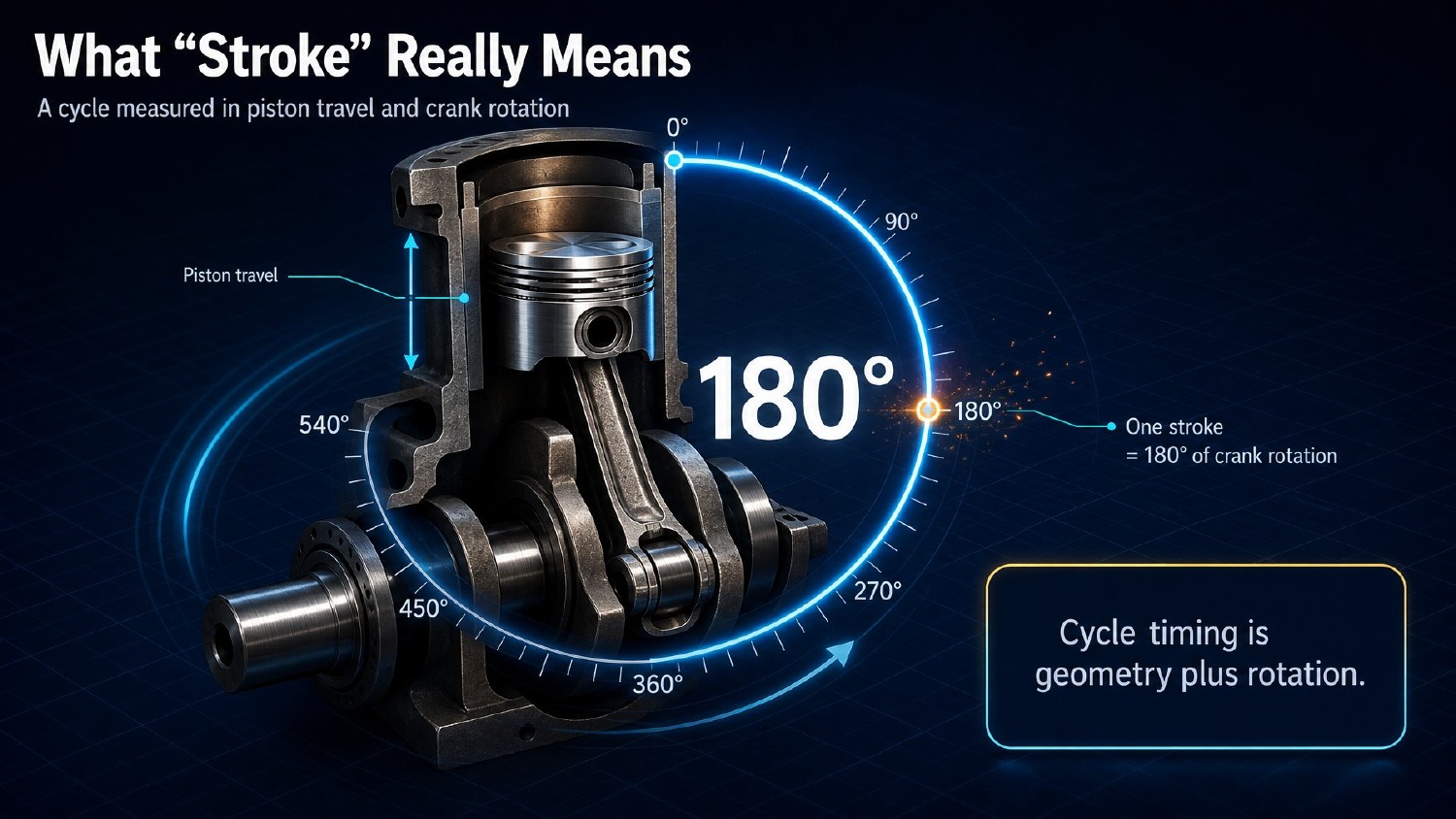
Four strokes equal two crank turns
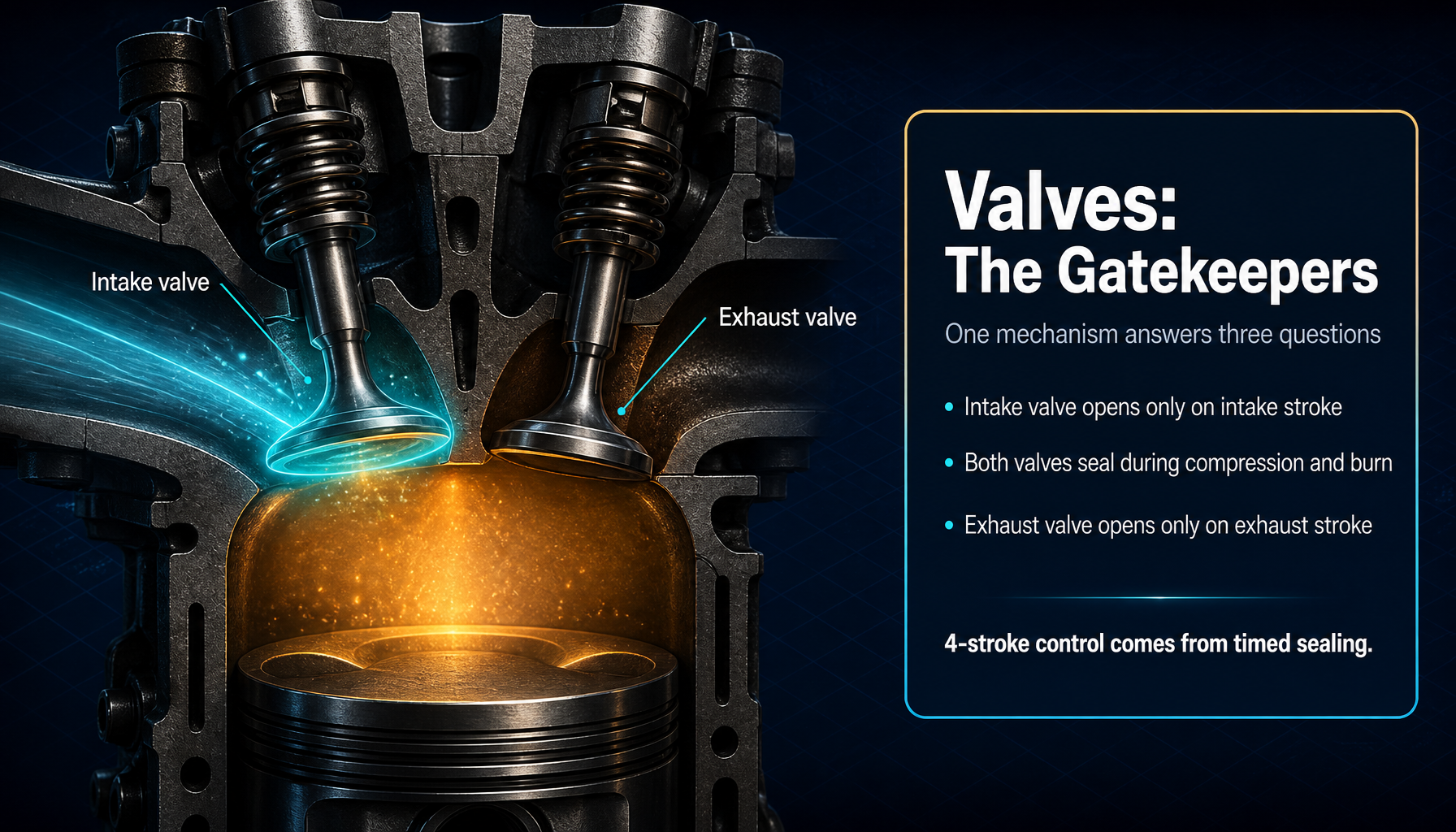
Intake and exhaust valves open/close
Cam syncs valve events to crank
Lobe shape sets how much and how long
Links cam rotation to crank rotation
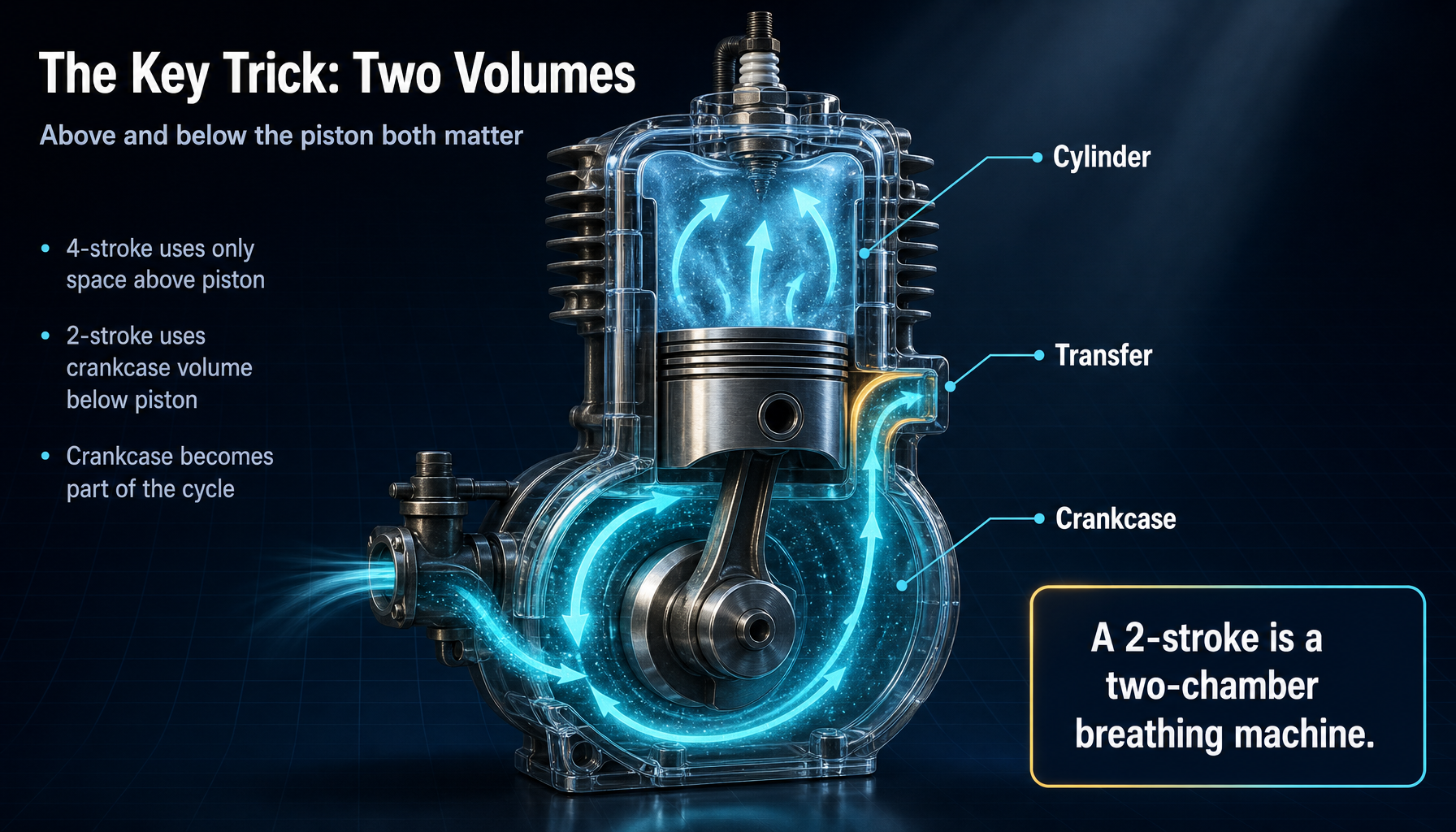
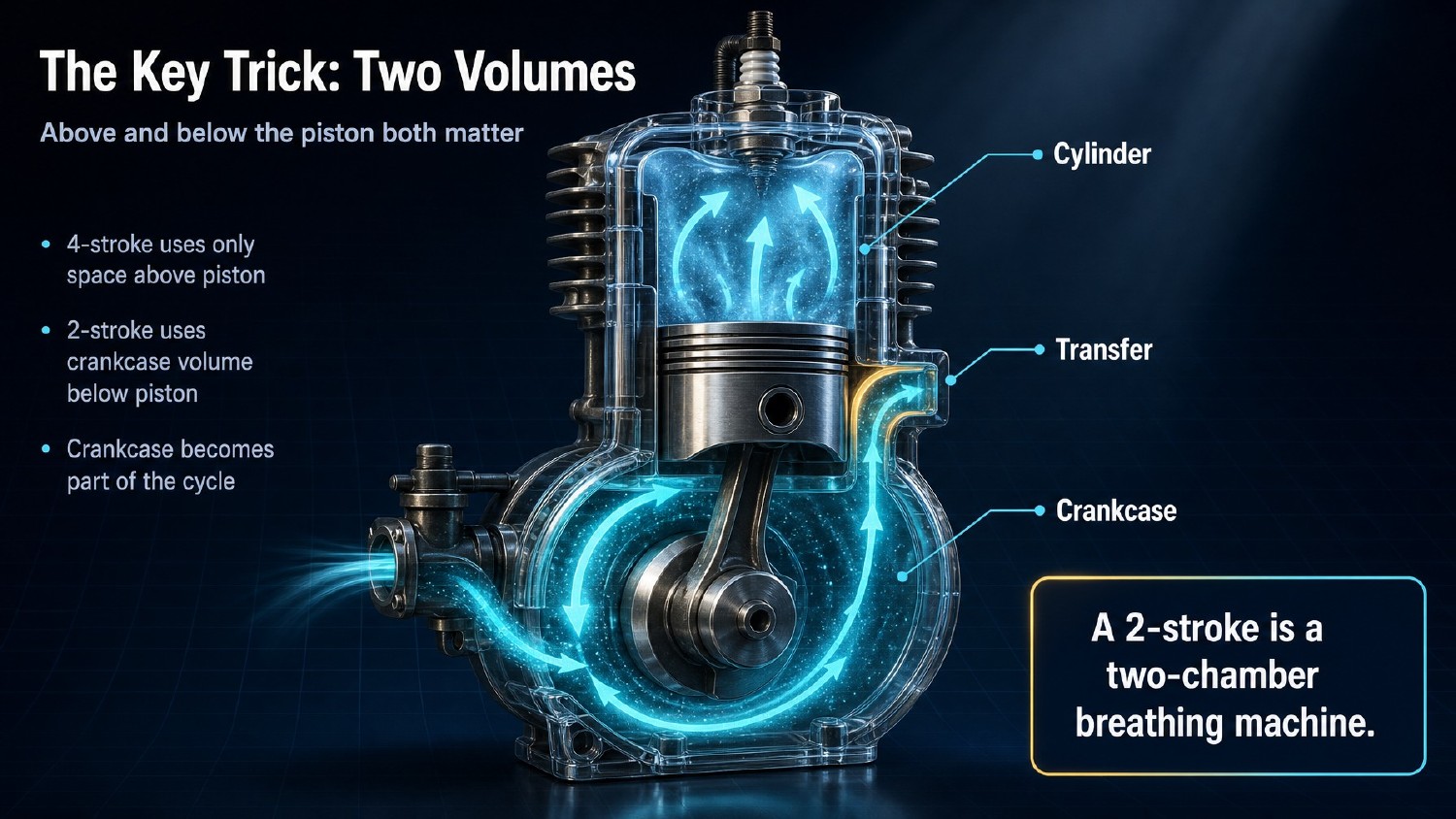
4-stroke cycle happens only in cylinder
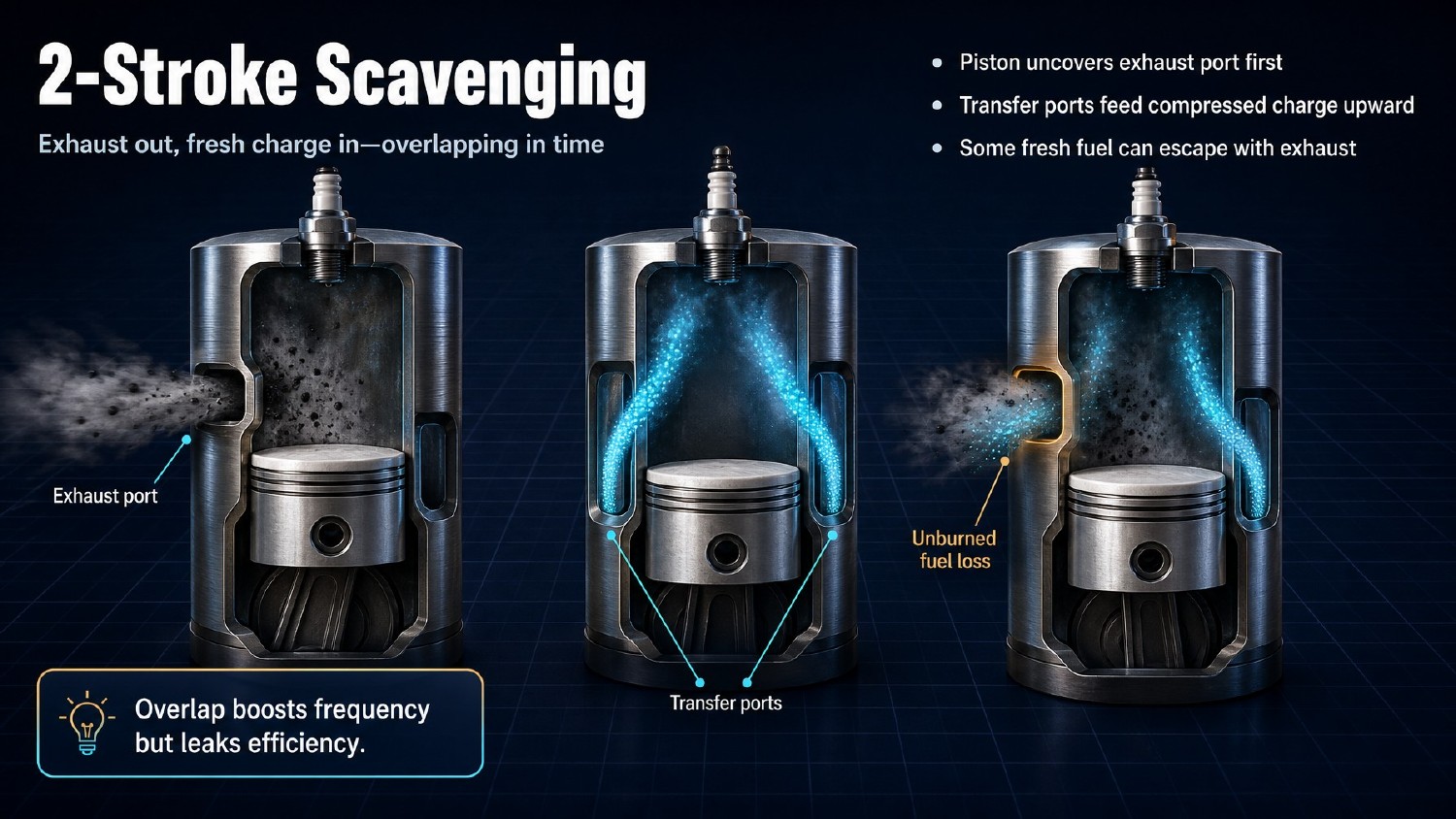
2-stroke uses space below piston too
Charge moves from crankcase to cylinder
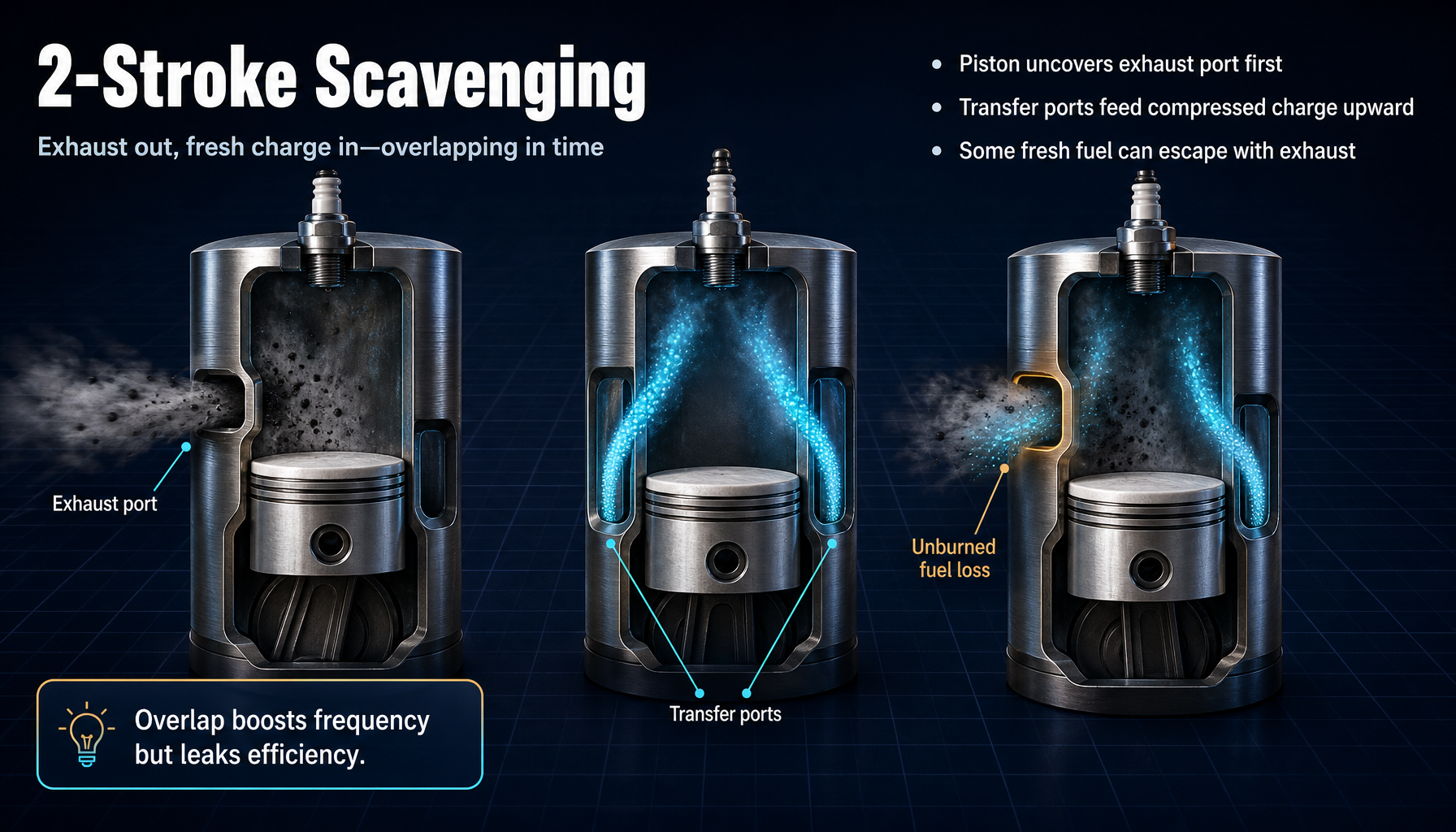
Two strokes complete one cycle
Exhaust opens before transfer begins
Fresh charge pushes exhaust out
Some mixture exits via open exhaust port
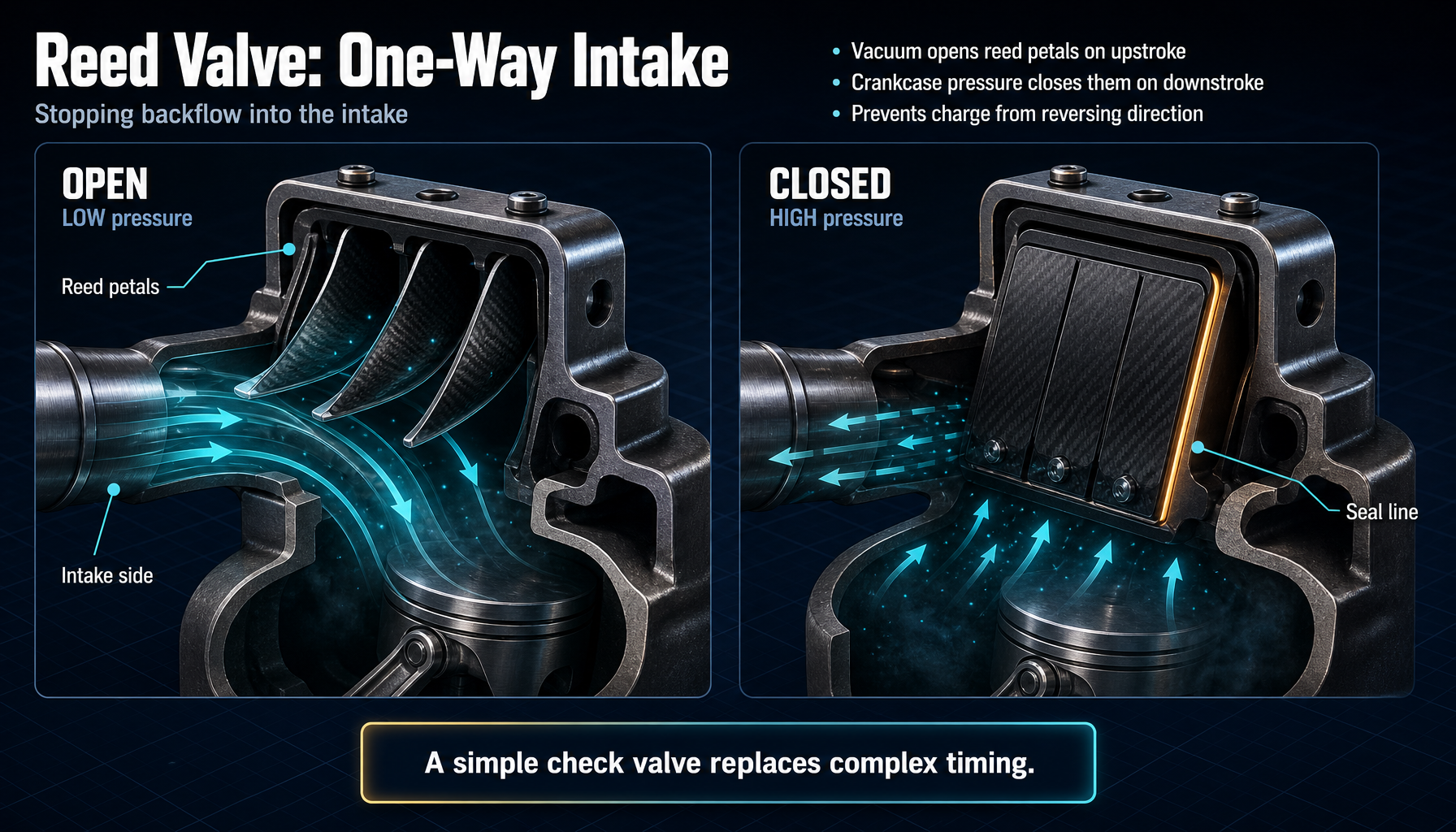
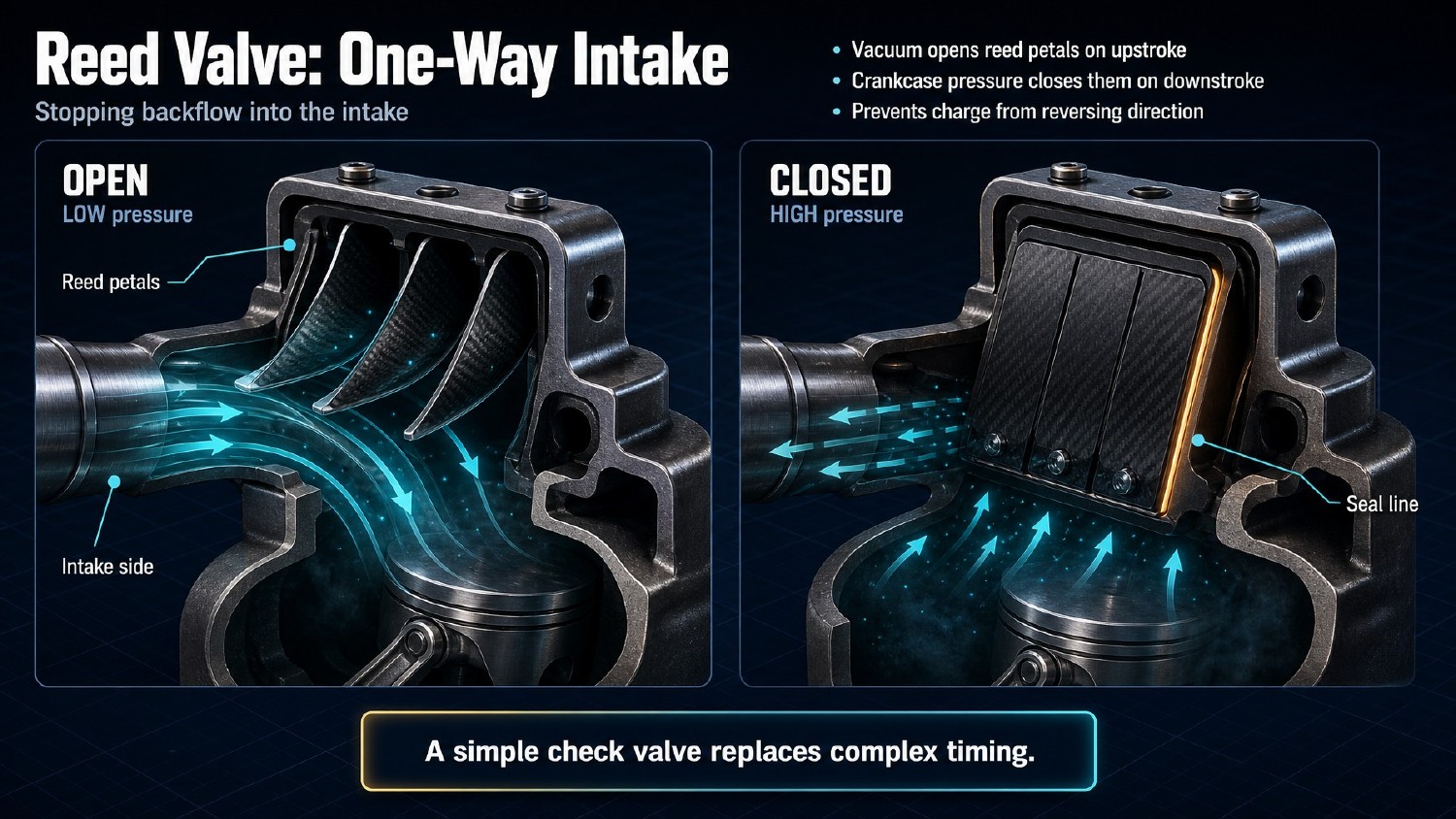
One-way intake check valve for 2-strokes
Rising piston lowers crankcase pressure
Descending piston pressurizes crankcase
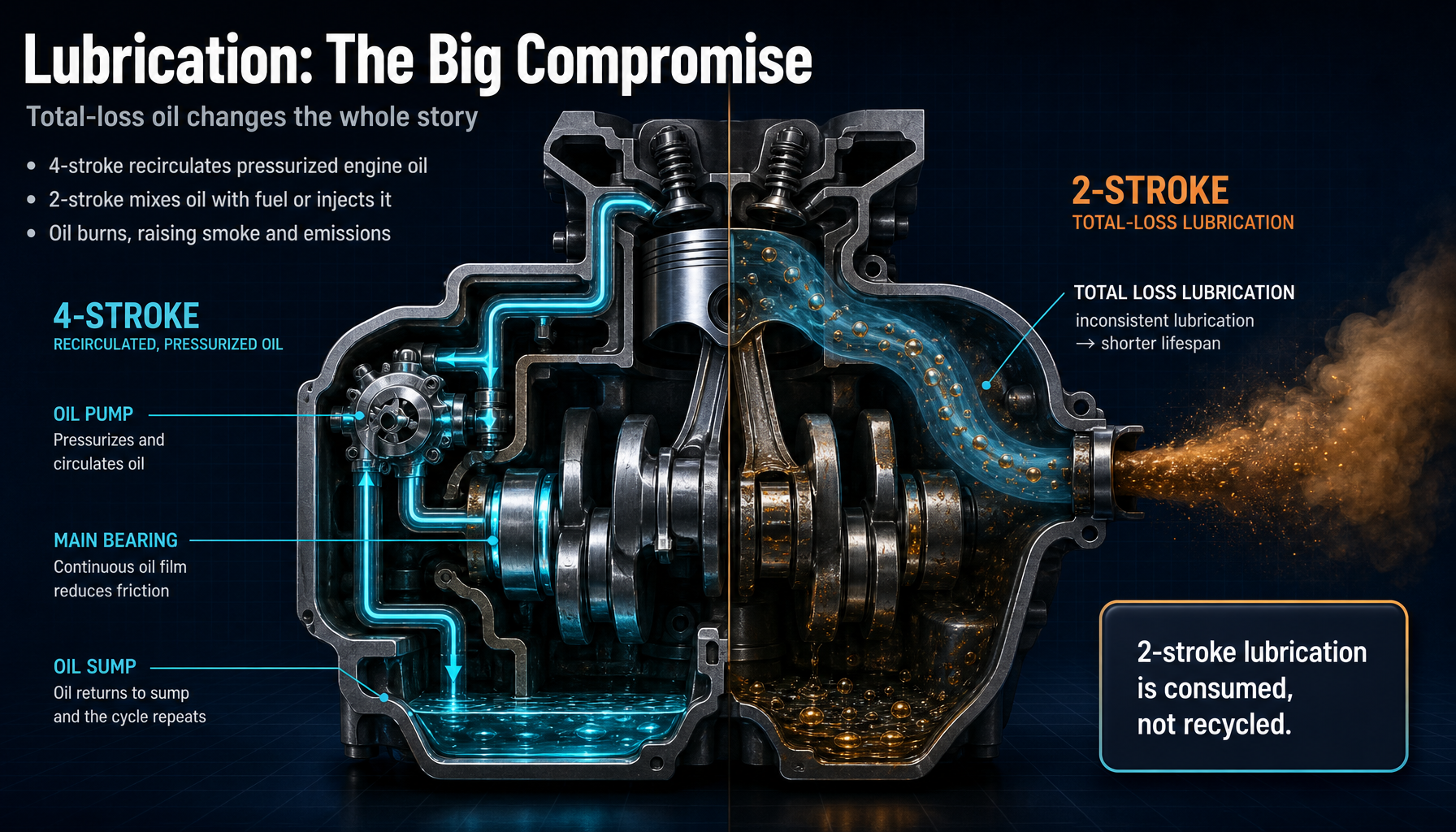
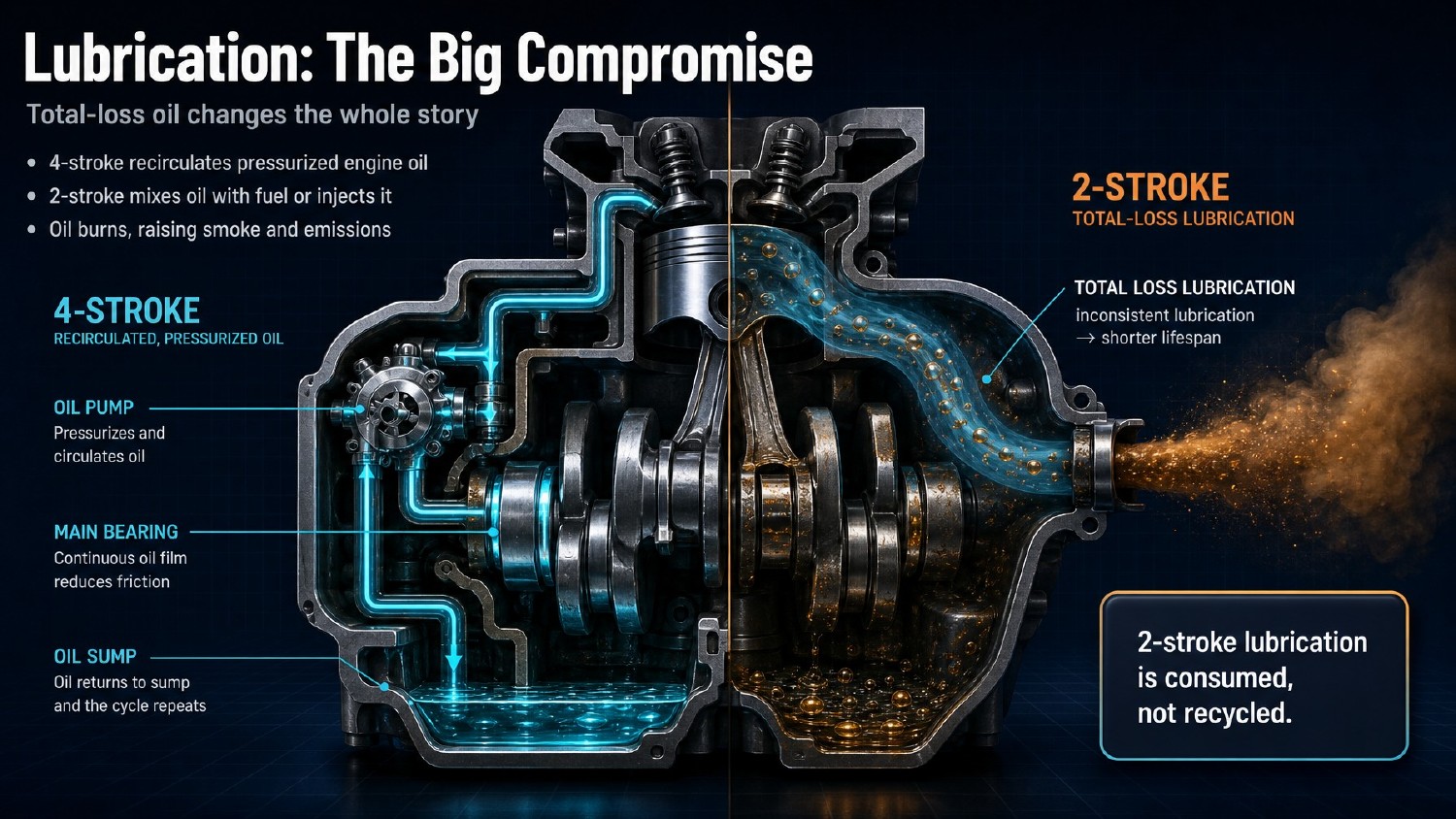
Circulates, filters, and pressurizes oil
2-stroke oil is burned with the charge
Crankcase is intake path, not oil sump
Less robust lubrication shortens service life
Often 3 rings including oil control
Often 2 rings, less friction
Pins prevent ring ends catching ports
Lubrication limits bearing choices in 2-strokes
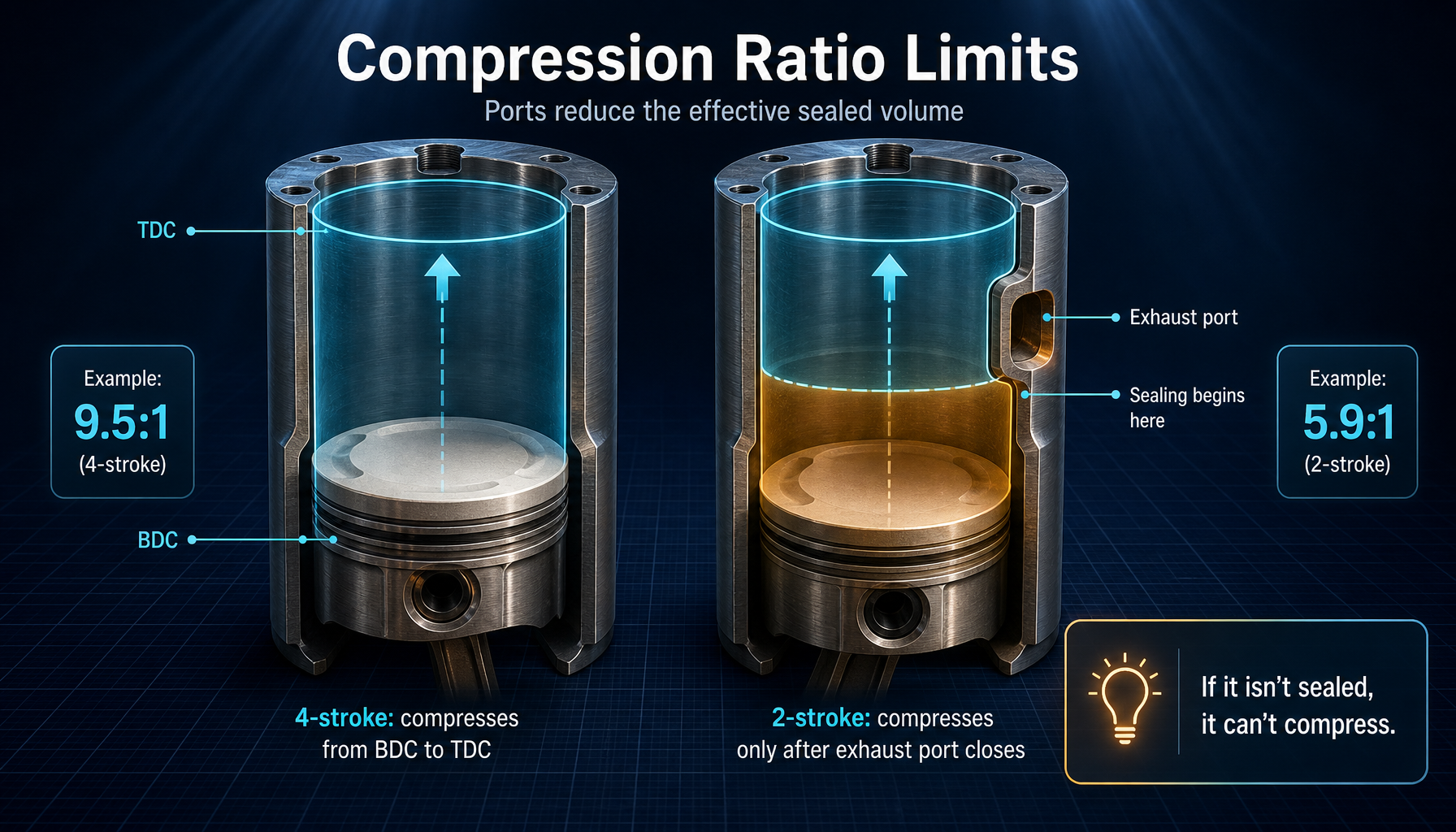
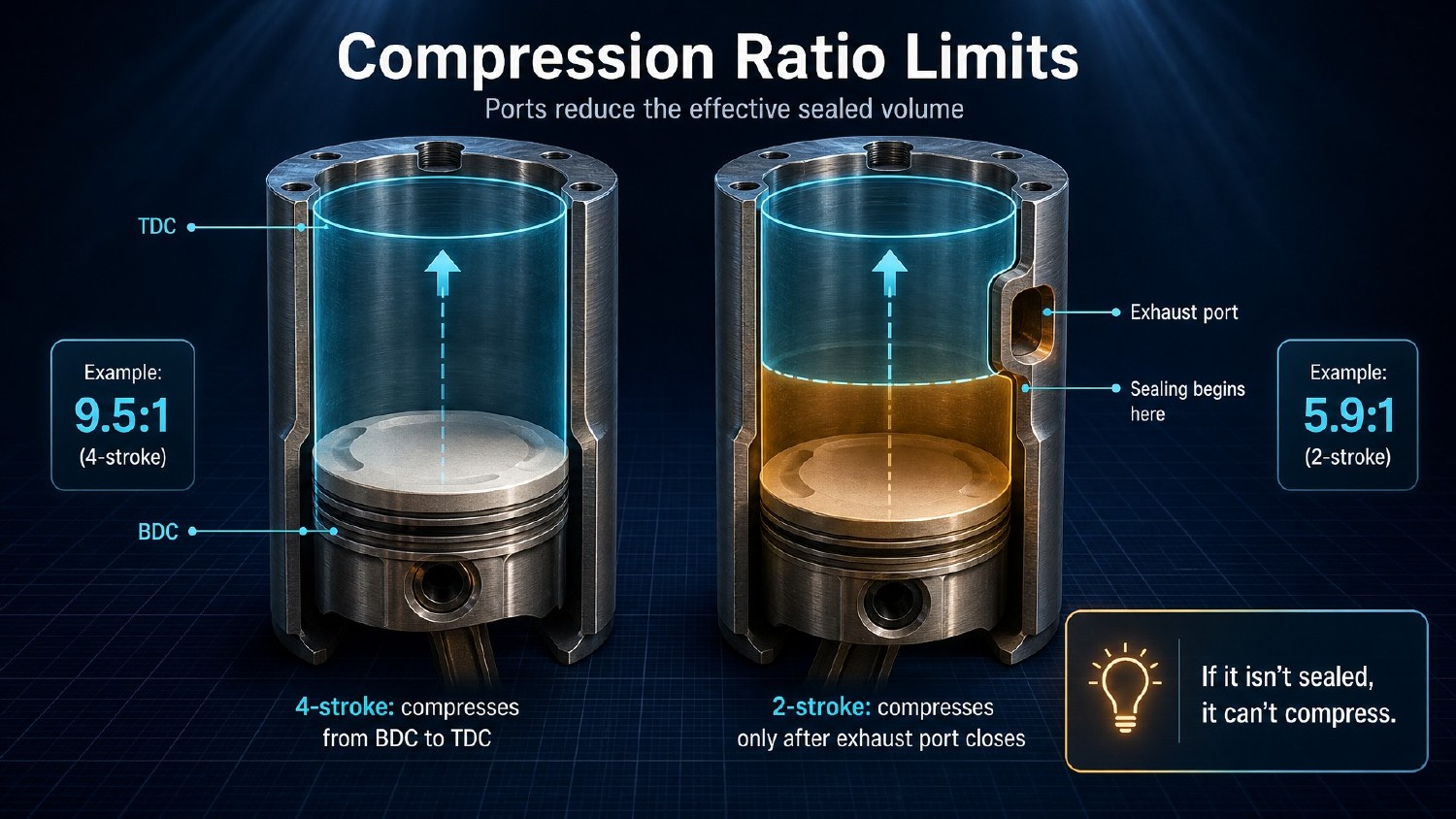
Compression starts after exhaust port closes
Ports reduce usable compression stroke
Ratio of max to min cylinder volume
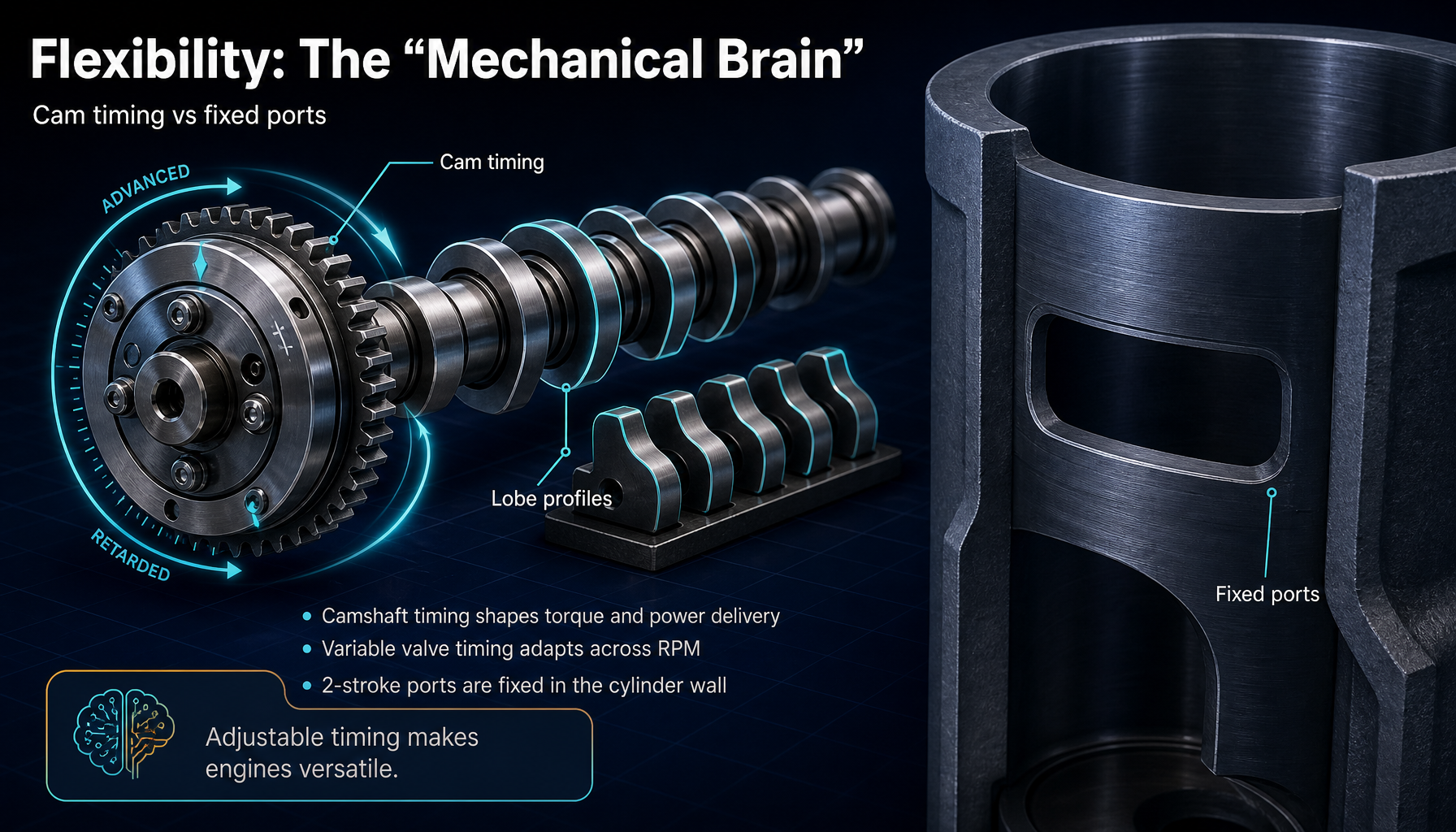
Valve timing can be changed for behavior
2-stroke ports cannot move with RPM
Changes effective exhaust-port size
Expansion chamber shapes the powerband
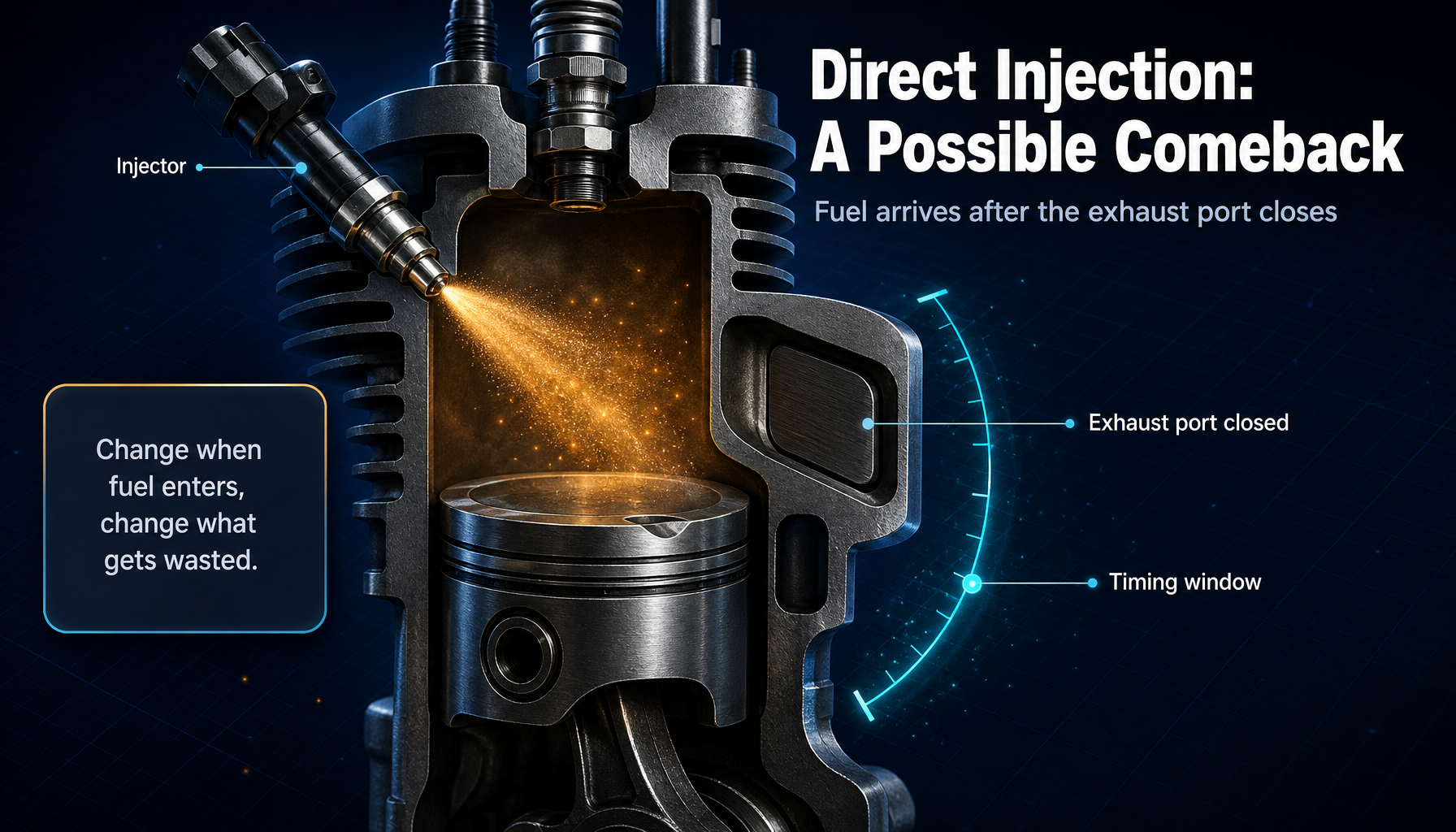
Cleaner, longer-lived, more efficient
Scavenging loss plus oil burning emissions
Cuts fuel short-circuiting to exhaust
Normal burn is controlled, not an explosion
Main goal is smoother power delivery
Efficiency, emissions, durability are linked
Port timing overlap causes inherent losses
May decouple fuel loss from scavenging
Review, practice, plan and keep going.
Support for the way you learn.
Get product updates, then join our Discord community to share what you need from UYI.
Ask. Explore. Go beyond.

UYI keeps your learning in sync, so you can keep going on your Laptop, Pad and Phone.
Mac / iPhone / iPadYour world is part
of what you learn.
DIY your look.
Make it unmistakably you.
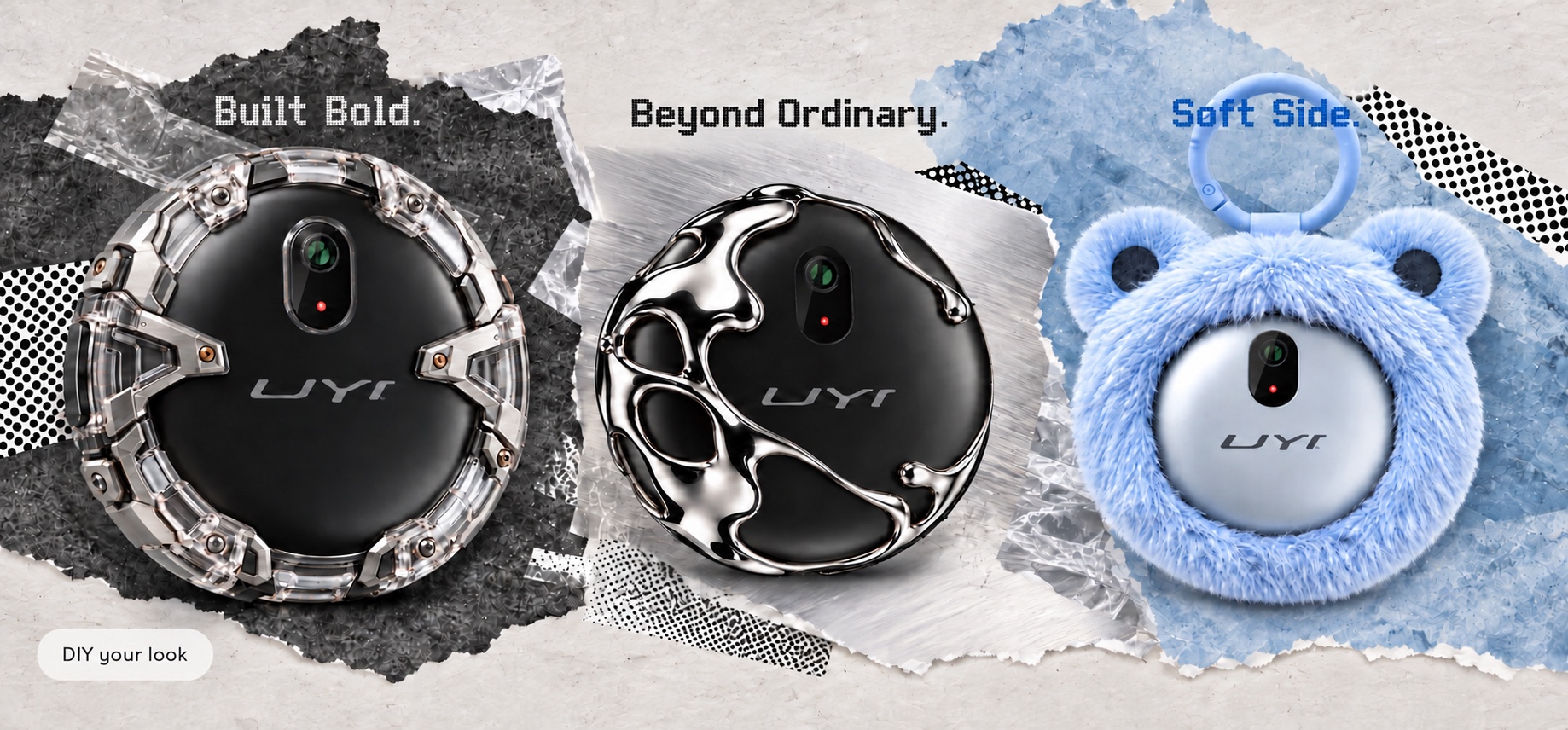
Swipe to compare all three products.
| Feature | UYI | PLAUDNote Pro | NotebookLM |
|---|---|---|---|
Capture & hardwareKeep the moment. In more than words. | |||
| CaptureCapture method | Audio + videoAudio + video | AudioAudio | // |
| CameraCamera | 4K · 120° FOV4K · 120° field of view | // | // |
| MicrophonesMicrophones | 4 digital mics4 digital microphones | 4 MEMS + 1 VPU4 MEMS microphones + 1 VPU | // |
| Privacy indicatorsPrivacy indicators | Recording indicator + camera shutterRecording indicator + electronic camera shutter | Recording indicatorRecording status indicator | User-uploaded filesUser-uploaded files |
| Local storageLocal storage | 32GB / 64GB32GB / 64GB | 64GB64GB | // |
| Battery lifeBattery life |
|
| // |
| ConnectionConnectivity | Wi-Fi 6Wi-Fi 6 | BLE 5.4 + dual-band Wi-FiBluetooth LE 5.4 + dual-band Wi-Fi | Web / AppWeb / App |
UnderstandingSee and hear the whole picture. | |||
| Synchronized captureSynchronized audio & visual capture | Audio + video / photosRecord audio with video or photos on the device | Audio + added imagesNo built-in video capture; images can be added | Import audio / videoImport audio and video files |
| Audio + visual AIJoint audio & visual understanding | Audio + imagesUnderstands audio and images together | Audio-first + imagesPrimarily audio, with optional images | Audio + imagesUnderstands audio and images together |
| TranscriptionTranscription & speaker identification | Multilingual + speaker labelsTranscription, speaker labels and multiple languages | Multilingual + speaker labelsTranscription, speaker labels and multiple languages | // |
| Visual summariesVisual summaries | Illustrated reportsIllustrated reports | Text summariesText summaries | Reports + audio / videoIllustrated reports, audio and video summaries |
Knowledge & creationBring your knowledge together. | |||
| Source integrationMulti-source knowledge integration | Audio, video, PDFs, notes + webConnect audio, video, PDFs, notes and web pages | // | Uploaded sourcesUpload source materials |
| Multi-file summariesMulti-file summaries | Multiple filesSummarize multiple files together | Single fileSingle-file summaries | Multiple filesSummarize multiple files together |
| Knowledge basePersonal knowledge base | Supported: A dedicated personal knowledge baseA dedicated personal knowledge base | // | // |
| SearchSearch | Cross-course · multimodalCross-course, multimodal semantic search | Current recording / noteText search within the current recording or note | // |
| ConversationsOngoing conversations | Context + history · knowledge-base Q&ARetains context and past questions Knowledge-base retrieval and Q&A | Current-file Q&A · no long-term memoryNo long-term conversation memory Q&A based on the current file | Project Q&A · no long-term memoryNo long-term conversation memory Q&A based on files in the current project |
| ExportFile creation & export | PPT, HTML, Word, PDF + sheetsCreate PPT, HTML, Word, PDF, spreadsheets and more | // | Reports, slides + videosCreate reports, slides, videos and more |
Learning supportTurn understanding into progress. | |||
| Flashcards & quizzesFlashcards & quizzes | Course priorities + past mistakesPractice based on course priorities and past mistakes | // | Generated practice · no feedback adaptationGenerate flashcards and quizzes; no adjustment based on personal feedback |
| Study plansStudy plans | Supported: Review based on goals, progress and areas of difficultyReview based on goals, progress and areas of difficulty | // | // |
| Tasks & remindersTo-dos & reminders | Class action items + remindersExtract action items from class and send reminders | Action items + to-dosGenerate action items and to-dos | // |
| PersonalizationPersonalization | Supported: Continuously adapts to learning history, preferences and mistakesContinuously adapts to learning history, preferences and mistakes | // | // |
| Proactive helpProactive learning suggestions | Supported: Personalized suggestions and proactive help exploring ideasPersonalized suggestions and proactive help exploring ideas | // | // |
Your knowledge.
Your data. Your control.
UYI is designed for intentional, user-initiated capture—not passive, always-on recording. Clear capture awareness and user controls help you decide what is kept, exported or deleted.
Your data belongs to you.
End-to-end AES-128 encryption protects your data in transit, on-device, and in the cloud. UYI never collects, shares, or uses your personal data without your authorization.
Your content, your choice.
View, manage, export, or delete your content anytime.
UYI is a personal wearable AI memory designed to capture the audio and visual context around the moments you choose, then turn it into knowledge you can search, revisit and continue building on.
Most recorders stop at a transcript or summary. UYI is designed around continuity: connecting what happened with what it means, then helping you return to it when you need to learn, decide or act.
Words rarely tell the whole story. Audio alone may capture every word while losing what those words refer to—the formula, diagram, gesture or action unfolding in the moment. UYI keeps what you heard and what you saw together, preserving the visual context needed to understand the explanation and recall it accurately later.
No. UYI is designed for intentional, user-initiated capture—not passive, always-on recording. Clear capture awareness and user controls help you decide what is kept, exported or deleted.
UYI is being designed around transparent capture and user control, including clear recording awareness and control over what is stored, exported or deleted.
Join our email list for product development and early-access updates. After signing up, you can join our Discord community to share your learning needs and help shape UYI. We will share availability when it is confirmed.